


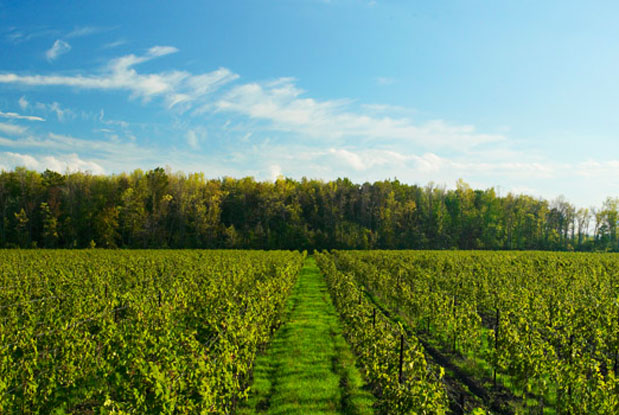

Autumn has always been a favourite season of mine. A time of apple crisp and pea coats with collars turned up, the months preceding the first day of snow are ones that I like to relish at a lazy pace, often from the comfort of my living room window watching the leaves fall. For Chef though — and consequently for me it seems — September and October constitute harvest season, i.e. massive work months.
Picking fruits and vegetables always sounded like a romantic idea to me: blue skies, a white linen dress with a floral apron overtop, and a pretty straw basket full of the season’s crop — like a scene from Anne of Green Gables. To my disappointment, the reality of harvesting fall crops is one of rubber boots and oversized men’s sweaters (because no one told you it would be two degrees outside or that you would be out for over half the day), and, there’s no straw basket, just a very practical, unromantic bucket.
With Chef’s pop up restaurant, Boxed, currently prepping for an upcoming fall harvest dinner at Southbrook Vineyards on Oct. 20, Niagara-on-the-Lake and all its surrounding farms have become a regular weekend attraction for us. Aside from the subsequent three days of canning that always seem to follow our visits, the charm of this little town is just as irresistible upon each stay as it was during the first.
Currently celebrating its annual Niagara Wine Festival — on till Sept. 30 — a day trip or last-minute weekend getaway would be perfectly timed come this Saturday. Boasting dozens of participating local wineries, skip the crowds in St. Catharines, where the festival is based, and go straight to the source of the celebration: the vineyards.
Visitors planning an overnight stay may choose from many dozens of idyllic B&Bs with rooms outfitted in four-poster beds and sitting rooms warmed by amber lit hearths.
Based on our own overnight trips to the area, the Apple Tree Historic B&B comes up at the top of the accommodation lot. Leaning towards the ornate side in terms of décor, with each of the three guest rooms dressed in a Jane Austen-esque allure, the home’s luxury appeal isn’t in its Georgian fittings but in the cozy, comfortable hospitality of owners Gail and David — a lavishness rare to come by.
Guests of Apple Tree can count on being greeted with critical tidbits of tourist information including where to eat (the side verandah — not the main dining room — of The Charles Inn for an economic and tasty lunch) and where to drink (Ravine Vineyard, which has one of the prettiest views to enjoy a cheese platter — courtesy Monforte — and a delicious bottle of Ravine Reserve Red wine, available at wholesale price).
A stone’s throw away from the city centre, guests are only footsteps from an evening at the Shaw Festival. On till late October, the Shaw Festival’s current lineup includes critically acclaimed productions of His Girl Friday and Ragtime, coming to an end on Oct. 5 and 14 respectively, as well as Misalliance (playing till Oct. 27), for theatergoers wanting an evening of comedy à la Shaw.
While 19th century living (afternoon tea and theatre outings) had me on a high during our last visit to Niagara-on-the-Lake, it was the 100 km virtual kitchen pantry (a.k.a the Niagara Culinary Trail) and the local fare that had Chef anticipating out next visit.
From the peaches and apples at Quiet Acres to the heirloom tomatoes at Tree and Twig to the charcuterie cured in-house by chef Ryan Crawford of Stone Road Grille, the local bounty is plentiful in Niagara-on-the-Lake. And, as we tasted, Chef Crawford is taking full advantage of his palatable surroundings.
Having heard the praise for the menu and Stone Road Grille’s stellar local wine program (the VQA offerings here represent the entirety of the wine list) created by his fellow Stratford alum, Chef was eager to begin the meal here, and had already ordered the oysters and house charcuterie plate before I had even had a chance to thank the waiter for filling my water glass.
Delirious when it comes to his love of oysters, the dozen Village Bay selects went fast on his side, despite having been chosen to suit my own taste for the smaller variety of the shellfish. Paired with a classic choice of Brut Rose, in this case by Henry of Pelham, the sweet acidity of the bubbly did its duty and cut the brininess of the oyster without losing the savoury flavour of the ocean, vibrant in this fresh selection.
Shortly after inhaling the oysters, we moved over to the charcuterie plate, and discovered the reason why the cured and hand-sliced Feathershire prosciutto is an additional $10 to the cost of the plate. The first reason is, as Chef believes, because the product was nearly two years in the making (cured 21-months to be exact), and is worth its cost in quality and labour. The second is my own reasoning, which is that anyone who tastes this proscuitto once would be willing to pay an additional $10 for just one sliver of it thereafter.
I ask Chef why a Riesling has been paired with the charcuterie, thinking that it called for a red wine pairing. Chef quickly sets the record straight, sighing a morsel of wine information that unsophisticated Australian Shiraz drinkers such as myself can take with them to their next dinner party: a dry Riesling — like the Charles Baker 2010 bottle we were drinking — is an ideal pairing for food because its temperate acidity and sweetness subtly bolsters the flavours of a dish by never hiding the profile under its own notes. In contrast, pairing a red with the charcuterie would drown the complex flavours of the plate’s Berkshire sopressata and “boar & chick" terrine.
Mains at Stone Road Grille pay homage to its regional sensibilities, culminating in a celebration of pork that sees a local Berkshire pork trio divvied up into slow-roasted loin, parmesan sausage and confit belly. The wine pairing with this one had Chef contemplating in blissful silence, allowing me the opportunity to build a perfect bite of garlic scapes, ricotta gnocchi and pork belly — multiple times over. A red blend by Colaneri Estate Winery, Chef was surprised by the winemaker’s use of the Appassimento style for the 2009 Insieme paired with this dish. Not common in Ontario, the style is typical of hotter regions such as Veneto, Italy, where it is used to create the area’s rich, dry Amarone varietals. Replicating the earthy dark cherry notes of an Amarone, the Insieme is robust enough to complement the richness of the pork trio.
Full on local fare, with a trunk full of the region’s harvest to take back home, Chef and I leave Niagara each time more impatient to get back for another visit than the last. While harvest season might not be all white linen dresses and floral aprons as I had hoped, simply bringing along one’s own straw basket to the roadside farmers’ stalls in the area is enough to capture a touch of the Romantics in this scenic countryside. Next time.
Toronto-based writer Jennifer Lee is the editorial director of FILLER magazine, an online fashion and culture journal. She is also the co-editor of Hardly magazine, an arts-centric online teen publication for Canadian girls.
