



Set an early alarm (or plan a very late night), because one of the prettiest sky shows of 2026 is about to line up over Toronto.
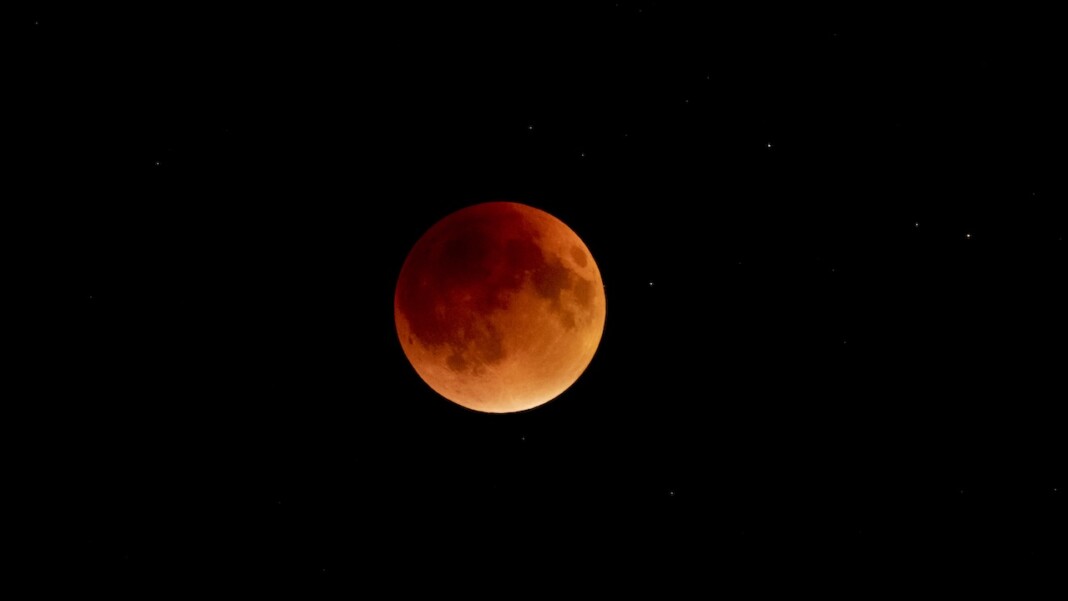
In the early morning of Tuesday, March 3, 2026, a Full Moon will slip into perfect alignment with the Sun and Earth, passing through the deepest part of Earth’s shadow in a total lunar eclipse! Expect this aptly-named ‘Blood Worm Moon’ to be a smoky copper-red for about an hour at peak, depending on where you’re watching from.
Toronto is in a good spot for this eclipse, but your best window to catch it is short (and horizon-dependent): the Moon will be low in the west as totality begins, and it sets before the eclipse is fully over.
According to TimeandDate.com, here are the best times to spot it!
- 3:44 am: Penumbral eclipse begins (subtle shading starts)
- 4:50 am: Partial eclipse begins (this is when the Moon starts reddening)
- 6:04 am: Totality begins (the Moon goes fully red!)
- 6:33 am: Maximum eclipse (deepest point of totality)
- 6:52 am: Moonset in Toronto (your viewing likely ends here, maybe even earlier if it fades near the horizon)
If you’ve never seen a total lunar eclipse in person, the colour shift can feel surreal! The Moon goes from bright grey to a muted rust or “blood” tone, and the science behind it is somewhat poetic.
According to NASA, during totality (when the Earth passes directly between the Sun and the Moon), Earth blocks direct sunlight from reaching the Moon, but some light still bends through Earth’s atmosphere. NASA describes it as the effect of sunlight filtered through a thick slice of Earth’s air, making it “as if all the world’s sunrises and sunsets are projected onto the Moon.”
March’s full moon is commonly called the Worm Moon. As per the Weather Network, it’s a name that’s associated with seasonal thaw timing (linked to the appearance of beetle larvae in early spring in the Great Lakes/Northeast region), while “Blood Moon” is the popular nickname for a total lunar eclipse (hence, the “Blood Worm Moon” mashup).
Because the Moon is setting during totality, you’ll want a spot with a clear sightline to the west as it gets very low. If you’re setting an alarm, aim to start watching by the partial phase (from 4:50 am), when the colour shift becomes more obvious.
