



Legalization of cannabis, which becomes official Oct. 17, has already influenced Bay Street and the real estate market and has attracted entrepreneurs who want to seize opportunities in this burgeoning industry. But what does this change mean for Toronto’s dining scene?
To answer that question, it’s helpful to consider other markets who have gone through the same process. In Colorado, for instance, where cannabis was legalized (Jan. 1, 2014), the sales of marijuana overtook alcohol for the first time in 2017. However, Colorado’s gross food and beverage sales in 2014 were $2,972,760,803. In 2017, the number reached $3,633,069,244.
Justin Brunson, founder of Brunson Concepts and named one of Denver’s most influential restaurateurs by Zagat, has seen legalization have an impact on his six restaurants.
However, it’s not a sudden spike in nacho sales or drop in liquor purchases or even patrons succumbing to laughing fits into their entrees that has caught Brunson’s attention. Instead, it’s the changes in the labour pool.
“I would say the only real impact on the restaurant industry would be that the cannabis industry has drastically reduced the worker pool,” says Brunson.
“Most pot shops can pay $15 plus per hour — plus full benefits — for a job that is way easier than anything in a restaurant. Turnover is at an all-time high, and we are left competing with the pot shops to fill low-level hourly jobs.”
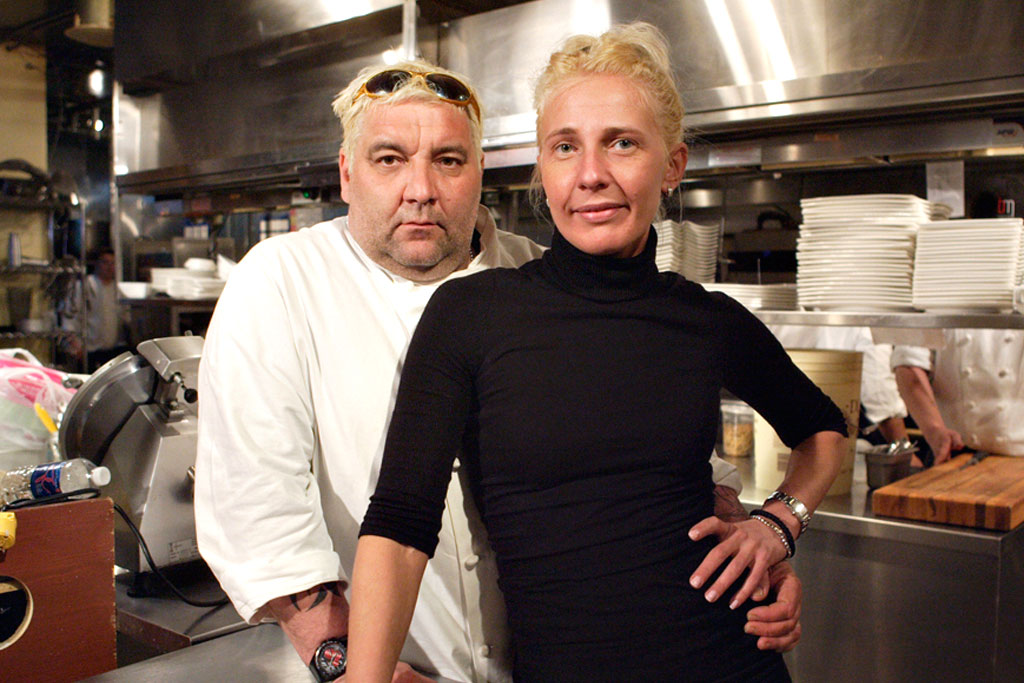
Does this seem likely for the fine dining scene post-cannabis legalization in Toronto? According to chef Marc Thuet, a fourth-generation French chef who has worked in Michelin-starred restaurants across Europe, as well as Rosewater, the Fifth and Atelier Thuet here in the city, it does and it doesn’t.
A self-described addict, Thuet, now 30 years sober, is acutely aware of what cannabis legalization might mean for Toronto’s finer restaurants.
“Liquor sales will go down, wine sales will go down. It’s possible that food sales will go up, but that’s in the Burger Priests of the world. The fast-food business will increase, but restaurants aren’t going to see any changes,” says Thuet, currently baking for the Four Seasons, Royal York Hotel and 80 other clients from his 6,000-square foot bakery in Leslieville.
“Legalization won’t change menus,” he says. “If people were smoking dope, they’d be smoking dope already. They don’t have to wait for Oct. 17.”
According to Charles Khabouth, who owns 16 restaurants in Toronto (including Byblos, Sofia and Weslodge to name a few) and serves 3,000 diners a night, pot is something from which the savvy entrepreneur can’t steer clear.
He recalls chasing cannabis companies out of his office two years ago when they pitched him on partnerships, and now — Post City has learned in an exclusive — he’s laying the groundwork for his new project Wink. A contraction of the words “weed” and “Ink,” (the name of his company), the project will operate something like the cannabis-influenced coffee shop Tokyo Smoke, which aims to serve weed in a stylish environment.
“In the beginning, I was dead against it. Charles Khabouth selling drugs? I didn’t want the connection, but when the ex–chief of police [of Toronto Bill Blair] is involved and the CEO of the largest pharmaceutical company on the planet — yeah, I’m interested,” he says. “Now, it would be weird if we weren’t part of it.”
But will it impact his hospitality business? “Outside of training our staff to observe signs in people who’ve overindulged, cannabis legalization isn’t going to change the things we do,” says Khabouth.
Hempster is a Toronto-based online cannabis community and wellness brand that designs recipes that fuse marijuana with gourmet meals. Co-founded by chef Ronnie Fishman, the company holds cannabis educational events for the public and offers home chefs instruction on how to infuse meals with marijuana flowers, oils and extracts. Fishman, a veteran of the Gusto 54 restaurant group, says that even if Toronto’s top chefs wanted to cook with cannabis, most of them wouldn’t know where to begin.
“Just because they’re chefs doesn’t mean they know anything about cannabis,” says Fishman. “People who come to our cooking demos are from Forest Hill and Rosedale. They want information on how to prepare things not to make you screwed up [from the effects of THC], but to make something delicious to eat.”
The introduction of legalized cannabis has created a Wild West atmosphere with plenty of money flying around for new business initiatives with little idea what will work and what will not. But that will all change as the industry matures and blossoms, stars emerge and laws are set. When a company such as the licensed producer Aurora is in talks to purchase brewers like Steamwhistle — and heavyweight companies like Coca Cola are trying to muscle their way in — expect the sport drink and alcohol world to also face disruption.
In the meantime, however, according to restaurant industry stalwarts like Brunson and Thuet, don’t expect abrupt changes.
“I don’t think a restaurant like Alo is designed for someone stoned. You can do it, but I don’t think Patrick Kriss is making food for people screwed up on weed, whether or not it’s legal,” says Thuet.
By and large, restaurants aren’t going to change their menus to adapt to a post-legalization world, and edibles — foods infused with cannabis — won’t even be legal until 2019.
