




The “Chino” from Uncle Pete’s might be Toronto’s most controversial sandwich, but its brilliance is hard to deny. While a mozzarella arancini tucked into homemade focaccia sounds heavy, the dish is elevated by a crucial finishing touch: Rippah Chili Oil. Yet, like many of the city’s best culinary breakout stories, this one didn’t begin in a professional kitchen. It started with a farmer’s market, ten jars and a leap of faith.
Rippah Chili Oil is the brainchild of Nicola Scott, an Aussie who moved to Toronto during the COVID pandemic to be with her Canadian fiancé. “I always wanted to live overseas,” she says. “And at the time, it just felt like the universe was telling me, go.” Toronto, with its layered food culture and constant cross-pollination of cuisines, turned out to be the perfect landing spot.
“It’s such a food mecca,” Scott says. “You can get a little bit of everything.” That “everything” is baked into the oil itself. Though Scott laughs about being “a white woman making chili oil,” her palate tells a more complex story. Raised by a mother born in Hong Kong, she grew up eating Chinese chili oils and hot sauces, later spending time in Malaysia and travelling throughout Southeast Asia.
As a result, was a chili oil born out of an amalgamation of life experiences, something unable to be replicated. “It tastes like pho and Thai tom yum had a baby,” Scott explains.
Layered with lemongrass, lime leaf and tamarind, the oil has bright, citrusy, slightly sour flavours balanced with smoky, umami depth. The kind of flavour that evolves as you eat it.
Before Rippah, Scott spent fifteen years in HR in Australia. After moving to Canada, she faced a common barrier: a lack of local experience. “No one would hire me,” she says. During that first year of instability and distance from home, chili oil became her anchor.
“I would make it for friends and family back home as gifts,” she says. “During that time, it was really the thing that got me through.” Even after landing an HR job, she kept daydreaming about chili oil. Finally, she tested it the simplest way possible: a yard sale, Dollarama jars, and a batch of 10. They sold out. “That was enough for me to quit my job,” she laughs. No business plan. No food production background. Just, as she puts it, “a lot of passion, delusion and naivety.”
The early days were chaotic, and little has changed — Scott still wears every hat. From production and deliveries to marketing and finances, she handles it all herself. This often means working late into the night, hunched over equipment in commercial kitchens she was still teaching herself how to use.
“I’d be doing production runs until 2 a.m., 5 a.m.,” she says. But growth came quickly.
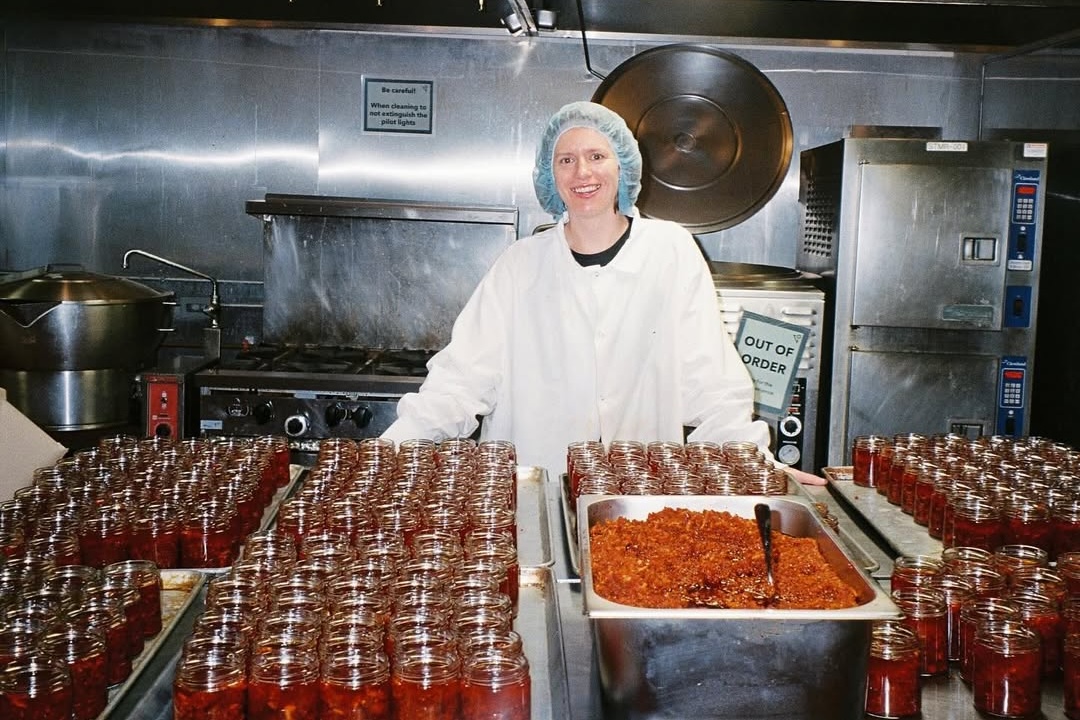
From her home kitchen, she moved into rented commercial spaces, then into a food incubator program, and now operates out of the Ontario Agri-Food Venture Centre, where she’s preparing to scale even further with new equipment. “In one production shift now, I can do around 800 jars,” she says. It’s a long way from 10.
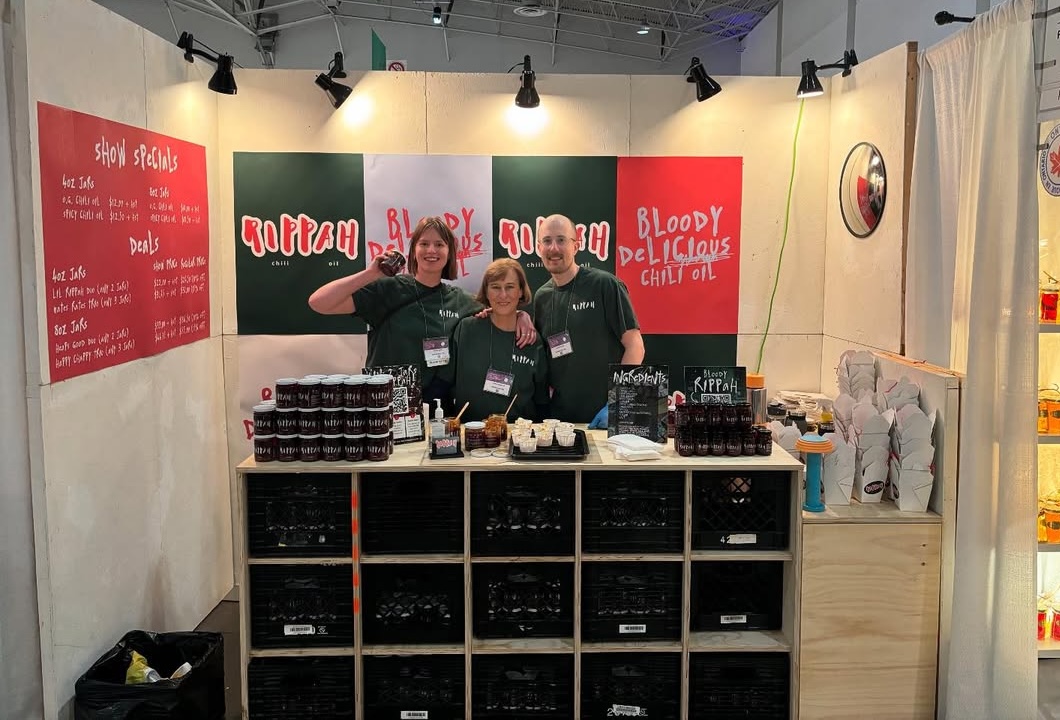
Part of Rippah’s rapid rise can be credited to the city itself. Scott began at farmers’ markets, using them as a testing ground. Tweaking her recipe based on real-time feedback and figuring out what people actually wanted from a chili oil. Then came the One of a Kind Show. “That was the rocket launcher for my business,” she says. It introduced her to a wave of new customers, industry connections, and opportunities — including retail
placement. Today, Rippah Chili Oil can be found at Summerhill Market, with plans to expand into larger grocers like Farm Boy and Whole Foods.
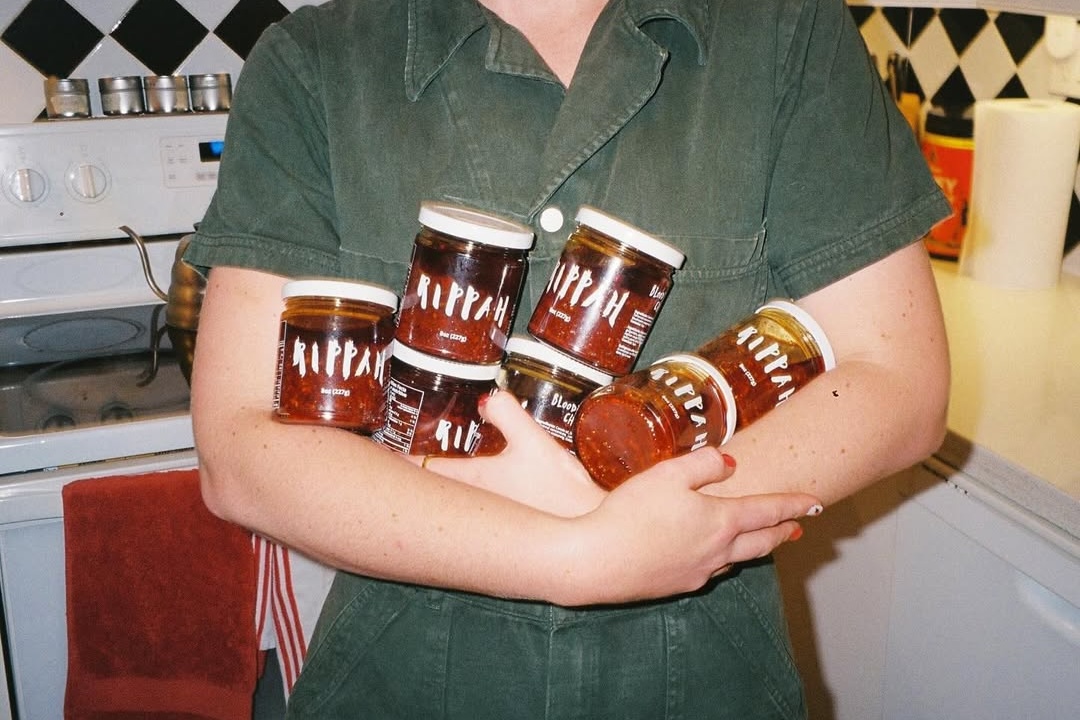
It isn’t just retail where the brand is making an impact; Toronto’s restaurant scene has taken notice. At Uncle Pete’s, the oil has become a defining ingredient, adding heat and complexity to the already showstopping Chino. The reach is even extending beyond the city— at Poppies Bagels in Orillia, it’s drizzled over fresh cream cheese. For the home cook, Scott suggests whisking it into mayo for fries or stirring it into coconut-based curries and noodle dishes. “It pairs really well with anything with coconut milk,” she says. “Or like a peanut butter, chili oil, soy, lime noodle situation.”
Chili oil is on the rise in Toronto, but Scott notes she’s not alone. Brands like Zing, Magic Taste, and others brought chili oil into the mainstream during COVID, paving the way for smaller producers. “Because it’s still so new, we all advocate for each other,” she says. “If someone buys another brand’s chili oil, that’s still a win. It means they’ve been converted.” It’s a rare camaraderie, supporting each other through collective momentum. “It really takes a village,” she adds. Scott’s vision to expand into more retail and food service is ambitious but achievable, with Rippah’s set to work with restaurants, caterers, and hotels to integrate the oil into signature dishes.
Expect to see Rippah integrated into signature dishes at restaurants, caterers, and hotels across the province soon.
