Home Blog Page 371

The AGO’s bold new Picasso exhibition set to open to the public

0
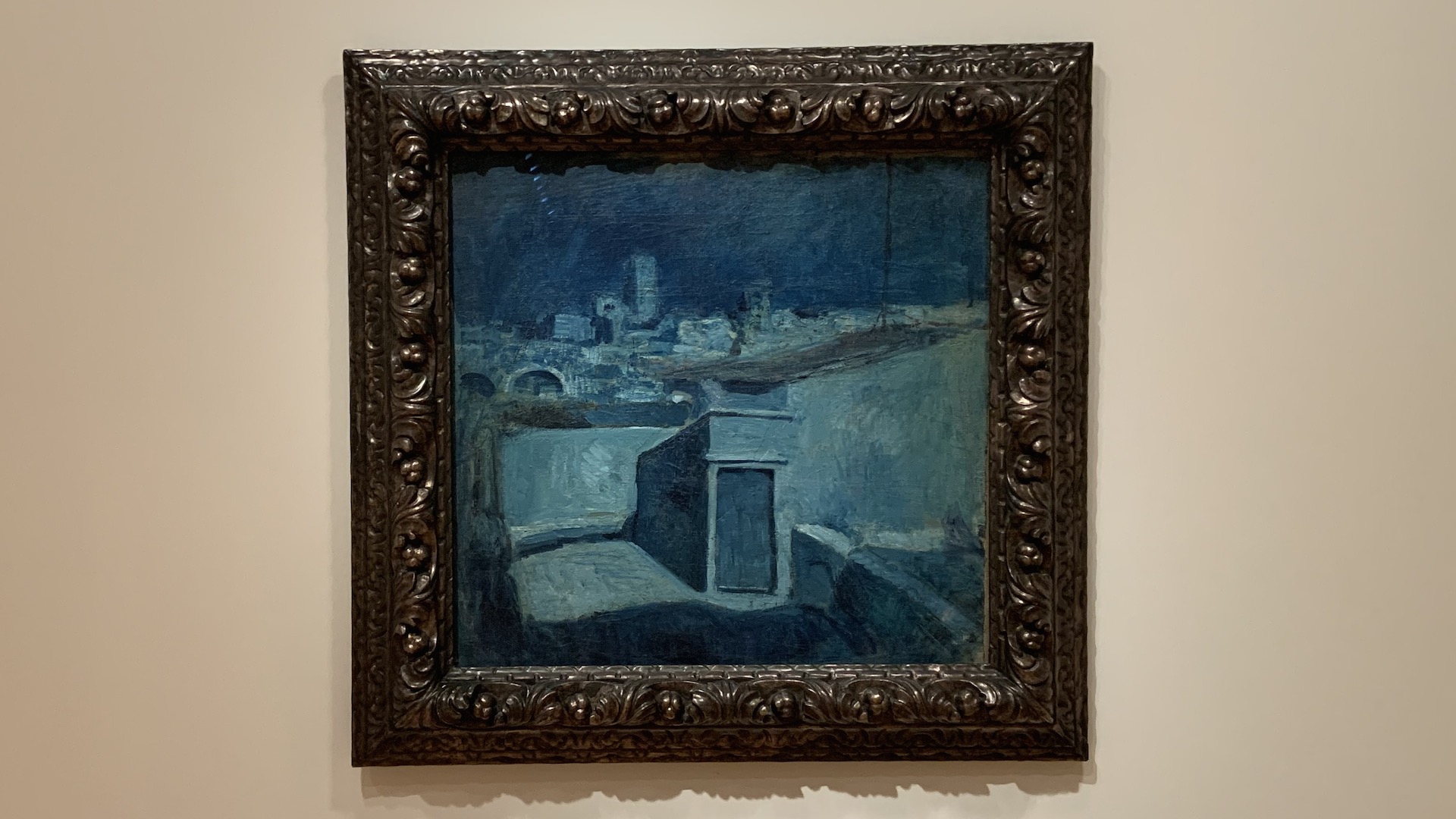
Pablo Picasso. Blue Roofs, Paris, 1901. © Picasso Estate / SOCAN (2020), Photo © Ashmolean Museum, University of Oxford.

As far as exhibitions go, Picasso: Painting the Blue Period is a very big deal. The AGO’s hotly anticipated new show is open now to gallery members and will open to the general public on Oct. 26.

TRNTO had a tour of the exhibition recently, as well as a chat with the exhibition’s c0-curator Kenneth Brummel, the AGO’s associate curator of modern art, who put the expansive and important show together alongside Dr. Susan Behrends Franks, curator at The Phillips Collection.

Picasso: Painting the Blue Period has more than 100 objects from 15 countries and is co-organized by the AGO and The Phillips Collection, Washington, DC with the support of the Musée national Picasso-Paris.

Picasso is, without dispute, one of the most influential artists of the 20th century, and is well-known for his founding of the cubist movement. This exhibition takes a look at the early works of the master concentrating on his “blue period,” in the very early 20th century from 1901-1904 as the artist was just starting out and developing his characteristic style.

“Two Women at a Bar” circa 1902. (© Picasso Estate/ SOCAN 2021)

The collection comprises works from around the world, and Brummel suggests the prizes of the show are five works pulled together from different areas of Japan, which have never been shown in public together until this exhibition. He says, all told, he’s been working on putting together this show for seven years.

The show begins with two rooms dedicated the Picasso’s early works: Becoming a Modern Artist, and Depicting the Nude, both with works from 1901. The signature work in the first segment of the exhibition is The Blue Room, which is the subject of an investigation by the curatorial department that plays out later in the exhibition as another work is discovered underneath the painting.

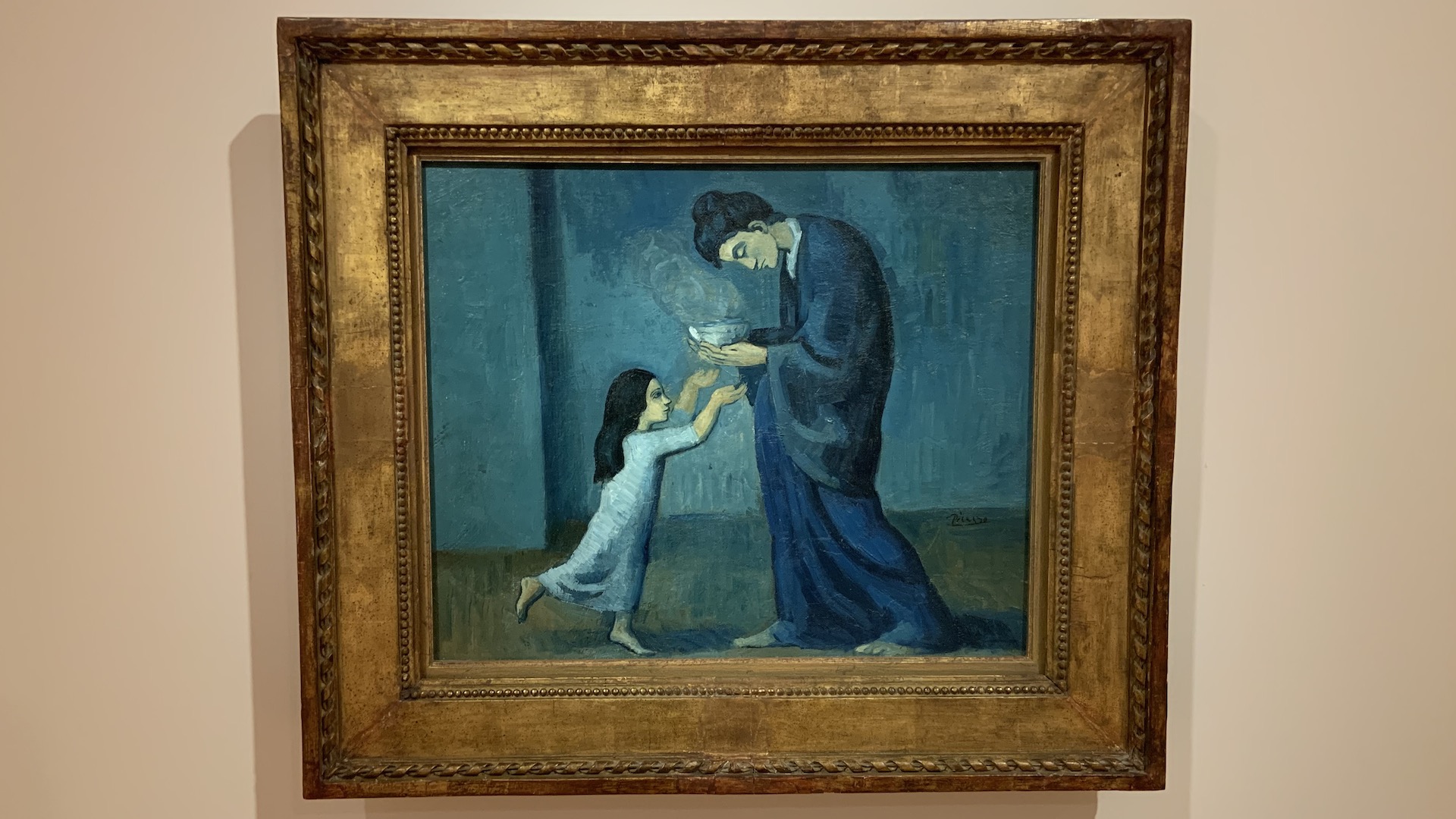
The exhibition kicks it up a notch over the next few rooms when the significant works of the Blue Period come to bare including pieces such as Woman in Blue Shawl (1902), Two Women at a Bar (1902), Barcelona Rooftops, and La Soupe, all from 1902. The Soup is also the subject of another thorough exploration through sketchbooks and complementary material before the exhibition touches on the subsequent and substantial Rose Period.

“Le Soupe” 1902. (© Picasso Estate/ SOCAN 2021)


“Barcelona Rooftops” 1902 (© Picasso Estate/ SOCAN 2021)

The final rooms show Picasso’s progression as an artist and his burgeoning interest in issues related to the plight of humanity.

The vast majority of Picasso’s most notable works, ones that are known best by the greater population at large come later in the artist’s career. After all, he managed to live until he was 91 and it has been estimated that he created more than 13,000 works. This show touches upon a handful of those years. But it is always interesting to look at the early and formative periods that reveal who the artist was, how his interests and style developed and why. Picasso is a fascinating figure, and the Art Gallery of Ontario has created an enjoyable and immersive deep dive into an important period in his life.

Picasso: Painting the Blue Period runs until Jan. 16, 2022.

The opening of the Picasso exhibition to the general public coincides with the closing of another popular show featuring the work of acclaimed pop artist Andy Warhol, which closes Oct. 24.

Space traveller William Shatner headlines Fan Expo Canada

0
Shatner coming to Fan Expo Canada
William Shatner, part of the NS18 mission team (photo: @clubforthefuture)

Fresh off his trip into space, Canadian pop culture icon William Shatner is set to headline Toronto’s Fan Expo Canada this weekend.

It’s time to dust off your cosplay outfit because Fan Expo, the largest comic book, sci-fi, anime, horror, and gaming event in Canada, returns after a two-year hiatus to Toronto’s Metropolitan Convention Centre on Oct. 22-24.

Operating under a “limited edition” format due to COVID-19 restrictions, 25,000 genre enthusiasts will have the opportunity to get their game on and rub elbows (through a plexiglass barrier) with celebs and artists from around the globe.

The star-studded lineup of celebrity guests includes Star Trek’s William Shatner and George Takei, Resident Evil’s Robbie Amell, James Marsters (Spike!) from Buffy the Vampire Slayer, comedians David Finch and Ken Lashley, and Canadian cosplayer Jillea.

Aside from buying stuff (like that missing Captain America comic book missing from your collection) and checking out the elaborately dressed cosplayers, not to mention the photo ops, autograph signings, and Q&A panel discussions, fans can unwind in the all-new anime screening room, which will be showing episodes of Sailor Moon, Naruto and Cowboy Bebop and more.

Also new to the event, Marvels Avenger S.T.A.T.I.O.N where you’ll find Avenger’s agents roaming around, trivia and giveaways, and “one of a kind” merch.

Bringing the kiddos? Young fans can join a princess singalong, compete in a lip-synch battle, build their own plushie or take part in a sorting hat ceremony on the show floor. There will also be meet-and-greets with professional costuming groups including The Ontario Ghostbusters and the Toronto Steampunk Society throughout the weekend.

Cosplay will take centre stage thanks to leatherworking and wig styling workshops, panels, and competitions and you can (safely) hobnob with professional cosplayers including Luckygrim and WendyYukki or hit the Cosplay Red Carpet and have a free photo taken by Droo Photography.

Attendees will need to follow safety protocols and show proof of vaccination. Social distancing measures are also being enforced with wider open venue spaces.

For the full lineup visit Fanexpohq.com.

One of Toronto’s coolest Korean restaurants is opening a huge Midtown outpost

0

OddSeoul, a staple on the Ossington strip for its late-night Korean small plates and chill vibe, is opening a new spot on Dupont Street later this month. The new venture, called Neon Tiger will open Oct. 28 and offer a similar Korean-inspired menu complete with boldly flavoured snacks and fun cocktails. 

You may recognize the new venue as the former Playa Cabana Hacienda, popular two-story taco place known for its massive 90-seat patio and festive decor. David Sidhu of the Playa Cabana empire became a good friend of the OddSeoul team during the height of COVID-19, prompting the sale of the venue. 

“We were waiting for the right time and the right climate to open. Our hope is to create a new legacy for this legendary location and make Playa Hacienda Proud,” says Naveen Chakravarti, owner of OddSeoul and Neon Tiger. 

Starting with dinner service and moving to offer brunch and lunch in early 2022, the new spot is spacious, with 90 seats indoors and up to 130 available on the patio. Neon Tiger echoes the same chill energy you’d find at OddSeoul, with good music and that relaxed, effortlessly cool feel you might find at a dive bar – but now with a ton more space. 

As far as food goes, eager patrons can expect a carefully curated menu of fun and approachable food and drink options that fuse Asian flavours with classic comfort food staples. Drawing inspiration from its sister restaurant, the menu is stacked with savoury small plates like scallop tacos – a Western take on the Vietnamese salad roll or simple but refreshing drinks like the Soju and 7 – a Korean twist on the classic highball cocktail typically made with whiskey.

Executive chef and food industry veteran Wes Haines, whose culinary credits include Gusto 101, Mildred’s Temple Kitchen, Bar Centrale and Little Portugal pizza place, Prohibition Pie, is running the show in the Neon Tiger kitchen. He hopes the new spot serves as a nod to the hipster charm of OddSeoul, bringing some of that same energy just north of Bloor.

“OddSeoul is an institution and with this new venue, we are still serving many of OddSeoul’s classic dishes, like the fan favourite bulgogi cheesesteak, but also trying to branch out and offer more pan-Asian flavours and try new things.”  


Toronto just got a giant beer hall and the fish tacos look amazing

0
Fish tacos are a popular pick.

Self-proclaimed ‘leader of the craft beer dining revolution,’ Beertown, has finally made its way to the big city. In addition to a long list of craft beers, ciders and wines reflecting the ever-evolving Ontario craft beverage scene, this family-friendly joint offers an equally extensive food menu sure to please all ages and tastes.  

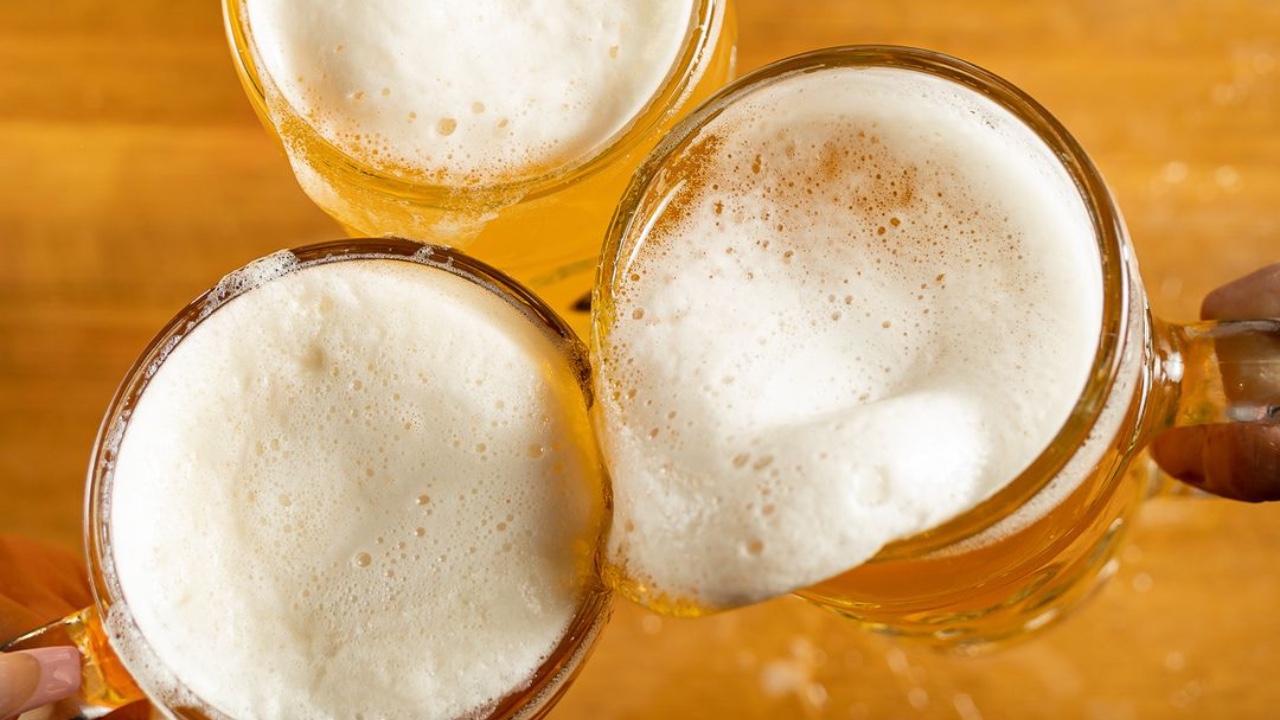
Beertown’s rotational beer program is ever-changing, offering exclusive releases, and limited run beers you won’t find at your local liquor store. They work closely with brewery partners to be the first to pour Canadian releases, like the country’s first ever non-alcoholic beer on draught, Omnipollo’s Konx.

Beertown

They also bring new beers to Ontario from abroad including – but not limited to – Duchesse Flanders Red Ale, Stone’s Arrogant Bastard and more. Try something new, like the Soleil Kettle Sour, brewed with blood oranges and vanilla in partnership with Storm Stayed Brewery out of London, ON. Or, stick to something closer to home like local fan favourite Bellwood’s Fruit Jelly King.

Beertown’s rotating taps and bottle selections have variety of ciders and gluten-free brews.

If cocktails are more your style, they have a partnership with Willibald Distillery in Ayr, Ontario to offer a fantastic cocktail on tap – the Farmhouse Limeade (featuring Willibald pink gin, freshly brewed hibiscus tea, lime, simple syrup and a splash of soda) in addition to more classic, signature and beer cocktails.

The food menu offers the same endless stream of variety, anything from fish tacos to pad Thai and all the typical pub food fare in between. Beertown has also developed stand-alone plant-based and gluten-friendly menus appealing to the full spectrum of dietary restrictions. 

Expect everything from typical pub fare to riffs on a few classics.

Owned by Jody Palubuski, former general manager of Toronto spot The Loose Moose, he has spent the past decade opening Beertowns in cities across the province including Barrie, Burlington, Oakville and London with Toronto being the latest venture, officially opening its doors mid-August of this year. Each Beertown location has the feel of an independent restaurant with the same focus on authenticity in food, drinks and service. 

“As a group, we went into the pandemic with five Beertown locations and came out of it with eight,” says Palubski. A testament to their rock solid business model and passion for what they do. 

An indoor-only spot with a capacity of 228, the Café TO program allowed Beertown Toronto to expand into a temporary patio, providing patrons an additional 28 seats outdoors.

Beertown is spotlight a series of Bavarian brews for the month of October.

Inside is an open concept layout complete with moveable glass walls that open directly to the sidewalk, providing an unobstructed view and connection to the lively Wellington and University Avenue street corner. 

For maximum family-friendly appeal, the spot strikes a perfect balance between lively and comfortable, marrying industrial style elements with pops of colour to create a distinct look and feel. A long saloon style bar handcrafted from zinc is soldered, welded and riveted in place while handmade light fixtures hang from the exposed pipe-lined ceilings, paying homage to the Beertown team with numbers and letters hidden in the design.

A look inside Beertown Toronto

In a city full of breweries, Beertown stands out because of its approachability. You can find local craft beers as well as some bigger names appealing to a broader audience. Their mission is simple: create a public house for the community.  

“Some have described us as a “gateway beer bar” and we are happy to take on that moniker; we’ve created a public house for the community – a space where you can kick back, relax, and come together with friends to celebrate good drink and food.”

You can head to the 125 Wellington Street West location Sunday to Wednesday from 11:00 a.m. to 11:00 p.m. and Thursday to Saturday from 11:00 a.m. to midnight.  


Top Chef’s Rob Rossi just opened a Northern Italian osteria in Yorkville

0

Following the massive success of opening his restaurant Giulietta in the spring of 2018, chef Rob Rossi (who appeared on season one of Top Chef Canada) has once again partnered with David Minicucci to bring a taste of Northern Italian fare to Toronto’s Yorkville neighbourhood.

Osteria Giulia opened on Oct. 2 at 134 Avenue Rd. Designed by Guido Costantino, Osteria’s interior is hyper minimalist, featuring natural wood and wicker dining chairs, pale hardwood floors, and a modern wood-panelled bar that’s stocked with spirits from around the world.

The Food

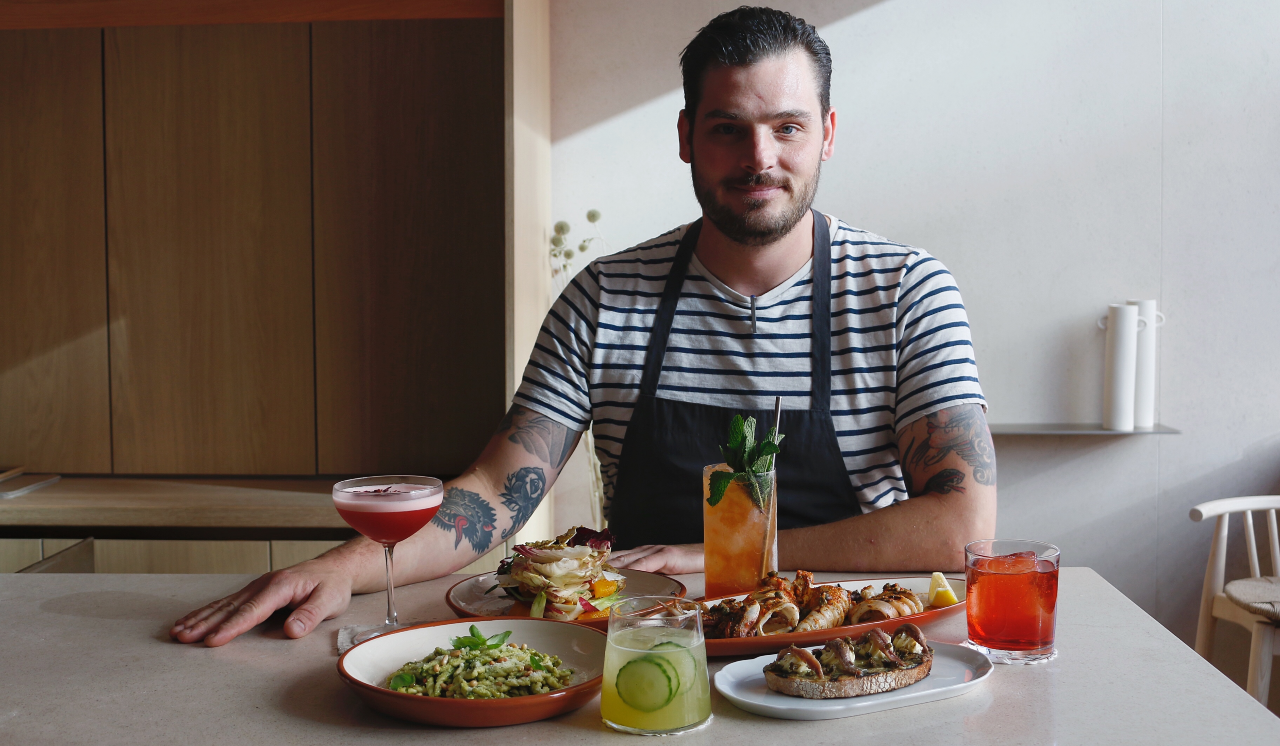
“Osteria Giulia is a Northern Italian coastal restaurant that’s very heavily focused on seafood, pastas, vegetables, and risotto,” Rossi says. “We wanted to keep the restaurant very simple, minimalist, and clean, and let the room speak for itself, with the food and the people being the accents. The inspiration for the food was to breathe new life into some classic Italian dishes, but still keep them very simple and honest,” Rossi says. The menu will also rotate different dishes, as ingredients come and go with the seasons.

Chef Rob Rossi

“I think it’s very important that the menu does change, because much like Giulietta, we like to change the menu at least three to four times a year,” Rossi continued. “Cooking Italian is all about using local ingredients, so we try to do that as much as possible here to create great Italian dishes.”

The anchovy and whipped butter toast is topped with roasted garlic and crispy capers.

The trofie pasta is done with a basil pesto and served with lots of pine nuts and pecorino cheese.

The chicory salad is light and refreshing, but retains a bitter bite, and comes stacked in layers,highlighting ricotta salata, heirloom chicories, lemon vinaigrette, and pistachios.

The grilled calamari brings some heat thanks to a sauce that blends chilli garlic, white wine, parsley, oregano, lemon, and capers.


The Drinks

Over at the bar, which seats eight, bartender Iain Codona has created a cocktail program that aims to highlight the same fresh approach Rossi has taken with the food menu. “It’s definitely in keeping with Rob’s philosophy of taking good ingredients and treating them with respect and preparing them simply with the guest in mind,” Codona said. “There’s a lot going on in our cocktail program, but they’re all plays on classics,” Rossi added. “My favourite is actually the Marsala Cobbler; it’s fresh and classic, with beautiful flavours.”

The Marsala Cobbler ($19), which is a riff on the classic sherry cobbler, mixes Pimento Marsala wine, lemon and almond, Angostura bitters, and Amontillado sherry, topped with a sprig of fresh mint.

The Messicano ($18), Osteria Giulia’s top-seller, is a tequila-based cocktail that blends white tequila, green Chartreuse, mint and basil cordial, a hint of lime juice, and served with refreshing sliced cucumber.

The Dopo L’Avoro ($17) is a dark pink aperitivo that’s a sour take on an Americano cocktail made from shaken egg whites, select bitters, and a mix of Vermouth red and whites, topped with a dried hibiscus flower. 

Osteria Giulia also puts a twist on the classic negroni ($19). Still using a mix of London dry gin, sweet vermouth, and campari, Codona adds a branded stamp on a big piece of hand-cut ice, and sprays it with distilled orange oil for a flavour that brings an extra touch of citrus.

You can stop by Osteria Giulia Tuesday to Saturday from 5:30 to 10:30. Walk-ins are limited, so be sure to book a reservation in advance.


This new Canadian clothing line claims to kill COVID-19 particles on contact

0
NONIE

You’ve got your masks, you’ve got your physical distancing, you’ve got your vaccine, but don’t forget your… trench coat? That’s what Canadian brand NONIE, worn by the likes of Megan Markle, is suggesting with their new antiviral trench coat that has the potential to stop the spread of COVID-19 & SARS viruses.

The fully recyclable, sustainable womenswear brand has partnered with patent-protected athletic scrubs brand FOLDS to make the outerwear staple you apparently didn’t know you needed.

Beyond the clean lines, roomy shape and earthy, muted colourways that make the trench wearable, the brand is using patent-protected nanotechnology to fuse every fiber of the garment with silver and carbon ions. This purports to kill COVID-19 & SARS viruses immediately, preventing them from multiplying on the fabric. The fabric also has zero microfiber release which stops the virus or bacteria from coming off the fabric and being inhaled by the wearer or someone nearby.

NONIE isn’t the first to bring pandemic-conscious clothes into the fashion scene; Diesel claimed to create anti-viral denim material to stop COVID in 2020, an Italian luxury brand called Albini Group created a Viroformula fabric for companies like Prada and Armani that uses silver to kill the virus upon contact and Toronto-based biotech company IFTNA created an anti-viral chemical fabric coating claiming to do the same.

When asked if antiviral materials will become a mainstay in fashion design, NONIE founder, Nina Kharey is hopeful.

“Clothing needs to be more functional now. It absolutely has a role in protecting us.”

Retailing at $790.67, the trench definitely comes at a price, but may provide some stylish peace of mind for the more COVID-conscious, fashion-forward shopper.

Experts have stated that COVID-19 mostly spreads through airborne respiratory droplets, and it’s been largely reported that the virus rarely spreads through surfaces, or fomite transfer. So it’s likely COVID-killing technology in clothing fabric will only do so much to stop the spread – but for the extra pandemic-conscious consumer, this might make you feel a little safer during those shopping trips to the packed grocery store.

Kharey says that a shift in recent years toward more purpose-driven purchasing has heavily influenced demand for brands, like NONIE, that offer 100% recyclable, sustainable clothing options.

“I think people are becoming more and more aware of the waste and consumerism in the [fashion] industry.”

You may recognize the brand from pictures of 2018-era Meghan Markle, who was spotted not once, but twice wearing a sleeveless, belted NONIE trench dress. With re-wear potential fit for a Duchess and an eco-conscious, socially responsible approach to design, NONIE’s pieces (known in the sustainable fashion world as “circular garments”) are sure to become increasingly popular.

“Fashion is one of the biggest polluting industries in the world,” says Nina. “Fashion needs to become more eco conscious; the industry contributes over 40 million tonnes of fabric to landfills every year.”

If you’re interested in buying into the newest COVID-era fashion and technology and you’re on the market for a new fall coat, this might be the purchase for you!

Artist unveils a four-storey art installation in Toronto for local cause

0
Mazzone mural for Shoebox Project

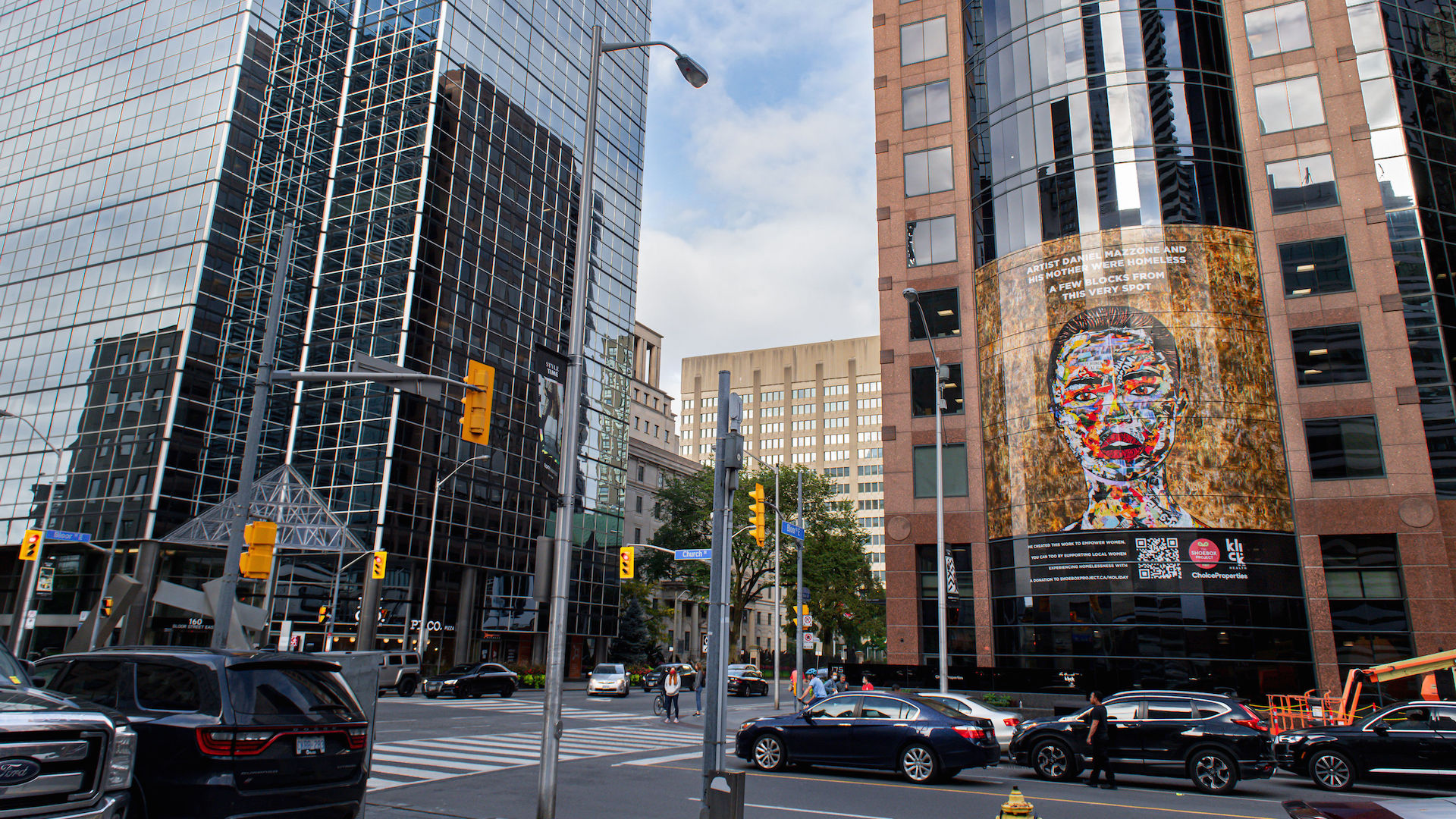
Canadian artist Daniel Mazzone unveiled Maria – a captivating four-storey art installation depicting a woman fighting to be heard. The large-scale portrait is in support of The Shoebox Project for Women aiming to help bring compassion and dignity to local women experiencing homelessness.

The activation kicks off the Toronto-based charity’s holiday fundraising campaign, which collects gift-filled Shoeboxes and messages of support, distributing them to local women impacted by homelessness.

“I got the inspiration for this project a lot because of my mom being a strong woman while growing up and her being homeless. I wanted to be able to give back to people in the same situation,”  Mazzone says.

Mounted on the front of Klick Health’s Toronto HQ at the corner of Bloor Street E. and Church Street, the activation is complete with a QR code that drives individuals to The Shoebox Project website for more information and/or to make donations.

The artwork will be up through the end of the year.

To watch our full interview with artist Daniel Mazzone, click here.

About the Shoebox Project for Women: The Shoebox Project for Women is a national registered charity that is dedicated to sharing empathy, kindness, and compassion with local women impacted by homelessness through the collection and distribution of thoughtfully curated, gift-filled Shoeboxes and messages of support. Over the past 10 years, the Toronto-based charity has distributed over 240,000 Shoeboxes across Canada, the USA, and the UK, and an additional $1.2 million worth of gift cards and essential products directly to local women and gender-diverse people accessing over 510 shelters and community agencies. 

About Klick Health: Klick Health is the world’s largest independent healthcare marketing and commercialization partner. Headquartered in Toronto, the company was established in 1997 and has consistently been named a Best Managed Company and Great Place to Work. In 2020, Klick was recognized with 14 Best Workplace awards, including Best Workplaces for Giving Back, Best Workplaces for Women, Best Workplaces for Inclusion, and Most Admired Corporate Cultures. This project will mark Klick’s first as a title sponsor of The Shoebox Project following five years of supporting the charity through both monetary and Shoebox donations. 

Toronto bakery and pizzeria is serving up the biggest slice in the city

0

Toronto’s Lamanna Bakery is adding to the great Toronto debate on the best pizza in the city, while at the same time making serious social media noise far beyond the city’s boundaries.

What’s one of the quickest ways to get Torontonians to disagree? Ask them where to get the best pizza in the city. Toronto is home to a staggering number of mouth-watering pizza joints serving up a plethora of options from deep-dish and Neapolitan to plant-based and gluten-free. And while the best pizza debate will continue to rage on, one Toronto bakery has taken the crown for serving up the largest pie in the city.

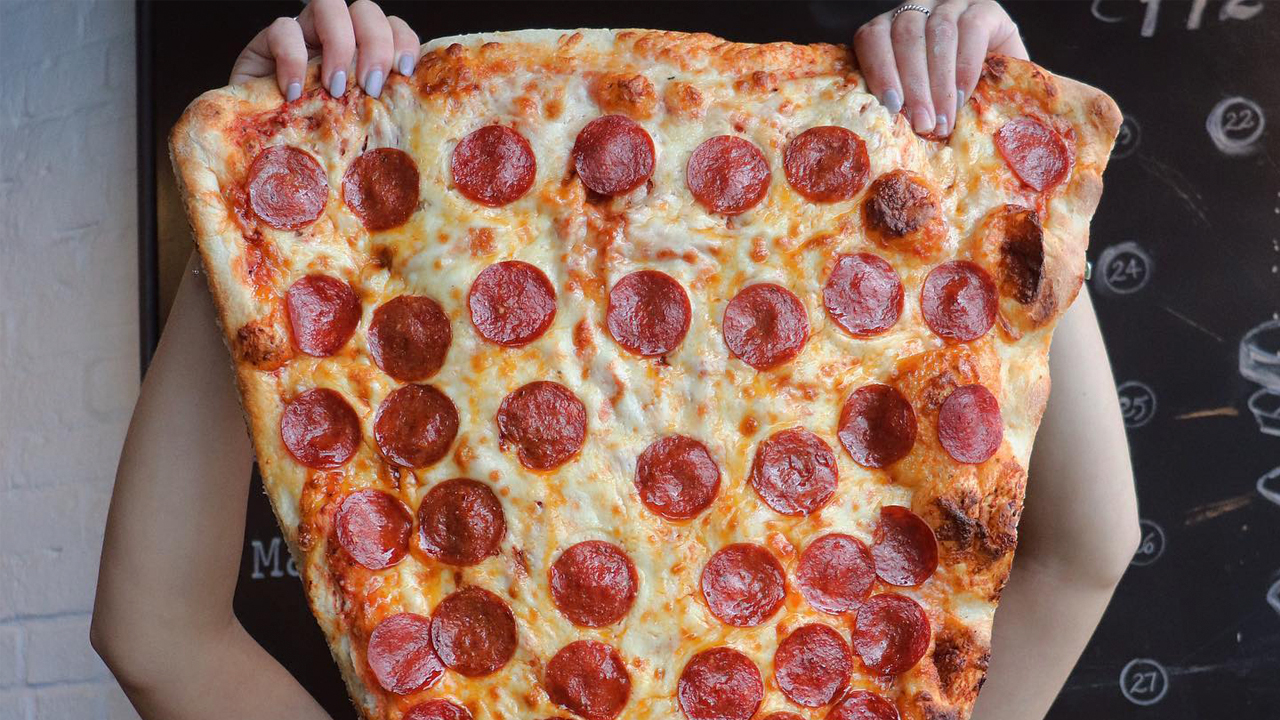
Lamanna Bakery, located at 6758 Kingston Road makes jumbo – 28-inch – slices of pizza. Dubbed the Big Slice, these supersized creations are racking up the Insta likes thanks to a menu ranging from the classics like the Italian Margherita and the simple Americano to non-traditional options like the grilled cheese – a slice covered in a dozen or so mini-grilled-cheese sandwiches and the Poutine loaded with French fries and smothered in gravy.


View this post on Instagram


A post shared by Lamanna’s Bakery (@lamannabakery)

And let’s not forget that Lamanna’s is also a bakery, so dessert slice options are as drool-worthy (and photographic) as their savory cousins. There’s the birthday cake Big Slice which, you guessed it, is topped with buttercream and birthday cake, and the Simpson, topped with pink dipped sprinkle donuts. Dessert lovers can get their fix with other decadent options that include churros, brownies, and cannoli.

The bakery is run by brothers Joe, Lorenzo, and Dave Lamanna who opened it for their parents, Peter and Rosa back in 2004.

“Our original idea was a small and cute boutique bakery which would feature some of their favourite recipes,” says Dave, whose parents emigrated to Canada in the early 60s and worked in bakeries for most of their lives.

And Lamanna’s is truly a family affair: Rosa is the master baker and head of the kitchen, Peter makes all the bases and dough (and has been using the same recipe since the 1970s), Lorenzo is the head baker and creative director, Joe is in charge of the gelateria, coffee, and retail while Dave is busy with pastries, cookies, and overall management.


View this post on Instagram


A post shared by Lamanna’s Bakery (@lamannabakery)

“Our parents have a great sense of humour so they were always supportive of whatever we wanted to do,” says Dave, when asked how his traditional Italian parents reacted to their non-traditional menu additions. “The main thing for them was that no matter how crazy we take things, we needed to ensure it tastes good.” And they’ve continued to lure locals and tourists alike with a diverse menu that doesn’t take shortcuts when it comes to quality and creativity.

Few places have become as food-obsessed as Instagram and Lamanna’s has certainly capitalized on this with its inventive options, boasting a social media following of just under 150,000. There’s also been major attention from south of the border including a write-up in People Magazine and a feature on Good Morning America. There was also that one time Shawn Mendes showed up with a bunch of friends. No big deal.

While the shop is currently only offering takeout, Dave hopes to resume indoor dining in the new year.

“We do miss the social experience that Lamanna’s has brought over the years, so hopefully we can get back there soon,” he adds.

Kortney Wilson on revitalizing your bedroom’s vibes for the winter

0
HGTV Canada

Fall is here, and the change of seasons might have you itching for a modification when it comes to home design. Instead of a full home renovation, making simple decor alterations to arguably the most important room in the house – the bedroom – might be all you need. We spoke to HGTV’s Kortney Wilson about some of the key ways to invest in freshening up your bedroom.

Where do you start to change the vibe of a bedroom?

HGTV Canada

Layers. Layers and more layers. The key to making a bedroom feel warm, comfy and glamorous is layering linens. Step one: start with some clean, fresh white sheets. In the end, even with pets and kids, they can be bleached. Step two: find a beautiful comforter or a duvet cover and overfilled duvet. By going with a duvet cover and investing in a really nice duvet, you can change up the look from season to season.  Step three: have four fresh pillows that don’t flop over when you sit them up. Two that match the sheet set and two shams that match the duvet, a quilt or accessorize with the room.

What are some low-budget ways to make meaningful changes to your room?

An inexpensive way to create a put-together look without spending a fortune on a headboard is to put some peel and stick wallpaper on the accent wall behind the bed. Buy a couple of extra-large pillows to create a cosy backdrop. This works really well in kids’ and dorm rooms but even in staging houses. I’ve been known to just buy a bed frame and let the accent paint or wallpaper create the backdrop.

Some higher-budget ways?

Adding a quilt over the sheets and using a higher thread count will give a luxurious feeling. The weight and softness of the sheets have also been known to be helpful for a good night’s rest. I’ve also experimented recently with weighted blankets in lieu of a quilt and then layered with a fluffy-filled duvet.

Why is the place we sleep in such an important and focal part of home design?

It’s our place of rest. A long time ago, I was in need of a mattress, and a friend suggested that I go with a fairly expensive one. I was really having a hard time getting over the price. She told me that I’m going to spend nearly half my life in that bed (clearly this was pre-kids) and I should invest in a good night’s sleep. It was the best decision I made. Years later, I took it a little bit further recognizing that walking into my bedroom was my place of refuge. Investing in a space that also made me happy when I walked in and gave me the feeling of peace and solitude affected how I ultimately fell asleep. In this crazy world, it becomes the little things that make a difference in daily life.

What are some of the biggest mistakes people make when designing the look for their room?

HGTV Canada

The biggest mistake that I see over and over is not having symmetry in the bedroom. One way to do it is to have two side tables on either side of the bed that are exactly the same with lamps that are exactly the same. You can change up the accessories like candles and picture frames, but the bulk of what’s there should ground the space. Often people use mismatched things from different parts of the house just to have somewhere to put their coffee cup in the morning. Invest in some nightstands and lamps for beauty, ambience and function.

Toronto’s favourite salad joint just opened a spot on Eglinton where Bar Buca used to be

0
Fresh Eglinton

Fresh Restaurants has opened a new spot at 101 Eglinton Ave. E., taking over the former Bar Buca.

Bar Buca permanently closed in October 2020 after the owners were evicted from the property for failing to pay rent to the landlord, and accumulating $22,000 in debt. Starting out as a stand-alone juice bar 20 years ago, Toronto’s first hot spot for raw and cold pressed juices has become the city’s largest plant-based restaurant chain, and currently has 10 locations scattered throughout the GTA.

The new spot is located right across from the chain’s original location, which was 90 Eglinton Ave. E.


View this post on Instagram


A post shared by Fresh Restaurants (@freshrestaurants)

The new space is bright and airy, with a series of new design elements. The wooden pantry shelves are stocked with a rainbow assortment of cold pressed juices, while also displaying an array of products from small and local businesses. An earthy colour scheme carries throughout the interior of the restaurant, where olive green tiles flank the serving counter, wallpaper with vibrant orange tangerines coats the walls, and plush light grey velvet chairs and powder blue booths make up the indoor dining area.

Fresh on Eglinton has a regular menu as well as a gluten-free menu that’s packed with all of your favourite snack foods like sweet potato fries and quinoa onion rings, as well as handhelds like burgers, wraps, and flatbreads. Of course, the classic salad and protein bowls are all available as well, using only the healthiest, freshest ingredients.

Fresh Eglinton is currently open for walk-ins and reservations everyday from 11:30 a.m. to 10:30 p.m.

Fresh Retail is also available for takeout and delivery on the Fresh Restaurants app, Uber Eats, DoorDash, SkipTheDishes and Ritual.

This celebrity photographer has worked with everyone from Meghan Markle to Drake

0

Caitlin Cronenberg has managed to hit the sweet spot in her career. The artist has photographed some of the biggest names in the world (most notably, the cover and art for Drake’s much-memed 2016 album, Views), and her art has graced the covers of Vogue and W Magazine. She has also been able to leverage her talent and acclaim to pursue more creative projects, including a recent NFT short film in collaboration with well-known Toronto horror filmmaker and her father, David Cronenberg.

But Cronenberg says it took her some time to get to the point where she could do the kind of work she was passionate about.

“I was sort of paying my dues at first. I spent a lot of time doing things that were out of my comfort zone and not really where I saw myself,” she explains, in reference to event photography she started out doing with Hello Canada. “I didn’t love it, but I got a lot out of it. I met a lot of interesting people, and I had experiences that I wouldn’t necessarily have had otherwise.”

Cronenberg says it was when she eventually quit events photography for good that she knew she had developed enough confidence to pursue this career the way she wanted to.

“I think taking steps to only do the kinds of jobs that you want to do is kind of telling yourself that you feel confident in your ability to only take on certain kinds of jobs,” she says.

She started doing film stills, which she says was an “incredibly busy” field but was what enabled her to do photography full-time.

Since she was a child, Cronenberg says she’s always known she wanted to do something creative as a career, and she was influenced by a family full of creatives. In high school at Bishop Strachan School, Cronenberg remembers they installed a darkroom during her final year.

“I basically just moved into the darkroom,” she says. “It made sense to me. I wanted to capture images and create art that way. And it sort of all fell into place.”

Cronenberg has certainly fulfilled that dream, although she would say she has yet to feel like she’s “made it.” But you would be forgiven for thinking that she has, considering her credits so far: she’s photographed everyone, from Megan Markle to Robert Pattinson to Jennifer Lopez, and has published two books of photographs. Her second one, The Endings, featuring the likes of Keira Knightley and Julianne Moore, led to a directing credit as Cronenberg transformed the book into a short film that debuted at TIFF in 2018.

She hopes to take that further and direct film features and says there are some “great projects” on the horizon.

Toronto florists are facing a major flower shortage with no end in sight

0
Alisa Anton/Unsplash

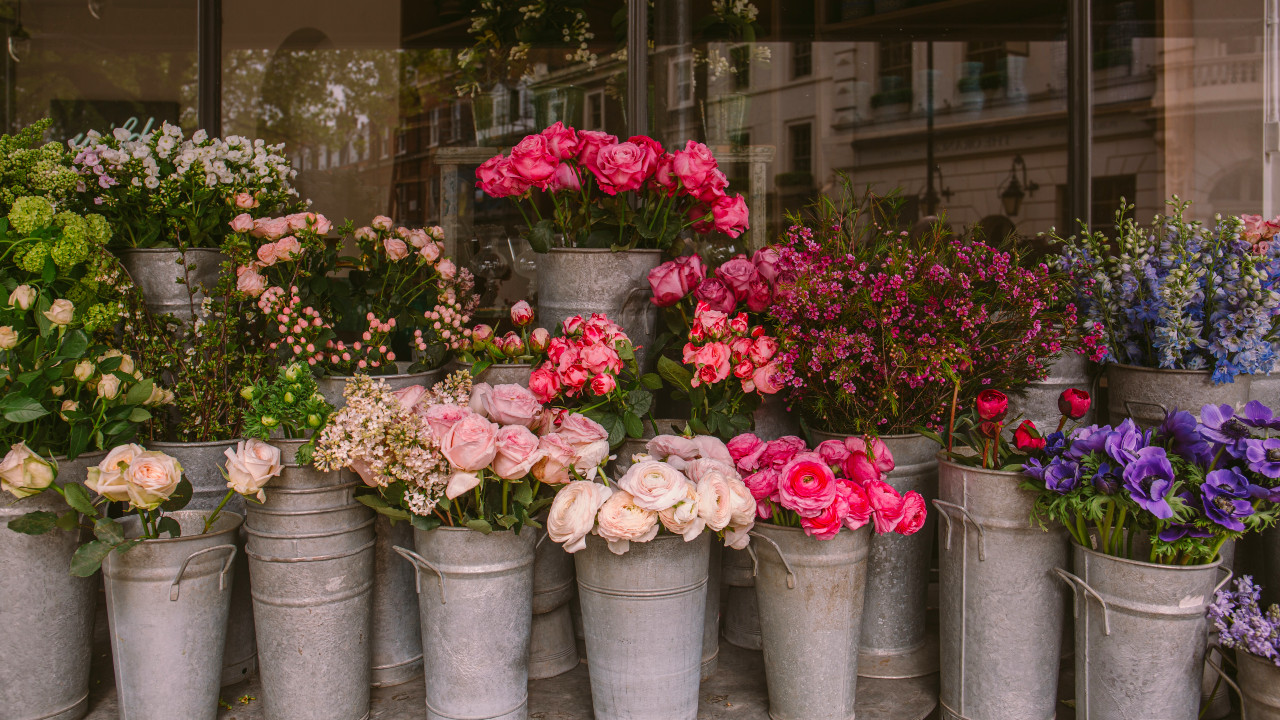
In 2020, the main concern for florists was a demand problem – with a raging pandemic and less money to go around, flower shops had to survive through a gruelling business year. But in 2021, the problem is a different one. Facing a surge in demand with the country reopening and weddings quickly piling up, Toronto florists are finding it impossible to bounce back to pre-pandemic levels – and the problem is supply.

“Worrying is like solving an algebra problem by chewing bubblegum,” Sara Jameson says, outlining her philosophy in managing the ongoing flower shortage that has caused so many local florists extreme distress. Jameson, the owner of Sweetpea’s, a flower shop in Roncesvalles, has been in the industry for 11 years and has never encountered a crisis quite like this one.

Flower imports and production have stalled

The primary reason for the shortage cited by most florists is that not enough bulbs were planted for 2021. During the disastrous events of last year, farmers—not just those in the flower industry—disposed of much of their unused product. Predicting that this year would follow suit, they sowed far fewer bulbs in an attempt to avoid composting flowers and produce needlessly. However, their predictions were incredibly off-base. Since lockdown measures have eased up, allowing larger gatherings to take place, the need for flowers has grown exponentially. “There’s a lot of demand, and no supply,” Bruno Duarte of Fresh Floral Creations on the Danforth says.

Many of Duarte’s suppliers have farms in Ecuador and Colombia. Imports from both countries have been limited in the past year, but for very different reasons. Despite having the right climate and greenhouse infrastructure when the weather isn’t cooperating, Ecuadorian farmers fell prey to the supply issues detailed above. Meanwhile, in Colombia, the flowers couldn’t even make it to the airport. A national strike ensued at the end of April in reaction to a tax reform bill proposed by Colombian president Iván Duque earlier this year, which was opposed by 80 per cent of Colombian citizens. Blockades established by local protestors and clashes near the airport in Cali prevented flowers from being shipped.

Even if flower farmers planted their bulbs in time and there was no political tumult affecting the supply chain, climate change can still cull whole fields at once, destroying tonnes of product in one fell swoop. Flash frost in South America killed crops of roses and hydrangeas. Forest fires in British Columbia and California razed farmland. Summertime hailstorms can wipe out months of hard work. “We’re seeing more and more unpredictable weather that resulting in really big damage on these farmers’ livelihoods,” says Sophia Su of Riverside Flower Shop in Little Italy.

Flower prices have more than tripled

The shortage has ultimately caused flower prices to skyrocket. Pre-pandemic, florists bought roses at around $2 per stem. They’ve now increased to $7 per stem. In an extreme case, one of Duarte’s suppliers had to close a couple of his farms because they had no roses ready. White roses are even harder to find, with Su dubbing this crisis as “The Great White Rose Shortage.” According to Jameson, prices for ranunculus, one of the most popular flowers she sells, have increased from $0.80 per stem to $3 or $4 per stem.

Dried flower wholesalers are accustomed to buying their products once every quarter, since the procurement process takes longer than their live counterparts. As a result, local florists only have access to dried flowers on the same quarterly basis, so when they sell out of a popular product, that’s it. “If you sell out of Product X and everyone loves Product X, you have to wait for the next shipment. It’s not a weekly basis like fresh flowers,” says Su.

There are shortages for almost every good that florists require in their inventory, making basic functions of their job significantly harder. Take plastics, for example. For a myriad of reasons, the production of plastic has slowed down, causing derivative products, like Christmas tree stands, to become scarce. In early anticipation of the holiday season, Jameson ordered her Christmas tree stands last year. When it came time for her order to be fulfilled, she received only one eighth of the quantity she ordered.

Flower twine, which Jameson used to buy for $20 for four rolls, now sells for $54 for the exact same quantity. Vases that would sell for $2.50 are now $7 or $8 each. Jameson says that she can’t even find three or four vases to match in order to make a series. Manufactured in Asia, ceramic pots are ferried over to North America in cargo containers, like many other internationally-procured goods, which sounds simple enough if you have the requisite number of cargo containers to make the trip successful. But what if you don’t? This year, due to a lack of shipping containers, ceramic pots were held in limbo for 5-6 months, leaving florists at a loss.

Su said that florists typically operate on “razor tight margins because [they] work with such disposable stuff.” Without experience and the ability to forecast properly, she says, “it’s really easy to buy too much and throw out a lot of money down the drain.” Now, with the rising prices of nearly everything they have to offer, the balance that was so difficult to achieve pre-pandemic is now even more fraught.

Local farms are an imperfect solution

When asked how the situation will progress over the next year, Su predicts that it will only get worse. This year, wedding season, which typically spans from May to October, was extremely busy with so many couples vying for dates. While restrictions continue to relax, the number of weddings will not only increase, but their scale is also subject to soar. Duarte notes that florists have adapted by relying more on local flower farmers, though he acknowledges that the Canadian climate isn’t conducive to year-round production.

Prices have increased manifold, but with demand surging over the next year, it is difficult to forecast whether the cost of flowers will plateau or return to pre-pandemic levels anytime soon. In return, consumers are being asked to approach florists with an understanding mindset. The adversity of the shortage has given florists more creative freedom to work with what they have. Despite this, if you’re looking for a specific flower, say a rose or a ranunculus or a peony, you may be out of luck. “If it’s not available, it’s straight up not available,” Su says of the shortage. “Money can’t buy everything.”