


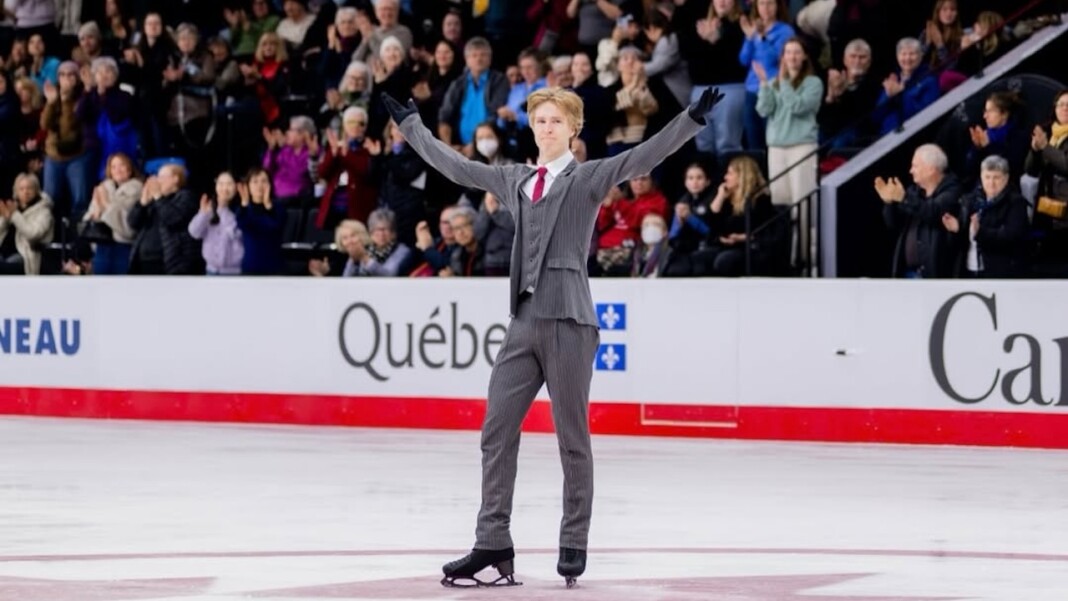

In the days leading up to stepping onto the world’s biggest stage, most Olympians are training hard, getting focused and visualizing success at the Games. Figure skater Stephen Gogolev is doing all that — but he’s also attending class. Three weeks before travelling to Milan for the 2026 Winter Olympics, he was still in the process of acquiring accommodations from his professors: he’ll be missing nearly two weeks of class and a midterm. Gogolev studies political science at the University of Toronto. Is this a common occurrence for figure skaters who are not just competing but podiuming at the international level? Gogolev knows a few other skaters who are enrolled in university but he doubts they’re taking a full course load — practice six days a week prevents otherwise. But Gogolev is unflappable, unconcerned with either prospect, participating at the Olympics or securing his accommodations, despite the former being not only a lifelong dream, but the hard-won validation of his talent and dedication.
“It obviously is a very special feeling, and I don’t know if it has really sunk in yet,” Gogolev says. “It was a huge goal and I’m very happy and thankful that I’m able to be going because I feel like this season I’ve had a bit more pressure than maybe the rest of the skaters because this was my first season coming back after so many injuries. It felt like I had to, at every competition, give it my best and kind of prove that I am worthy of going to the games.”
Growing up, Gogolev was something of a prodigy, swiftly earning a slew of titles and setting a number of world records at the junior level. Recurring back injuries stunted Gogolev’s senior competition debut. In 2024, after a stint at the University of California, training with coach Rafael Arutunyan, Gogolev and his team decided he should relocate back to Toronto, citing more affordable medical support in Canada.
“I felt I would get a lot more benefits that I didn’t have in California, such as treatment, doctors, care,” Gogolev says.
Name: Stephen Gogolev
Hometown: Toronto
Sport: Figure skating
Olympic event date: Feb. 10, men’s single skating, short program
Social feed: Instagram
Upon his return, Gogolev began working with Coach Lee Burkell and choreographer Benoit Michaud. Gogolev was supremely motivated to make the 2025–2026 season count — and he has the results to prove it, achieving a podium finish in all but one competition and winning the Canadian Figure Skating Championships in January.
“It felt like if I don’t do this with everything I have then I will probably regret it later on,” Gogolev says. “If I wasn’t able to make the Olympics, I would probably live in regret of the small little details that I kind of missed throughout the season.”
Teams are permitted a maximum of three men and three women for the singles categories in figure skating, but Gogolev is Canada’s only entry for men’s singles. (The same is true for women’s singles: Oakville’s Madeline Schizas will be the only skater representing Canada.)
Figure skaters will typically skate the same two routines during the short and free programs for the entire season, Olympics inclusive. Gogolev is most looking forward to skating his short program at the Olympics, a routine that drops us into the world of 1930s gangsters.
“When we first started choreographing it with Benoit, I was not quite against the idea of this music and the idea of the whole program, but I was skeptical. In the end, it turned out to be…my favourite program so far that I’ve had in my career,” Gogolev says. The program was different from his past routines, with a clear sense of storytelling.
Having grown to love it, Gogolev is more open to taking greater risks moving forward — surely his results from the season thus far have helped, too. Gogolev concurs. “It really helped my confidence because I never really had this much success on the senior level, so that was a really big turning point.”
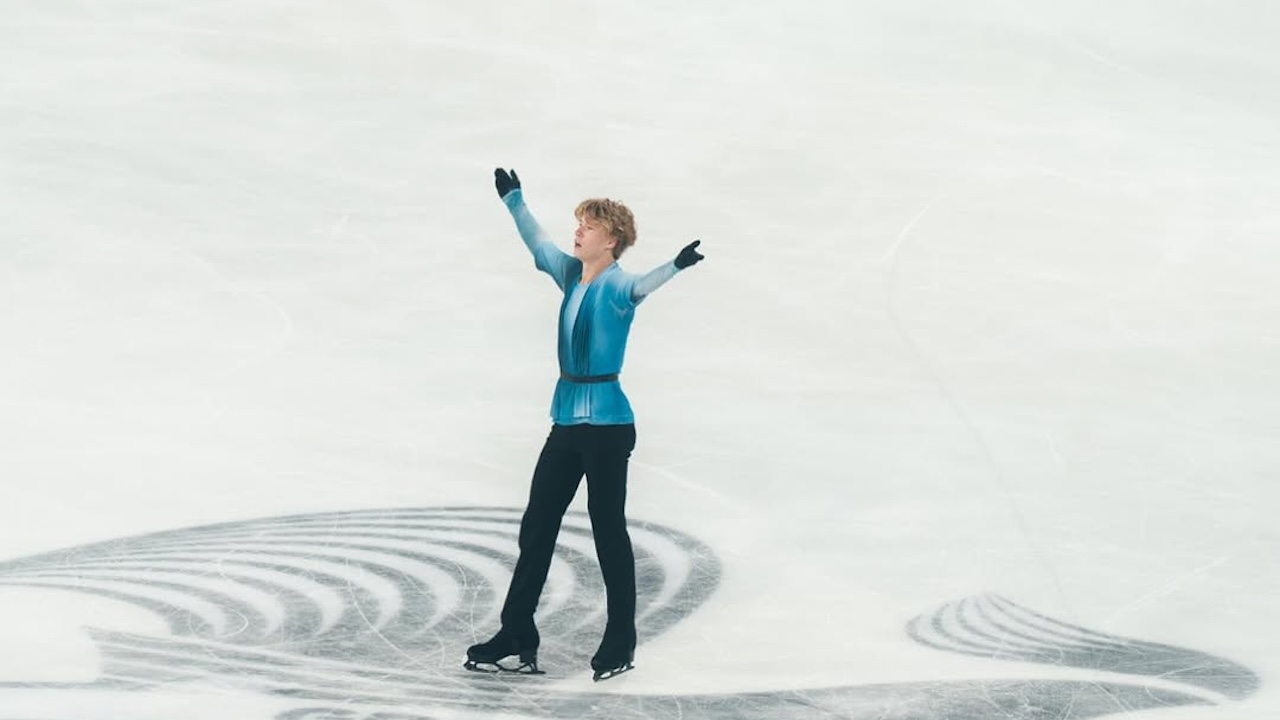
It makes me wonder whether Gogolev’s return has maybe perturbed some of his fellow skaters, emerging out of nowhere to sweep medals right out from under them. “I wouldn’t say I really paid attention to that, but maybe some skaters were a little surprised because it’s almost like I’ve been gone for the past few years and I haven’t really been competing.”
For all the pressure he faces on the ice, Gogolev is no different from other guys in university his age. He mostly listens to rap, bringing up British rapper Fakemink during our conversation. He’s most looking forward to eating some good Italian food in Milan, and hoping to catch some freestyle skiing or snowboarding, though he’s yet unsure how he’s going to be able to sneak away to the hills of Cortina and back (it’s almost five hours away by car). There’s no one he’ll be hunting to take a picture with in the Olympic village; Gogolev is focused on results.
Towards the end of our conversation, I ask whether any of his classmates know that he’s going to be skating for Canada in Milan. “I don’t think anyone’s really aware,” Gogolev says with a laugh.
We’ll be profiling more athletes during the 2026 Winter Olympics; refer here for future coverage.
