


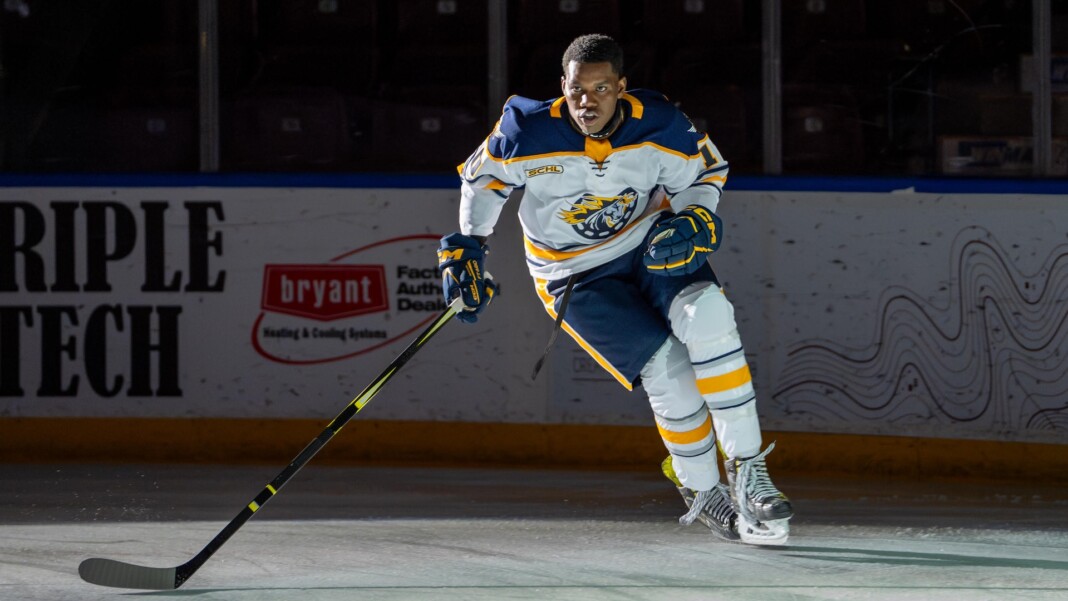

Hockey is having a bit of a reckoning. For decades, the sport has been plainly intertwined with our national identity, uncomplicatedly held up as Canada’s favourite pastime. Lately, however, we’ve begun to take that apart — questioning the often oppressive culture that lies beneath it and challenging its most toxic roots. There was Black Ice, the TIFF documentary helmed by Hubert Davis that exposed the history of anti-Black racism in ice hockey. This past year, it was Heated Rivalry — the unexpectedly explosive queer hockey romance — that had not just Canada but the world thinking about the deeply homophobic culture that the sport has been built on. Then, there was the Olympic incident: when Trump made a call to the U.S. men’s hockey team to invite them to the White House after their gold medal win, he made a joke about how he would be obligated to invite the U.S. women’s team, who had won gold just a few days earlier, as well. The laughter that rang out from the players in the locker room was heard round the world, and led to weeks of discourse about the sexism embedded in the hockey world, too.
And now there’s Youngblood — no, not the one with Rob Lowe. Former pro hockey player and filmmaker Charles Officer began working on a remake of the 1986 hockey film before he passed away in 2023, with a key change: he turned the protagonist into a Black player from Detroit. Davis stepped in to bring the film to life, and Toronto actor Ashton James, who was attached to the original project with Officer, stepped into Dean Youngblood’s skates. After a successful TIFF premiere in 2025, Youngblood is hitting the big screen, coming to theatres beginning March 6. We chatted with James about taking on this iconic role, getting into the hockey mindset and exploring masculinity alongside Blair Underwood.
What originally drew you to this film?
I saw Charles Officer was doing it, and that made me want to do it, just off the strength of that. He’s someone I wanted to work with for so long. I also was excited to explore what it looks like to pursue being a professional athlete at a high level. I had always played sports growing up, but I never took it seriously, so that exploration was interesting. These ideas around toxic masculinity were also interesting, because I was trying to figure out what masculinity meant to me. And of course, learning to play hockey, gaining that skill, was exciting too.
You looked like a natural on the ice! How much training did that take?
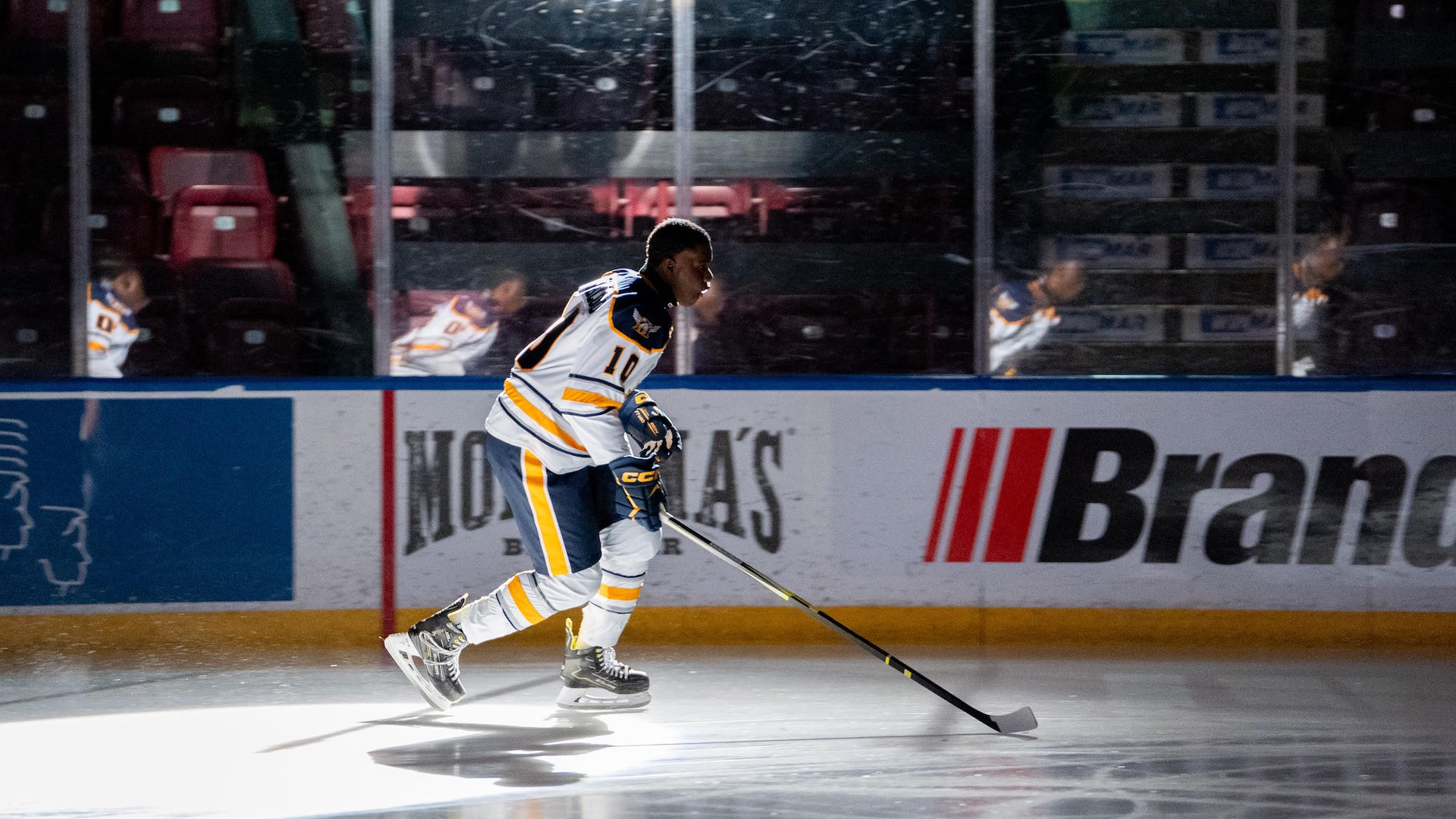
A lot! I was first talking to Hubert [Davis] earlier, and when I sent in my audition, I put in a skating tape as well, and he said, “I saw that and I was like, ‘Oh, we’re in trouble.'” I know how to skate, but I didn’t know how to play hockey, or do a hockey stop, or a crossover, or all those things. When I initially got the job [with Officer] I was supposed to train for three months, and I ended up training for two and a half years, sadly. But kudos to product for allowing me to continue that training. I got to build my body and train as a hockey player. But I’ll never forget, when we first started, I was sitting on the bench while Chris Nelson, our hockey coordinator, was running through some stuff with the other players, and a lot of the guys in the movie actually played hockey. Chris finally goes, “Alright Ashton, get in there.” In my eagerness, I jump on the ice and I fall, just totally wiped out. It was good to get that out of the way!
You mentioned masculinity being part of what drew you to this film. Part of that conversation is in relation to your character’s relationship to his father, played by Blair Underwood. How did you two explore that in your scenes together?
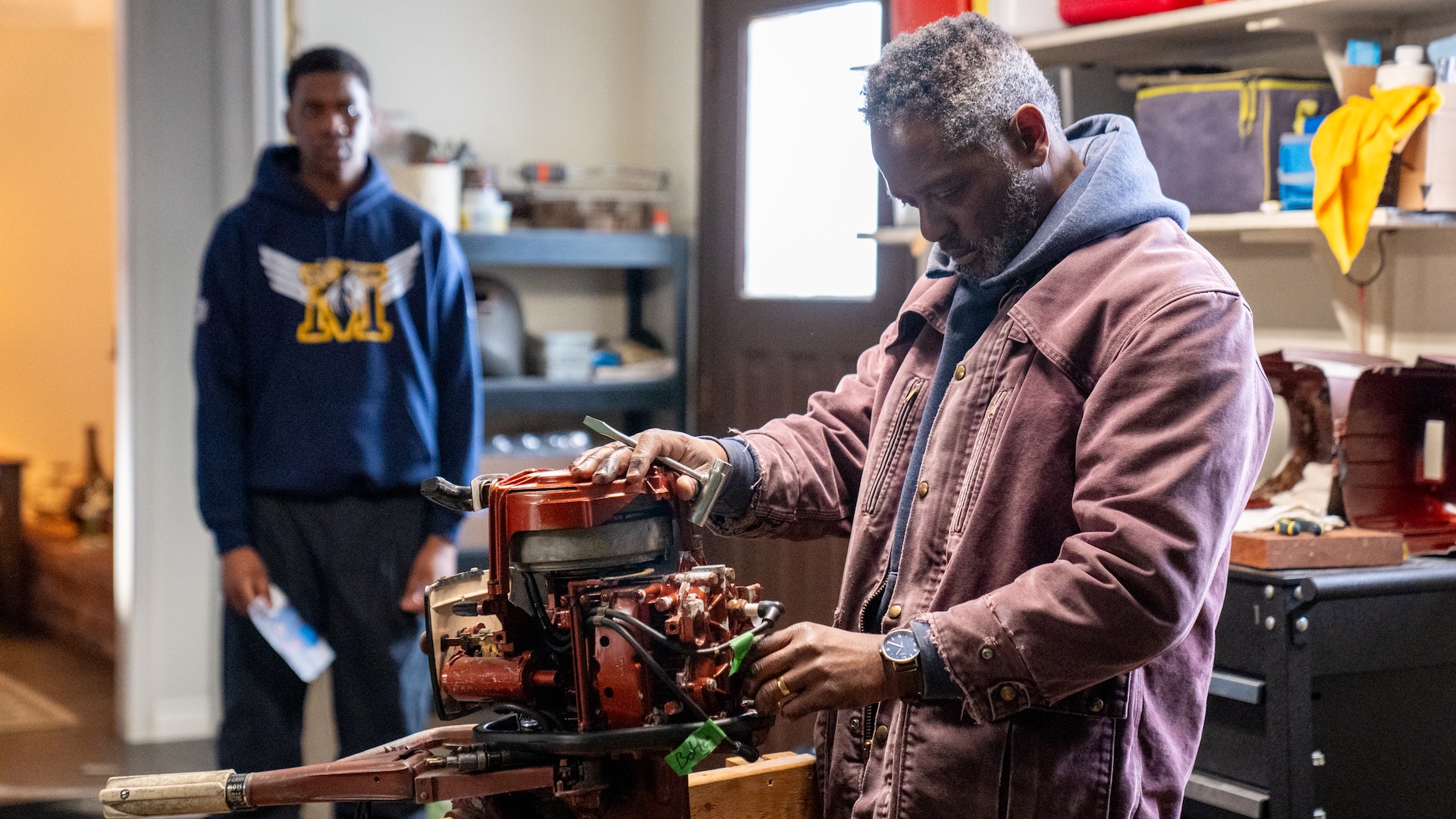
I was still figuring out what masculinity meant for me, and I feel like there’s a certain idea in society of what it is. I came to find out that my masculinity is quite soft ‚ I was raised by my mom and my grandmother and my sister and my aunts and my cousins, and I think they allowed me to see myself in a way that wasn’t how society wanted me to see myself as a “man.” When it came to filming, it was about what we’re adding to the conversation. When I look at Dean and Blaine, a lot of their relationship is that they don’t really talk, and when they do, they talk around each other. I was talking to someone about the difficulty in being a parent, and for Blaine, it’s that he can only teach what he knows. If he doesn’t know any better, how can he do something different? In the same way that I had my mom and my grandmother and the community of women who raised me, Dean had his mom, but then he lost her. Hopefully, if someone is like Dean, the film can allow them to see that there’s a different path.
Definitely; Dean grapples with the often righteous anger he feels in the film, and he struggles to figure out how to express it and when. How did you navigate portraying those outbursts of anger with nuance?
Hubert and I were really mindful, because we didn’t want to cause harm in the sense of turning Dean into an angry black boy. We wanted to be a part of a conversation, and we wanted people to connect in a way that doesn’t feel like a stereotype. To Dean’s credit, he’s acting on what he knows. From a young age, his dad instilled this idea of, don’t hesitate, just react, and sometimes our first instinct is to fight. That isn’t always the best decision. Things are happening to him and his responses are warranted most of the time, in my opinion, but his reaction might not be the best one. We tried to create moments where Dean got to internalise some of his decisions after almost every incident, and in turn, he tries to take steps to make better choices.
This film is coming out at an interesting time in terms of our collective understanding of hockey as a representation of Canadian culture, but also the inherent toxicity of the sport. Heated Rivalry, for example, is exploring some of the same ideas of Youngblood in a different way.
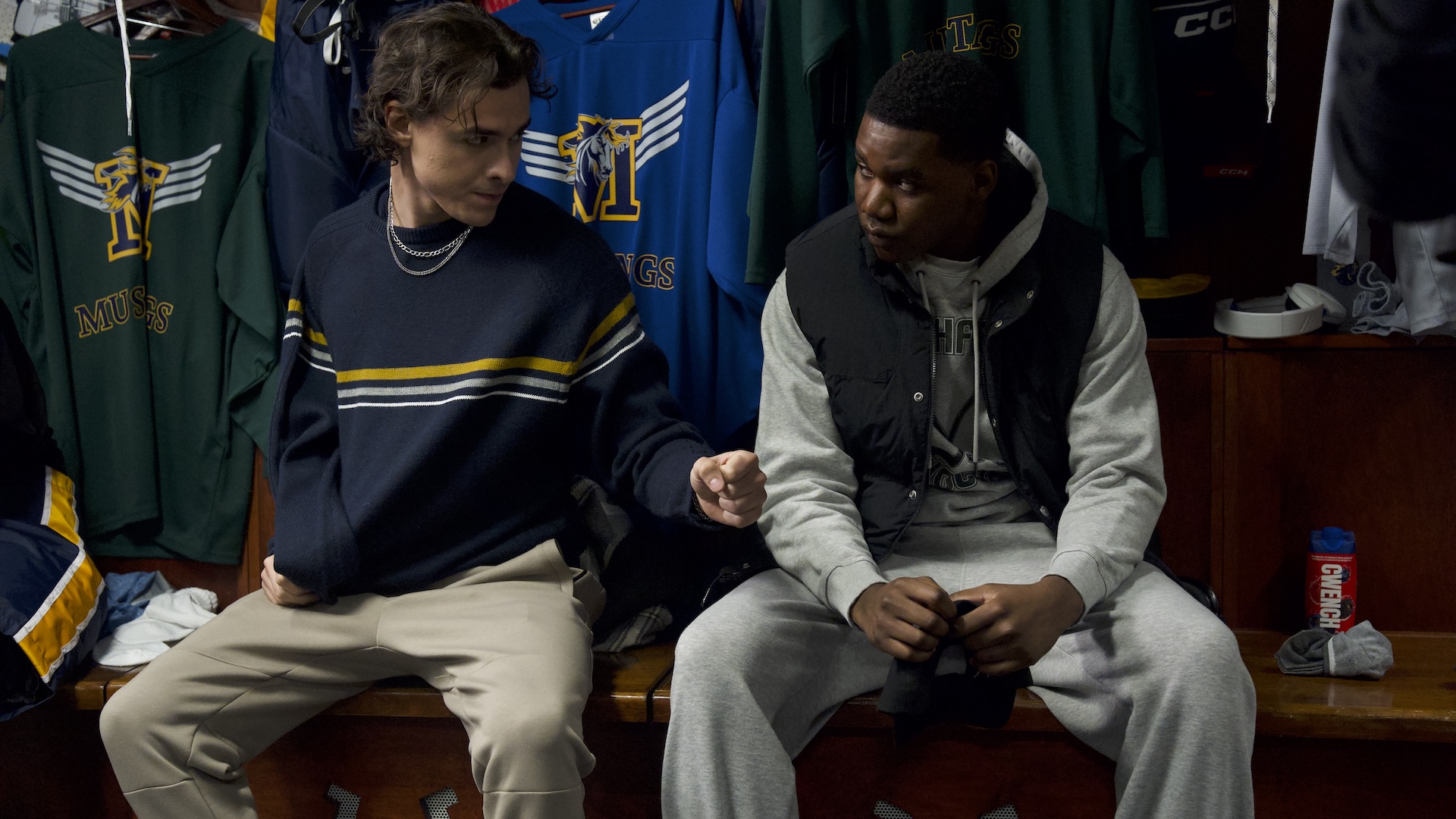
All the things coming out so far, to me, allow so many different avenues for people to come to hockey and come into this space with their experiences. It’s on the NHL and it’s on people in the hockey community to allow themselves to find a fuller version of themselves. So that’s the hope with a story like this one; that we can continue to bring a different audience to connect with the sport. And it also doesn’t need to remove every aspect of the sport. There are things about hockey that I really respect — yes, the idea of masculinity when it comes to fighting can be toxic, but something I respect about it is that they never fight for no reason. Sometimes it’s to win momentum, sometimes it’s to protect a player. And when it comes to the players, there’s such a respect of the game. If you take all of that and add in what I was saying before, mix it all together — there’s something beautiful there.
And this is obviously a concept that Hubert Davis himself has explored before in his documentary Black Ice. What was it like working on this film with him?
I feel like I haven’t given Hubert enough love; I selfishly want to speak to all that he did to make sure that the film got to this point. After what happened with Charles [Officer] and his passing, for him to come in and uplift it and make sure that it didn’t not get made — I just want to give him his flowers. And I want to publicly speak to the force that he is, and the director that he is. He did such an amazing job with this film, and I hope that he gets to make more things and that people can support him and his growth as an artist.
