Home Blog Page 964

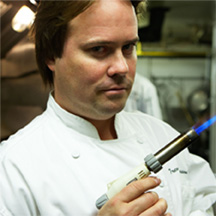
Wilkinson brings French classics to The Roosevelt Room

0
a chef1
a chef1

Toronto native Trevor Wilkinson is putting his French cooking roots to good use in a decidedly forward-thinking environment: a supper club in Toronto’s entertainment district.

After plying his trade in the finest of the city’s kitchens, working with Michael Bonacini at Jump, as well as Marc Thuet and David Lee at Centro, three years ago Wilkinson opened the doors to his own, eponymous French bistro—Trevor Kitchen & Bar. With a solid team in place, Wilkinson eyed his next challenge, and along came Jeff O’Brien and his new concept supper club, The Roosevelt Room. Designed by Allen Chan, Anwar Mukhayesh and Matt Davis (HGTV’s The Designer Guys), the space is contemporary Art Deco that oozes a French cabaret style.

Despite the cooler-than-thou looks, Wilkinson’s approach to the food remains the same: "good cooking, nothing flashing, French techniques and really good quality ingredients — pot, wooden spoon, fire." There is, however, a nod to the Hollywood glamour period in the menu.

After the first draft of the Roosevelt carte was passed around and it was looking good, someone found an old menu from the first Academy Awards, at the Roosevelt Hotel in 1929, coincidentally. A classic French menu, it inspired Wilkinson and owner Jeff O’Brien to abandon their earlier efforts and craft a new (yet old) version of the historic menu. Expect a dinner menu high on French classics such as soupe a l’oignon, steak frites and coq au vin.

"I have a real love for French food," says Wilkinson. "Duck confit, foie gras, they are some of my favourite things to eat."

The Roosevelt Room, in keeping with the supper club format, serves dinner starting at 5 p.m. with no reservations past 8:30 p.m., when the slow transformation to night club takes place.

For more information go to www.therooseveltroom.ca. The Roosevelt Room is located at 2 Drummond Pl., 416-599-9000.

All in a day's work: Fashion shoot with the kids

0
Liisa photoshoot
Liisa photoshoot

I am ready to pose once more. I will be working for Fashion Magazine, their February issue, as my first job back since having my son. A perfect start as I love working with this league of extraordinary people.

Normally, I would book some highlights (it’s been about a year since the last one) with my local Civello lady but, because I am still breastfeeding, my hair might not survive the ordeal. Every brushing reveals a doll’s head full of lost strands and leaves me feeling less and less like I "just stepped out of a salon." (Definitely not one of the things they tell you about in What to Expect When You’re Expecting.)

So I head to work with about half the hair I used to have in two complimentary shades of blonde — just one of the joys of motherhood that I will be contributing to the job today. The other two joys also come along: my three-year-old daughter and three-month-old son.

I have no fear that my daughter will suffer any kind of stage fright. Indeed, as soon as we finish her picture, she announces that she is hot and proceeds to remove every last shred of clothing before running in tight circles emitting a loud noise that usually means she is happy.

We are shooting the Hudson’s Bay Company’s Olympic wear and because my little guy is exactly that — little — nothing fits him very well and so for his picture he is stripped of his diaper. Turns out he knows how to steal the show just as well as his big sister.

Halfway thru the shot nature calls and he relieves himself in a picture perfect stream… all of which we caught on film. Definitely a good one for his baby book (But not, I am assured, for the magazine). My husband stands in the wings saying "That’s my boy" and I wonder what it is about bodily functions that makes men so proud.

The clothing is all very wearable and comfortable. I like an oversized knitted sweater with a typical Canadian scene on the front. It would be great to pair with really tight jeans or I would probably wear it with a long pretty dress in some unexpected pattern.

I also love a red checked henley type shirt that makes me feel like a true Canadian. They also have this in kids and baby sizes… Do I see a future family Christmas card photo? My little one almost wears a great Canada hat with ear flaps (also comes in every size).

This would be a great gift for almost anyone on your Christmas list — support Canadian athletes, stay warm and look great all at once.

After a brief interview (during which I am unbelievably distracted by my hyper three-year-old and my hungry three-month-old), six photos, four breast feeds, one brown rice salad, four cookies and six or seven air kisses, we are strapped back in our car seats and headed for home. On the way, I ask if everyone had fun. My three-year-old says "I liked the cookies. My hair smells like photo shoot."

My three-month-old says nothing as usual but lets out a gigantic burp that prompts my husband to say "That’s my boy."

Liisa Winkler is one of Canada’s biggest supermodels and mother of two beautiful children. Her blog appears bi-monthly at Postcity.com.

Fiddling’s caped crusader

0
ashley
ashley

ACCLAIMED FIDDLER ASHLEY MacIsaac has been in and out of
the spotlight over the last two decades for his music, for selling a stake in
his career on EBay, even for yelling obscenities to an unsuspecting
audience as part of a performance art project. He defies convention and
pushes the boundaries of what it is to be a Canadian musician.
And he’s back.

Just 34 and after living in Toronto for the last decade, MacIsaac had
settled down with his partner Andrew MacIsaac (née Stokes), married
since 2007. Now, with a new traditional record released on the east coast
and a solo pop album to come, MacIsaac looks ready to return to the
spotlight.

“I plan on getting a lot busier with the new record,”says MacIsaac, who
plays Hugh’s Room in Toronto on Nov. 13. “I’ve got seven titles for it at
the moment. I was going to call it Crossover and do two albums, but
everyone’s doing that, so it’s not cool any more.”

MacIsaac has one foot firmly in the traditional Cape Breton fiddle
scene, where albums are sold from the trunks of cars and off the stage but
the “money is good,”and one foot in the mainstream, where an album may
take “three to six years from start to finish.” He has a unique perspective
as a result. “I feel more blue-collar than most artists, I imagine,” he
explains. And it was this blue-collar MacIsaac that drew the fiddler from
the comfy confines of Toronto to the border city of Windsor in
southwestern Ontario.

“Windsor is very blue-collar, and there are lots of Cape Bretoners,” says
MacIsaac. “I don’t think I picked up my fiddle more than three times at
home in the 10 years I lived in Toronto. In the first week here, I had 65
Cape Bretoners at my place bringing biscuits and rum and playing fiddle
all night long.”

There are legends aplenty concerning young MacIsaac, a prodigy from
his beloved Cape Breton — hanging out with the likes of Allen Ginsburg,
being trumpeted by the late, great Peter Gzowski at the CBC, who
introduced MacIsaac to a wider audience.With charisma and rare talent,
MacIsaac combined his fiddle prowess with his love of rock ’n’ roll to
create a riotous blend of new music. He exploded in popularity in the
mid-’90s with his breakthrough Hi, How Are You Today? featuring nowclassic
songs such as “Sleepy Maggie.”

Following that album, he was
productive, but also plagued by a number of problems, from label
mismanagement to personal issues, and never rose to those heights again.
But, being Ashley MacIsaac, he could continue making records for
another two decades and people would still pay attention. But his interests
have broadened to include a foray into politics and a desire to return to
university.

“I’ve got more interest in doing other things with my life as well as
being a recording artist,” says MacIsaac. So what does he think of
Stephen Harper’s recent move into the musical realm? “What a shame.
He had the opportunity to perform with the greatest cellist ever,” says
MacIsaac.“Why couldn’t he perform better? I’d rather hear Freddy Kruger
sing it.”

The story behind the world’s most important comedy venue

0
letterman
letterman

ON A RECENT trip to New York, I picked up a copy of I’m Dying Up Here by William Knoedelseder.

Subtitled Heartbreak and High Times in Stand-up Comedy’s Golden Era, it tells the story of the beginning of the Los Angeles stand-up scene in the mid-’70s, and the long-forgotten comedians’ strike at its centre.

What the book is really about is the tragic death of comic Steve Lubetkin. Hardly a household name, Lubetkin was the comic who jumped from the roof of the Hyatt House, a casualty of the bitter strike between the comedians and Mitzi Shore.

Telling the story from Lubetkin’s point of view may seem an odd choice, but it works. Knoedelseder starts his story with the comedy scene in New York at the beginning of the 1970s.

At the time, the city was the epicentre of all things comedic in the U.S. But then, two things happened that tipped the scales to the West Coast.

The first was the move of the Tonight Show to Los Angeles in 1972. The other event was the opening of the Comedy Store on the Sunset Strip.

Sammy Shore was a mid-range comic, not well-known, but good enough to have established a Beverly Hills lifestyle for himself and his wife Mitzi. Together they took over a nightclub and turned it into a casual drop-in for performers.

It was a modest success, but after Sammy came back from a tour, he found that his wife had turned it into a showcase for the comics that were teeming in L.A. for all the new work. Soon after, Mitzi served him with divorce papers, and she got the club in the settlement.

The Comedy Store became the most important comedy venue in the country. This is where everyone got their start: Leno, Letterman and many more.Dropins from stars such as Pryor and Carlin were commonplace.

Nobody was paid, but the idea was that you experimented onstage, and talent scouts in the audience hired you for “real” gigs on TV and in Vegas.

A group of comedy elders appealed to Mitzi to pay a stipend to the acts, but she declined. Both sides became intransigent, and the unthinkable happened: the comics picketed the Comedy Store.

Mitzi still had enough loyalist comedians to stay open, but the story went national, and a lot of damage was done to her reputation. A compromise of sorts was reached, and business resumed as usual.

Except it wasn’t quite the same. Now that she was the “employer,” she gave the coveted spots to the very best. And that left a lot of middling acts out in the cold. Comics like Steve Lubetkin.

Knoedelseder takes great pains in describing Lubetkin’s struggle. It’s clear that the comic was suffering from emotional problems, and his lack of success only exacerbated them. When he couldn’t get his much-needed spots after the strike, he snapped, and jumped off the roof of the hotel next to the Comedy Store.

It’s a tragedy that I thought was lost to the ages, but I’m thrilled that Knoedelseder has resurrected it and Lubetkin’s memory. It’s a tribute to a man and an era, as well as a reminder that show business is a game in which not everyone emerges a winner.

One of the best openings in years

0
drowning
drowning

WHAT A WEALTH of talent resides in the three women behind the Tarragon Theatre’s latest play Drowning Girls. Beth Graham, Charlie Tomlinson and Daniela Vlaskalic are to be applauded for a stunning and unforgettable production.

This exquisite and profound play is thrilling even before the show begins: three old-fashioned bathtubs — each half filled with water, shower heads above — sit equidistant on the otherwise empty, checkerboard-tiled stage. The lights dim, and when they come up, we see three young women submerged in the water.

They suddenly all burst up, totally out of breath and gasping horrifically, as does the jolted audience. It may be the most striking opening of any play in decades. The play (a mere 75 minutes with no intermission) maintains a consistent level of suspense to the end (Who drowned these three women?), but of course, like any good work of art, it is far more than the sum of its wonderful parts. This play is not about drowned women alone, any more than King Lear and Oedipus Rex are about lousy family relations.

Indeed, I can state without any reservations that The Drowning Girls shows its audience more about what it was like to be a woman in England (and the U.S. and much of Europe) in the 19th century or in 21st century Afghanistan under the Taliban for that matter, than the reading of a hundred essays.

The play is wonderfully poetic, almost like a Greek tragedy, as the three women play more than a dozen roles each, both male and female, finishing or echoing each other’s sentences. The visual metaphors are ubiquitous and perfect: their wedding bouquets become scrub brushes; the water which often pours over them from the shower heads becomes rain then tears. Other props are used in equally creative, inventive ways. This is live theatre at its best.

The Drowning Girls is playing at the Tarragon Theatre (www.tarragontheatre.com) until Nov. 15.


Also this month, local performers David Hein and Irene Carl’s My Mother’s Lesbian Jewish Wiccan Wedding opens at the Panasonic Theatre.

Lauded by critics, when in premiered at the 2009 Fringe of Toronto Theatre Festival this past summer, there is no doubt that the hour-long Fringe production of MMLJWW has changed a great deal for the big remounting at the Panasonic. After all, the production comes from the humble confines of Bread & Circus, an out of the way spot hidden in Kensington Market.

Will Jews, Wiccans, gays and/or straights be offended or delighted? Critics can only speak for ourselves. But I can say one thing with certainty: seeing productions like these grow out of Fringe festivals is a very laudable thing, and I congratulate David Mirvish.

Stealing laughs from rich & poor

0
ross 1
ross 1

THE SHERIFF

ROSS PETTY

Q: You’ve got a ‘80s glam rock look going on here. Who’s the inspiration for your hairdo?

Margaret Atwood. But seriously, folks.… I like Russell Brand’s look.

Q: Who’s today’s real-life Robin Hood?

Bernie Madoff.

Q: What’s your favourite line in the play?

A lot of my lines are ad libbed, so my favourite has yet to be created.

Q: What’s your opening day routine?

Start planning my ad libs for the opening night performance and then hope I can remember the actual script.

Q: What are you getting your wife Karen [Kain] this Christmas?

A lovely bunch of coconuts!


ROBIN HOOD

SOUND OF MUSIC’S JEFF IRVING

Q: If you were to steal from the rich, what would you do with the
money?
I’d use it to bribe people to get off Facebook.
Q: How does your Robin Hood differ from the standard version?
Mine has a webcam built in and plays Blu-ray discs.
Q: What’s the hardest part about being an actor?
Convincing people that this is my real job.
Q: How do you handle butterflies before a performance?
I get
performance moths, not butterflies. A quick talking to and some
Mel Torme usually do the trick.


THE GOOD FAIRY

AIR FARCE’S JESSICA HOLMES

Q: Which Canadian politician is the most fun to impersonate?
I enjoyed doing Belinda Stronach, until I met her. She said, “My
son just loves your impression of me.” But it didn’t come off as a
compliment, more like a warning that I might find a dead bunny
in my kitchen if I ever impersonate her again.
Q: What’s something we don’t know about you?
I can’t help
laughing when I’m nervous, so I giggle like an idiot when I’m
skiing or horseback riding.


MAID MARION

CANADIAN IDOL’S EVA AVILA

Q: What would your parents say if you were dating a broke
criminal who wears tights and lives in the forest?
Ahahahaha!
They would most likely ask a lot of questions and perhaps feel
worried about me but ultimately respect my choice of being in
love with such an individual.… Hee hee.
Q: You opened for Beyoncé this summer. Was she all that?
We met briefly. She gave me a hug and said I was beautiful!
(I mean, come on. Beyoncé telling me I’m beautiful? Puh-leeze!)


PLUMBUM von BOTOX, RN
 

DAN CHAMEROY

Q: Complete this sentence: my character is the love child of:

Ross Petty and a cougar.
Q: What’s the most ridiculous thing you do as Plumbum?
Plumbum actually put herself through nursing school so she
could get up close and personal with her plastic surgery
obsession. Not to mention the meds!

The secret technique behind Toronto's best fries

0
fries mcmurray
fries mcmurray

For some people, when it comes to french fries, they’ll drive across town in rush-hour traffic to get a taste of their favourite treat.

If you ask my daughter, she likes McD’s.

However, I quite enjoy the frites at Pastis. They’re crispy, golden, lightly salted and delightfully addictive (reminds me of the days when I worked at Le Bistingo).

On the other end of the scale, the poutine fries at Smoke’s Poutinerie — specifically the pulled pork poutine — absolutely rock. They’re perfectly gloppy and sauce soaked, yet still hold their texture.

At Starfish, people are always asking how we make our fries. So here’s a few tips and secrets that’ll help you make a similar version at home:

We keep the skin on — a nice, thin skin works best on the Yukon Golds.

If you don’t have a chipper, julienne the potato to your desired size. Then you have to soak your spuds — overnight is best. The idea is to take as much starch out of the potatoes as possible. Two or three rinses is best.

Next get the fryer going and get the oil good and hot. You need to blanch the frites in the oil, so give them a good cooking. Then pull and drain them and just let them rest. At Starfish (this is the secret technique part), we chill them in the fridge for the next day’s service and then we fry them again when the order comes in. The second cooking makes them crisp outside and soft and lovely inside.

As I am not a chef, I found this technique out through happenstance when I was running a media lunch at a restaurant years ago. Nobody showed up and the food turned into a staff meal. The fries were too cold to enjoy so I asked the cooks to pop them back into the fryer to heat up. Low and behold, the best fries ever came out. Decadent as it sounds — twice fried is the only way to go for me!

Once you have the frites out of the fryer, drain and rest on a paper bag. The kraft paper absorbs more of the residual oil. Now, get a stainless steel bowl and toss your hot frites with salt and thyme to season. Place on the serving plate immediately, and call for supper.

A nice light sauce for dipping is another little known technique I only show to folks at Starfish if I know them. Cocktail sauce and aioli — 50/50 mix. Give’er a try, but don’t tell your cardiologist I said so.

Shuckingly yours, Paddy.

Patrick McMurray is the owner of Starfish Oyster Bed & Grill and The Ceili Cottage. He is also a World Champion Oyster Shucker. Catch his blog weekly at PostCity.com.

Macy's north? What's old becomes new again

0
the bay
the bay

As you know from my previous blogs, I could spend hours in a boutique like Ewanika or Lilliput Hats, trying on an original silk shirtdress or a funky new fedora.

But, due to my affinity for small shops, I have to admit I haven’t been to The Bay for more than a pair of tights in years.

I found the clothes were always “messy” and therefore hard to see.

Still, there has been so much buzz surrounding The Bay and it’s redesigned store on Queen Street that I decided I should go and check it out.

This location is different. It is nicely decorated, spacious, and tidy. There are beautiful chairs set-up around the store for anyone who needs a shopping break, and the dressing rooms are enticing. I am reminded of Macy’s and think to myself: “This is what a department store should look like!”

“The Room” at this location is infamous — with unique shoes, bags, jewellery and high-end clothing pieces. Originally known as the St. Regis Room, this high-fashion section has been around for more than 70 years — back when it was the Simpson’s department store.

I look through the area quickly because my attention is peaked by the expanse of Canadian clothing lines in other sections of the vast department store.

The Bay has gone back to its roots and is focusing on Canadian designs by Pink Tartan, David Dixon, and Baia Black. If, like me, you are passionate about all things Canadian, you too will be excited to see all the Canadiana this store has to offer.

Of course, if you must go to a boutique, you can get Pink Tartan at TNT or Andrew’s. As for David Dixon and Baia Black, they’re only available at the Bay.

The Bay Queen Street is located at 176 Yonge Street, Toronto – 416.861.9111.

Always on the lookout for Toronto’s best boutiques!

Wendy

As a personal style coach with THE REFINERY, Wendy Woods translates the world of fashion into a personal style that makes her clients shine, while introducing them to Toronto’s unique boutiques.

Best cappuccino: Luscious java in Leslieville

0
coffee bestof
coffee bestof

The secret has been out for a while now. That’s why there is usually a lineup out the door.

It isn’t just Leslieville locals racing to get their morning pick-me-up anymore, the rest of Toronto has caught on.

If you arrive at Mercury Espresso Bar during java rush hour, you should expect to wait five to 10 minutes for a sensuous $3.95 cappuccino.

Staff will usually draw godlike designs on your beverage, making it difficult to take the first sip. But once you do you’ll pass through the gates of coffee heaven.

If you manage to get a seat, good luck getting up.

The walls are lined with local art (Toronto artist Doug Stone’s paintings and mixed media will be on display for the next several months) and you can enjoy pastries, scones or their famous ginger cookies (freshly baked at Morning Glory Cafe — 457 King St. E.), while reading the paper or surfing the net.

Business partners Deb Tiller and Matt Taylor opened this java gem three-and-a-half years ago, at the corner of Queen Street East and Morse Street. They brew Intelligentsia coffee, an American fair trade variety sold exclusively in specialty coffee shops across North America.

A latte goes for about $4, a single americano is $2. Most of the pastries and sweets come from Altitude Baking (1346 Queen St. E.).

Mercury is fit with a patio for mild days, and it’s the perfect place to stop and rest on your way to the beach or Queen East’s eclectic medley of shops and galleries.

915 Queen St. E. 647-435-4779

Martin Kouprie reveals what he's serving Prince Charles

0
couprie
couprie

Martin Kouprie, the chef and co-owner of Pangaea, will be cooking for Prince Charles and Camilla Friday at a reception hosted by the federal government.

PostCity.com caught up with Kouprie to find out what he’ll be serving the royal couple.

PostCity.com: Where is the event being held?

Kouprie: The event (Farmer’s Market reception) is being held at the Brick Works in Toronto. In attendance, along with 100-130 others, will be Finance Minister Jim Flaherty.

PostCity.com: What’s on the menu?

Kouprie: We are preparing Bison Tartar on Cookstown Dahlia Root with preserved egg yolk and onion seedlings.

PostCity.com: How much extra pressure is there knowing you’re cooking for Prince Charles?

Kouprie: There is no more pressure cooking for Prince Charles than there is everyday.

PostCity.com: How did you get selected to cook for them?

Kouprie: My close affiliation with farmers and local producers (as well as being a member of Slow Food Toronto) has garnered me this invitation. I will be working closely with David Cohlmeyer of Cookstown Greens and partnering up for this event at his invitation.

Harmonious therapy

0
a hero
a hero

MARGOT MCKINNON IS committed to helping people with neurological disorders improve their overall well being, one stretch at a time.

And it is her meticulous teaching style that makes the Body Harmonics Pilates founder so successful.

McKinnon, 42, offers classes to the general public, but applies a specific type of care when it comes to her students with Multiple Sclerosis or Parkinson’s Disease. They are divided up based on their moving ability, though McKinnon is in perpetual awe of each student’s progress.

“These people never miss their class,”McKinnon says.“Some have been coming for 12 years, and then there are people in a wheelchair who are in the advanced class.” Most of the students are between the ages of 30 and 60, and bring individual challenges along with them.

“It’s emotional,” says McKinnon.

“One woman I teach is losing her speech. She came in one day, really struggling, but by the end of the class she was speaking almost clearly.”

Self-esteem is a concern as well. “Our purpose is to help people connect with themselves in a way that is not scary,” she explains. “You see it in their physical posture.”

McKinnon finds that the biggest challenge in her field of work is educating people on what Pilates can do for them.

She wants the public to be aware of the profound effect that intelligent movement can have on the body, and on one’s general well-being.

She says that by learning how your body works, you’re improving its ability to function properly.And the added bonus is that it does wonders for your mental health — a perfect therapy for people with neurological disorders.

“It’s a very simple way to improve quality of life for people that is enjoyable and empowering,” she says.

McKinnon, who describes herself as an “innate mover”, was born in France and moved to Canada as a child. She grew up in the Annex and now holds a masters degree in adult education.

“Teaching is in my blood, really,” she says. “This is the seed of what Body Harmonics is today because it brought my two passions together, movement and teaching. At the time, I didn’t know how I was going to apply it.”

McKinnon founded her business with a partner in 1996, and launched her private practice in 2004. By 1998, she had found a home base for her studio near the intersection of Dupont and Christie streets. She has another studio in the Yonge and Eglinton area.

Her neurological program is typically used by people on disability pensions. “We wanted to subsidize the classes because we knew some of our students were on fixed incomes.”

When McKinnon isn’t working she is teaching conferences abroad or doting over her five-year-old son, who is already learning Pilates.

“When I’m teaching it’s so natural. My work allows me to be really creative. And I de-stress by doing it!”

Local resident reaches out to those in need

0
local hero 1
local hero 1

DAVID ROSENBERG begins each free speaking engagement he’s given the same way. “I’m a son, I’m a brother, I’m a cousin, I’m a friend, my father’s a Holocaust survivor, and I’m a crack addict.”

Rosenberg, who grew up near Bathurst Street and Steeles Avenue, is now clean. He speaks at schools, summer camps and businesses as part of his job as the director of operations at Jewish Addiction Community Services (JACS), a North York centre for those of all denominations who are seeking help for addiction.

Rosenberg felt it was his duty to help out where he could at the centre after he had to rely on their programs when he realized he had to treat his own addiction.

A CEO of a multi-million dollar company by the time he was 26, Rosenberg was married with three children when he started abusing crack cocaine. The habit increased to the point where he was spending as much as $1,600 every two days on drugs.

“I was dying, and I had checked myself into rehab,”Rosenberg says. “I had done three-quarters of a million dollars of crack in three years. I had a couple holes in my lung.”

Doctors treated him and told him that addiction was a disease. There was no cure, they said, and it had to be looked after daily. Rosenberg came home from the hospital to an empty house, separation papers and next to no money.

He had alienated his entire family, and he knew he would have to enrol in a program where he could find support and guidance on a daily basis.

“I was raised in a conservative Jewish home, and 80 per cent of the programs I was supposed to utilize took place in the basement of churches,” Rosenberg says. “I’m a very well-rounded guy socially, and I have friends across the board, but to ask me to take my medicine in a church, when I was raised a conservative Jew, wasn’t going to continue.”

A friend at one of the church programs told him that he should check out JACS and gave him the address. He was thrilled to see there were people like him using the programs, all paid for through fundraising campaigns.

“More importantly, there were people who were five, 10, 20 and 25 years clean,” he says.

“I remember walking in and saying, “I’m home. I can recover here.’”

Rosenberg and his parents took part in a variety of programs, all facilitated by drug counsellors and a highly trained staff. Eventually, he was able to rebuild his relationship with his parents and children, his self-esteem improved vastly, and his health returned.

Contributing to the group himself was another positive.

“The opposite to helplessness is to be helpful,” he says. “One of the things that I’m taught is that I can’t keep my health unless I give it away. I’m doing it on behalf of the charity, but it also keeps me well, or I can be a light at the end of the tunnel.”

The organization doesn’t have a sign outside indicating what it is, so that participants can avoid being identified as addicts by people in the community.

Rosenberg decided that he would share his story as much as he could with others to try to get the message out about JACS and its resources, so that addicts or their family and friends would be aware that there was a place to get help.

“I went to nine funerals last year,” Rosenberg says. “Three of them were people under 18, and all three never found JACS.”

Thirty per cent of those addicted to drugs get to the first year of being clean, he says. Half of those get to the second year. Most people die, according to Rosenberg.

The organization offers 22 programs in total, not all of them about addiction.

They have groups especially for teenagers, for women and for men and for those who are concerned for someone they suspect could be struggling with addiction. There are religious and non-religious programs, and although it is a Jewish centre, all denominations are welcome.

“I’m a father, I’m a brother, I’m a son, I’m a friend,” Rosenberg says. “And I wouldn’t be any of these things without JACS.”

Post City Magazines salutes David Rosenberg and the JACS organization for fighting drug addiction in the city and beyond.