
Home Blog Page 28

Bayview Glen to transform in 2016

0

The City of Markham, in partnership with the Toronto and Region Conservation Authority, is finalizing the development of an innovative action plan called Bayview Glen Sustainable Neighbourhood Retrofit Action Plan (SNAP). It will assist in the environmental transformation of the Bayview Glen neighbourhood to promote energy conservation and active transportation, as well as prevent flooding.

In 2014, local residents provided input regarding their needs and preferences for the neighbourhood through surveys, a focus group session, two public meetings and the Bayview Glen School Fair. The resulting action plan, which embraces residents’ feedback, includes three highlights. 

The first highlight is state-of-the-art green infrastructure for sustainable water management on roads and parks.

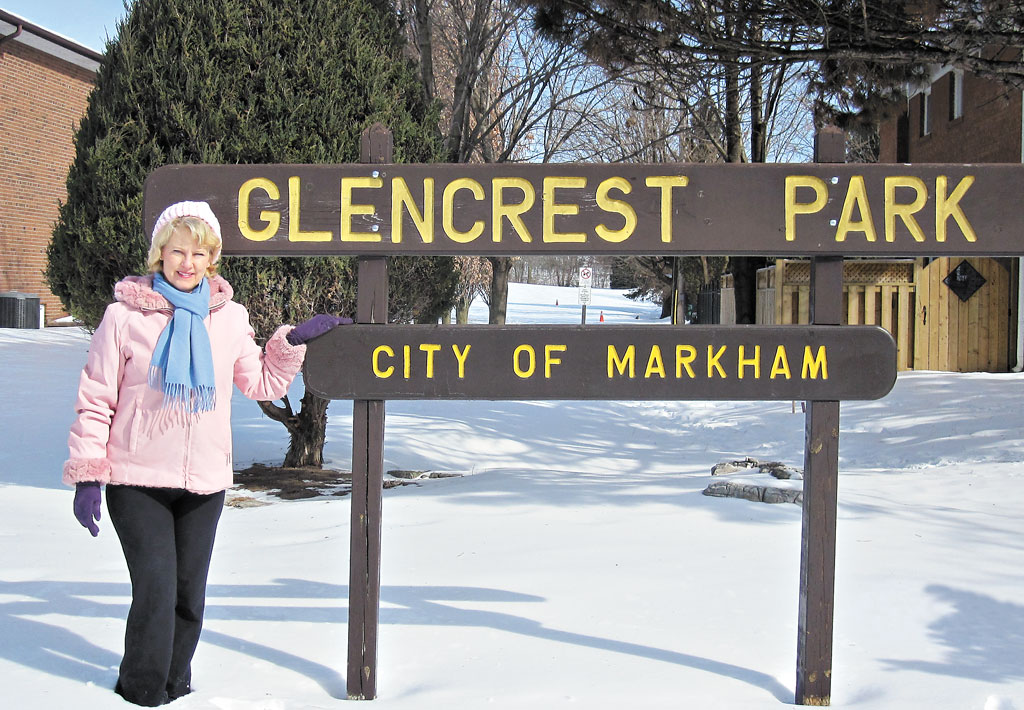
The second highlight is the renewal of Bayview Glen Park, Glencrest Park and Stonefarm Parkette, which will incorporate renewable energy, naturalization plantings and updated amenities to meet current recreational needs. 

The third highlight is a residential program to help homeowners implement sustainable retrofits at their property.

The project received funding from diverse sources, including the Federation of Canadian Municipalities, Enbridge, Canada Mortgage and Housing Corporation and York Region. The action plan is expected to be implemented starting in 2016 and realized over a five- to 10-year period.
Strengthening heritage policies

0

Heritage properties represent significant value for communities by connecting residents with Toronto’s history and culture. In Willowdale and North York, the preservation of heritage contributes to the dynamic character of our neighbourhoods.

Although development is often a sign of economic prosperity, the recent pressures of intensification have impacted efforts to maintain heritage properties. The demolition of unprotected old buildings to make way for new developments can often result in a regrettable loss.

At the last Toronto City Council executive committee meeting, I passed a motion to keep eight staffing positions from the planning and heritage divisions. This will help support studies for Heritage Conservation Districts and improve overall service levels. As chair of the planning and growth management committee, I recognize the importance of allocating resources to identify and protect Toronto’s heritage properties. By taking proactive measures, the city can prevent historic neighbourhoods like Kensington Market from undergoing the same loss of character as Yorkville Village years ago.

The planning and growth management committee also passed recommendations last month to amend the official plan to strengthen heritage policies throughout the city. 

At the heart of the issue is the balance of competing interests. These initiatives will help the city manage Toronto’s tremendous growth and will allow for a level playing field between communities and developers to produce the best outcome for Toronto.

Spring park projects underway

0

It’s been a winter for the record books, but spring is finally just around the corner. 

There’s no better way to take advantage of the warmer weather than getting outside and enjoying Ward 25’s incredible parks — and they’re about to get even better! 

In York Mills, Mossgrove Park is scheduled for revitalization, and in St. Andrews, Lord Seaton Park is set for an upgrade.

New playground equipment will be installed in both parks next year and consultations to gather neighbourhood input will be underway this spring.

Further south in Lawrence Park (right behind the Locke Library), a new drainage system was installed late last year, setting the stage for a major playground overhaul that’s already started. 

Design work is being finalized based on input from an engaging neighbourhood consultation earlier this year. Construction will soon be underway with completion targeted for the fall.

Over in Don Mills, be on the lookout for a brand new park on The Donway West just south of Lawrence Avenue East. The new park is scheduled to open this spring and will be a welcome addition to one of Canada's first (and best) planned communities.

In the meantime, I encourage you to head over to the Toronto Botanical Garden, which hosts an Organic Farmers’ Market each and every Thursday from 2 to 7 p.m. 

If you’d like to get involved in any of these Ward 25 park revitalizations or have an idea to improve a park in your neighbourhood, just drop me a line at 416-395-6408. 

Save Toronto’s own Central Park

0

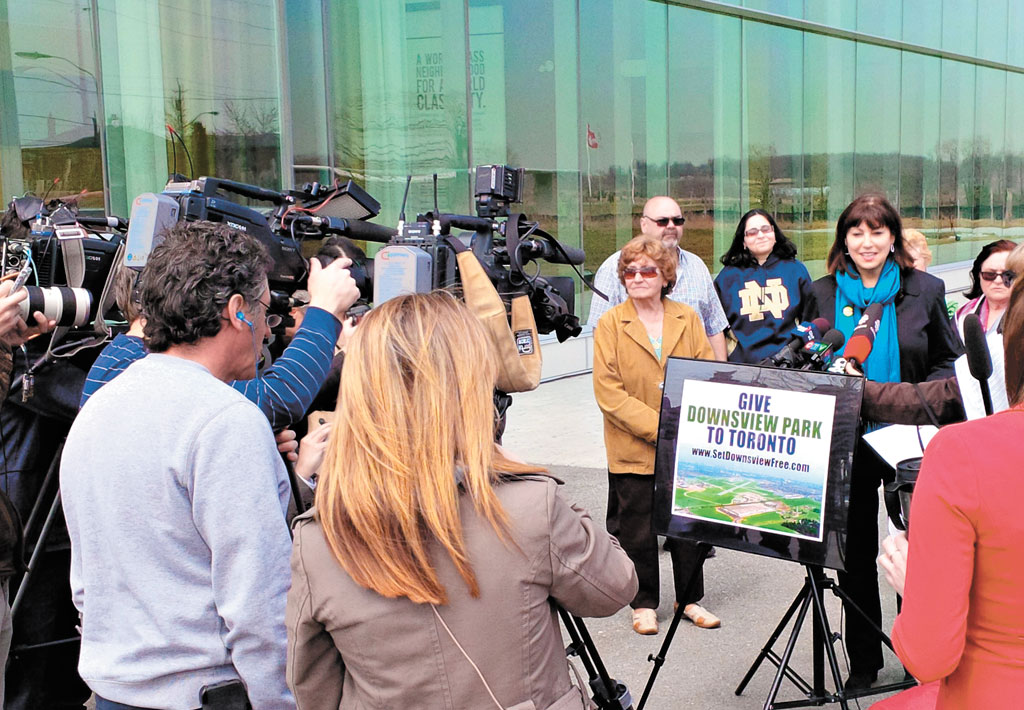
Downsview Park is as integral to Toronto’s future as Central Park is to Manhattan’s.

Although this is a bold assertion to some, consider this: Downsview Park’s green space is as distant from our downtown core as Central Park’s is from Manhattan’s lower downtown. 

Specifically, Downsview Park is almost identical in physical distance, driving time, and number of subway stops from Union Station as Central Park is from Manhattan’s lower docks. Imagine if it had been decided in the 1850s to hive Central Park into apartment blocks. 

The federal government is currently attempting such a small-minded fire sale of Downsview Park, and Canadians cannot allow it to continue.Toronto has no shortage of condominium towers. One only has to look at the cranes in our skies to see the evidence. However, our green space is a resource whose scarcity is becoming more pronounced every year. 

In a few decades we will lament the loss of any parkland we had the chance to save. Downsview Park, if permitted to be sold by the federal government to developers, will be considered a travesty by future Torontonians. We are at our own Central Park crossroads. 

Downsview Park once had the title of Canada’s First Urban National Park, which was unceremoniously handed to the Rouge Valley along with necessary money to fund that green space’s operation. It is a political decision for the federal government, not one based on fiscal necessity, to sell off Downsview Park. Visit SetDownsviewFree.com and stand with me to save our green space.

Parka fur angers activists

0

A national non-profit for the humane treatment of animals has filed a false-advertising complaint with the federal Competition Bureau against luxury parka maker Canada Goose, whose head office is located in North York. 

Detailed in 27 pages, Animal Justice Canada Legislative Fund’s (AJCLF) March 11 complaint disputes the company’s claims that its winter jackets use “ethical and responsible” coyote fur.

“We seek to defend and protect animals who are inhumanely trapped for their pelts and advance our mandate so ethical consumers are not preyed upon,” said lawyer Nicholas Wright, executive director of animal advocacy group Animal Justice — a separate entity from AJCLF. “Consumers … [may be] unaware of the cruelty inflicted on these animals,” he added.

Canada Goose, founded in 1957, is best known for its extreme winter outerwear featuring coyote fur around the jacket’s hood. 

“Coyotes, who are often caught in leghold traps, may face predation, suffer from internal bleeding or gnaw on their own leg in order to escape,” he said. 

Wright believes the re-emergence of fur as socially acceptable in the context of fur-trimmed coats is of great concern. 

But there is no evidence to substantiate the brand’s claim that coyote fur is warmer than synthetic fur, Wright said, adding that militaries use faux fur in cold-weather gear.

Alex Thomson, a spokesperson for Canada Goose, declined an interview, but directed Post City to its press statement. 

The brand is “deeply committed to the humane treatment of animals,” according to the company website. 

“We don’t believe that the humane killing of animals for functional purpose is wrong,” it states. “We are confident in both why we use fur and how it is sourced.” 

In an email response, the Competition Bureau confirmed that it has received the complaint but cannot confirm what action will be taken at this time. 

School versus homes

0

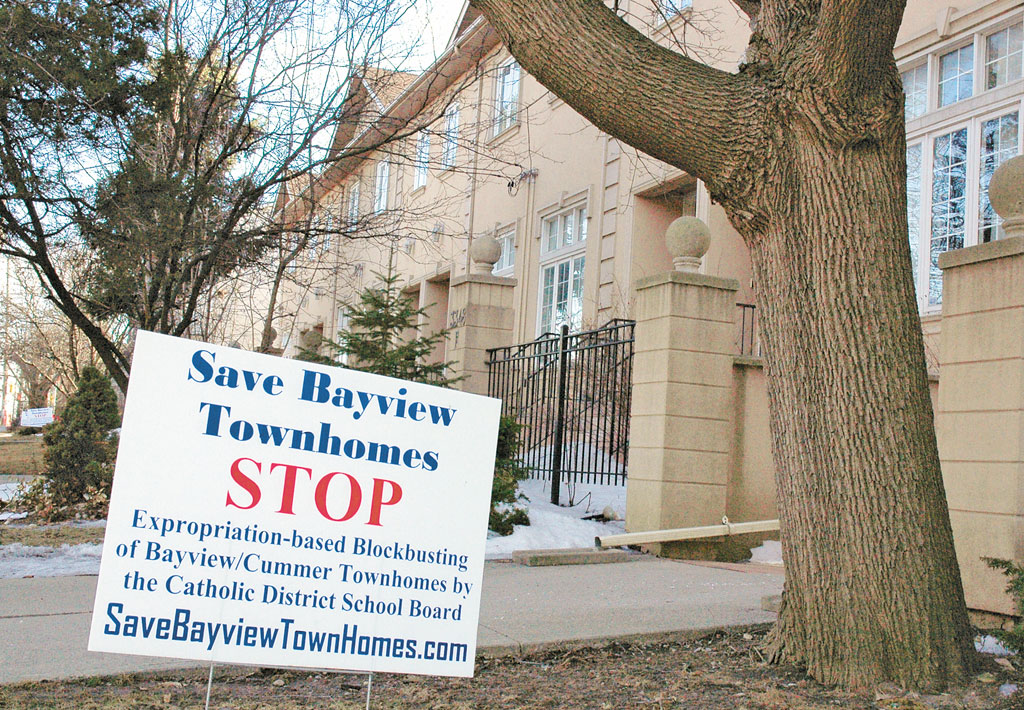
After Toronto Catholic District School Board (TCDSB) served Bayview residents with notices of expropriation to allow for the construction of a school, residents certainly weren’t happy, to say the least. But some have now rallied together, collectively hiring a lawyer to fight the case. 

The residents living near Bayview Avenue and Cummer Avenue received the notices of expropriation to allow for the construction of a three-storey, all-girls secondary school that would accommodate approximately 850 students.

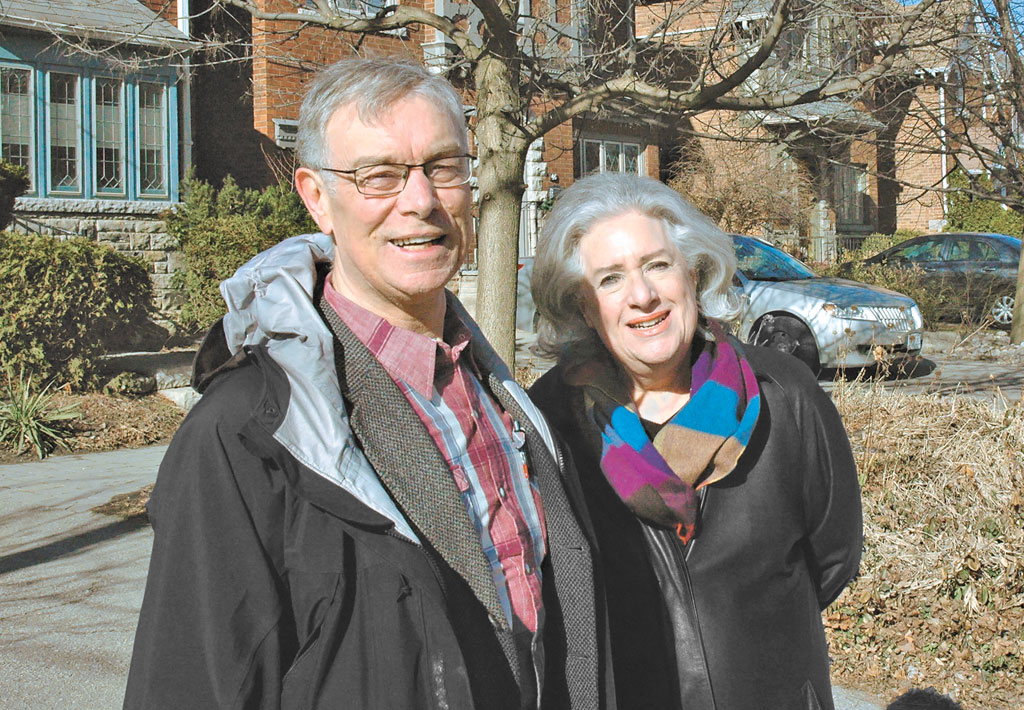
Jenni Xi is one such resident working with the lawyer to fight the case and said the whole situation is “unfair.” 

“We want to live in the same area but the housing prices make it impossible for us to buy back,” said Xi. “It’s a hard time.” 

Five months pregnant, Xi also noted that the surrounding amenities would be incredibly convenient for her as a mother in the future. Just across the street is a supermarket, bank and post office. 

But despite her determination, Xi said it’s unlikely that she’ll be able to stay in her home. 

“I heard from our lawyer.… Even with objection success in the hearing, [TCDSB] still has the power to expropriate the townhouses. So the decision doesn’t actually really matter,” said Xi. 

This is due to the province’s Expropriation Act, which allows a public agency to take possession of a property “for a purpose deemed to be in the public interest,” regardless of whether or not the owner is willing to sell it. 

Before the recent demolition, the site was home to an elementary school owned by the Toronto District School Board (TDSB) with a capacity for 400 students — the new proposal calls for double that.

Kathie Shinn is another resident who will have to move out of her home should TCDSB go through with the expropriation. 

“I think they’re being unfair because, you know, they purchased that property knowing how big it was,” said Shinn. “These are our homes; they’re not just houses to be torn down.” 

A resident of the 12-year-old homes for five years, Shinn is currently on a medical leave from work after being diagnosed with a brain tumour. 

“We don’t know whether or not I’m going to have surgery in the future and we have to look for a home too. We have too much on our plate right now.” 

Plan for Ed’s debuts

0

When David Mirvish sold the family property at the corner of Bloor and Bathurst in the Annex neighbourhood that had been home to Honest Ed’s for more than 70 years, some feared the worst. 

In early March, more than 500 people showed up at the Park Hyatt Hotel on Avenue Road to find out about the new development plan. What they might not have expected was an innovative and inclusive design that has garnered near-unanimous support from across the city.

Westbank Properties, alongside Vancouver architect Gregory Henriquez, announced the development would contain 1,000 rental suites and several storefronts and restaurants interspersed throughout 55 buildings, 2.5 to 29 storeys in height and no condominiums for sale. More than 50 per cent of the rental units will be two-bedroom or larger 

The project will incorporate a covered public marketplace, an alleyway dedicated to small startup shops with a plethora of food trucks on standby; and bike-friendly facilities as well as electric car–charging stations and green roofs designed by Toronto landscape architect Janet Rosenberg. 

“We wanted to honour the memory but, at the same time, create a vision that moves forward and captures the same vitality and visionary agenda that Honest Ed’s did back in the ’50s and ’60s when it was in its heyday,” said Henriquez. 

The 29-storey “micro-tower,” one of five on the 1.8-hectare site has a small footprint of just 5,500 to 6,500 square feet. 

According to Henriquez, these towers limit shadowing impacts onto streets, improve access to views and diminish the overall scale of the development. 

“And they’re more attractive,” he added.

Heritage preservation is also a big concern with approximately 14 addresses on Markham Street set to be preserved — including the Victorian row houses on the west side.

David Harrison of the Annex Residents’ Association is delighted to see that the developer has listened to so many concerns raised by the community. 

“There are lots of ticks in lots of boxes,” said Harrison. Although he admits that many community consultations still lie ahead.

Preservation priorities

0

Leaside was nominated to become a Heritage Conservation District (HCD) in May of last year by former councillor John Parker. One of 16 areas currently nominated throughout Toronto. But some local residents are concerned that the process is taking too long and the character of the historic neighbourhood is at risk. 

The most recent report, released in February, calls for only half of those district studies to commence by the end of 2016, with Leaside and Summerhill among those to follow at a later date.

“Several of these areas, including Leaside, face rapid erosion of the heritage character for which they are being nominated,” said Geoff Kettel of the Leaside Property Owners’ Association (LPOA), who is concerned with the slow implementation of the program. 

Carol Burtin Fripp, co-president of LPOA, said that while a lot of people are buying houses in Leaside, what they’re really buying is the lot. The demolition patterns happening in the area have her concerned, as well as the “monster homes” that are going up in place of the existing ones. 

“By the time anyone starts looking at Leaside, there will be hardly anything to look at,” she said. 

The proposed study area for Leaside focuses on the residential portion of the former town border by Bayview Avenue to the west and Laird Drive to the east, north to Glenvale Boulevard, south to Leacrest Road. She cites Parkhurst Boulevard as a particularly notable area relatively untouched by development.

According to Burtin Fripp, residents under HCD designation would be free to renovate the interior of their home, but would have to seek permission to make alterations to the publicly seen exterior. Currently, there are 16 HCDs in the city, including two in nearby Rosedale.

“For a lot of people, their home is their single biggest financial asset,” she said. “We’re not looking to threaten that. We’re simply looking to maintain the nature of Leaside, rather than replace it.” 

Sidewalks, make way

0

An advisory committee has asked the City of Markham to give cyclists the green light to ride on sidewalks. 

Seeing cyclists on sidewalks is a rare sighting in a city where a 1971 bylaw prohibits it based on wheel size, which can not exceed 60 centimetres. So children on small bikes are exempt from the $2 fine, but it is not even enforced, according to Peter Miasek, vice-chair of the city’s Cycling & Pedestrian Advisory Committee (CPAC).

Miasek said sidewalk bike riding was proposed to the city as a cost-effective interim solution to the lack of connected bike lanes in Markham. “It’s a growing problem that pushes cyclists to turn to major arterial roads,” he said, citing Bayview Avenue, Leslie Street, McCowan Road, Warden Avenue and 16th Avenue as examples of areas with gaps in cycling facilities. 

“I am a reasonably avid cyclist, but I still go on the sidewalks sometimes because it’s just too dangerous [not to],” he admitted.  

CPAC’s recommendation is limited to areas with a speed limit of 50 km/h or over. However, Coun. Valerie Burke suggested that 40 km/h be considered in some cases, such as John Street in Thornhill, said Miasek. 

“We are looking at putting in bike lanes on existing roads if they are wide enough, but that still leaves a lot of areas with no construction planned — or areas that aren’t wide enough, which is where the sidewalk alternative comes in.”

Coun. Don Hamilton, who moved the recommendation, added that the cycling demographic in Markham is changing. “All kinds of older people are biking now,” he said, creating a need for greater cycling infrastructure, such as multi-use pathways.  

But Wing Morse, a traffic representative for Ward One South Thornhill Residents Inc., said it would be nicer to enhance the confidence of cyclists by building bike lanes on the right-hand side of streets as opposed to taking up pedestrian space. 

“Motorists will then realize that they need to share the roads.” 

Posies for Parkinson’s

0

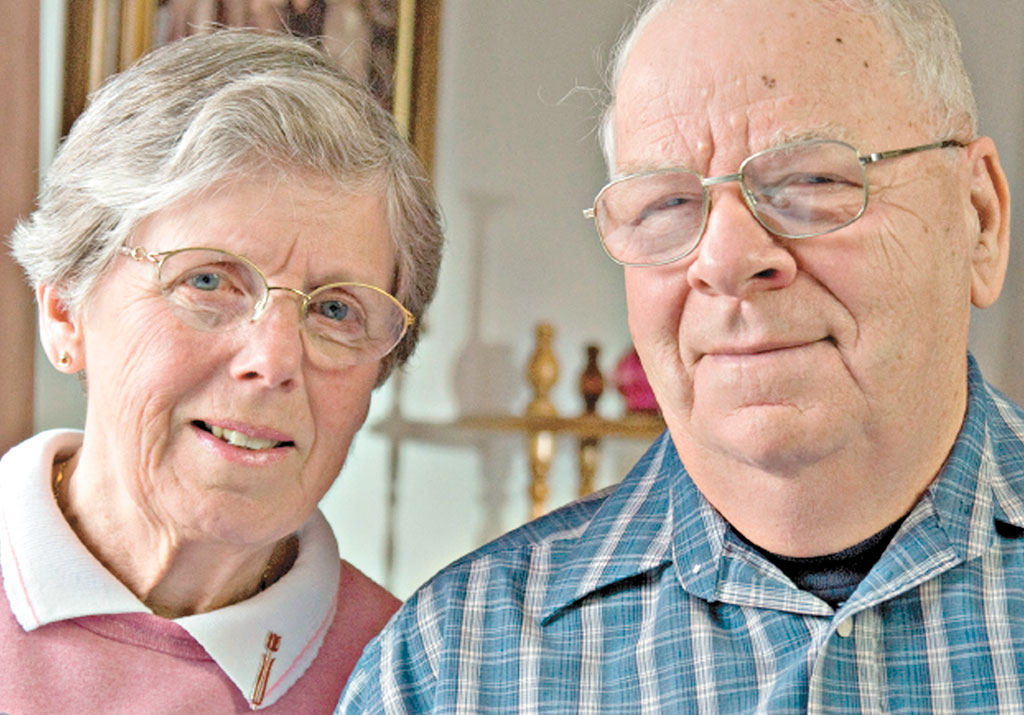
In 2014, North York couple Marg and Don Turner, both over 75 years of age, decided to dress up as superheroes for their venture up Yonge Street in support of Parkinson Society Central & Northern Ontario’s SuperWalk —  the walk’s theme: “Everyday Heroes, Extraordinary Hope.”

The SuperWalk is the largest national fundraising event for the disease in Canada. The duo raised $1,875 for the cause last year alone — an endeavour they have embarked on annually since Marg was first diagnosed in 1994. 

This April is Parkinson’s Awareness Month, where Torontonians sell potted tulips in order to help raise money and awareness for the disease —  a campaign Marg and Don actively take part in. 

According to Parkinson Society Canada, more than 100,000 Canadians are living with Parkinson’s disease — a progressive neurodegenerative disease, which affects voluntary, controlled movement. Tremors, slowed movements and stiffness or rigidity are often telltale signs of the affliction, for which there is no cure.

When Marg was first diagnosed more than 20 years ago, the neurologist who delivered the diagnosis gave her very little information regarding how to cope with the disease. 

“He said, ‘You have Parkinson’s disease,’ and that was it, nothing more,” said Marg, who claims she didn’t even get so much as a pamphlet. 

That is why Marg and her husband Don also help teach courses and run information sessions to educate those living with the disease. 

“Parkinson’s is one of the lesser-known diseases out there, and anything we can do to raise awareness, we try,” said Marg. 

Since Parkinson SuperWalk began in 1990 with just seven walkers, the event has raised more than $28 million for education, support, research and advocacy on behalf of Canadians with Parkinson’s.

Cold hands, warm heart

0

Canadians have a knack for complaining about the weather, especially when the first day of “spring” has come and gone and we’re still facing sub-zero temperatures. But although many of us have heated houses to curl up in, more than 300 youths are homeless in the York Region according to an annual report by 360°kids, a charity that provides support to at-risk youth and families in the region.

Richmond Hill resident Jadyn Dragasevich wanted to experience first-hand what homelessness felt like. As such, the 16-year-old co-chaired the first-ever 360°Experience Young Leaders Edition, an event that invited students from 20 schools across York Region to spend a night on the streets under the charity’s supervision. Richmond Hill mayor Dave Barrow also took part in the event (see story on page 9). For Dragasevich, the event took raising awareness to a whole other level. 

“People are no longer just sitting behind a computer screen in the comfort of their own homes and reading those stats off of their computer screen while there’s food warming up in the kitchen,” he said. “They’re experiencing — you know, on a very micro-level scale — what these kids are actually experiencing every day in their lives.” 

Dragasevich’s involvement with the charity began last year when his civics class took part in the Youth Philanthropy Initiative, which provides secondary school students with the skills to assess the needs in their community. Choosing to raise awareness for 360°kids through a 15-minute documentary, he earned the charity $5,000 and has stayed involved ever since. 

Dragasevich said, “360°kids is, in my mind, the best charity in York Region for the reason that it really focuses on the issues that I think lead to a better future for tomorrow,” the St. Andrew’s College student said. “If we really try to focus on the youths, we can accomplish so much more,” .

Brittany Wilson, resource development associate of 360°kids, hand-picked Dragasevich to co-chair the event. “He was such a go-getter,” said Wilson. “He went and booked the interviews with [mayor of Richmond Hill] Dave Barrow.… He’s totally into it and he’ll do great things for the community now and when he’s older.”

Students have rights too

0

In a precedent-setting decision, an Ontario judge ruled in favour of two high school students who argued that their principal’s plan to implement compulsory breathalyzer testing at their senior prom was unconstitutional.

Before the event in May of last year, Ron Felsen, principal of Northern Secondary School, notified students that the school would impose mandatory breathalyzer tests on all attendees prior to entry at the Eglinton Grand venue in Toronto.

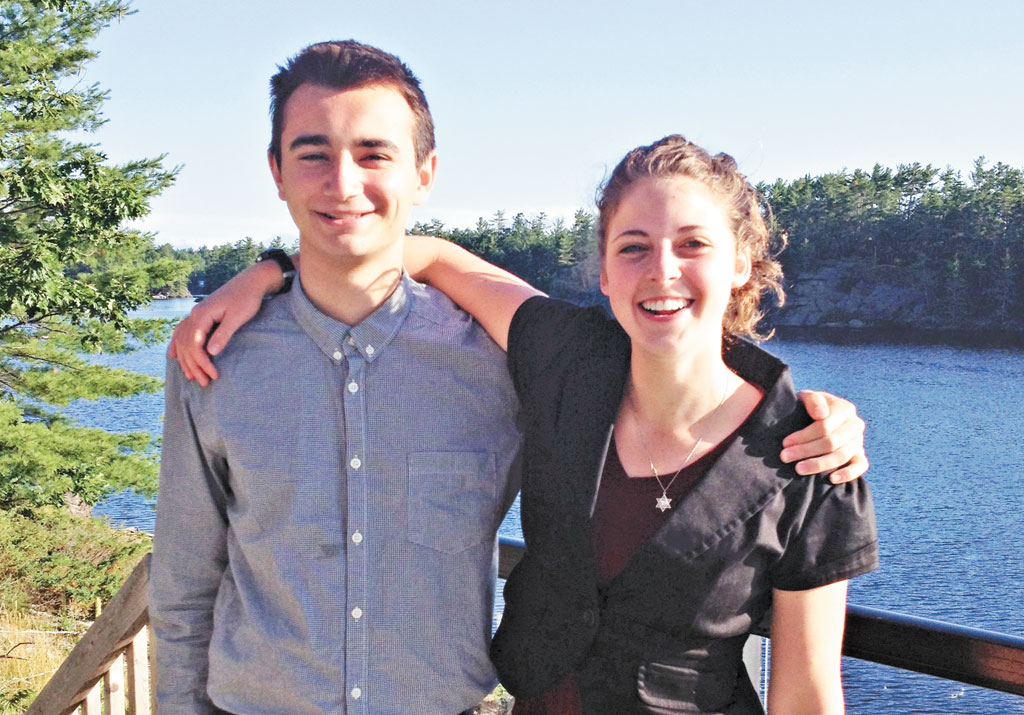
Offended by the decision, Brett Gorski and Simon Gillies, former president and vice-president of the student council respectively, began to conduct research on how it might infringe on their constitutional rights and contacted the Canadian Civil Liberties Association for guidance.

Representatives referred Gorski and Gillies to Toronto lawyer Jonathan Lisus, who offered his services to the two pro bono.

In early March, five months after the initial hearing in September, Justice Susan Himmel ruled that the testing would infringe on the student body’s right to be free from unreasonable search or seizure, as protected under Section 8 of the Canadian Charter of Rights and Freedoms.

Ian Matthews, co-counsel for Lisus, noted that it appears to be the first case where a judge has concretely determined that the charter does in fact apply to school authorities and off-site school-sponsored activities.

“It is an important confirmation from the court, and it will give a lot of guidance to school authorities and students about the applicability of the charter of rights to their actions,” said Matthews.

"The blanket nature of the test assumes the student has done something wrong and treats them as though they’re guilty before being proven innocent,” said Matthews.

In the absence of a ruling in May, the school chose not to enforce mass testing at the 2014 prom. Gorski and Gillies attended their prom without the use of breathalyzers and graduated from Northern Secondary School in June.

“It’s been a tremendous learning experience,” said Gorski, now 18, studying management at McGill University. “It’s amazing how much students have to learn, including myself, about their rights.”

Matthews commended both students. “That is exactly the type of behaviour we want to foster and encourage in our young adults,” he said.

Principal Felsen also applauded the two and added that the process was certainly a great civics lesson.