
Home Blog Page 25

Rallying for railway safety

0

In Ward 6 — and elsewhere in Richmond Hill — GO trains serve commuters on weekdays and CN transports goods along the rail tracks on a daily basis. The recent train derailment on this CN railway near the town’s Elgin Mills Road East area has heightened attention to the priority of rail safety.  

As a director of the national Federation of Canadian Municipalities (FCM), I have raised concerns about a variety of issues: the need for better disclosure and regulation on types of goods, structural integrity of tanks, emergency planning, training and response, risk assessments, oversight and enforcement of rail safety by Transport Canada.

Working with FCM’s national municipal rail safety working group, Transport Canada supports real time information sharing during emergencies and efforts to strengthen regulations regarding rail operations. A new Safe and Accountable Rail Act (Bill C-52) proposes amendments to existing legislation to create new regulatory powers for Transport Canada in order to better address safety concerns raised by FCM.

At the local level, I have pressed for repair of the grade crossings at Weldrick Road East as surface conditions have gone from bad to worse. The good news is that asphalt overlay will be undertaken this summer to provide a smoother transition over the rail tracks. As a long-term solution, it would be a good idea to build grade separations with a bridge overpassing the rail tracks, like the one on 16th Avenue.  

Please share your views with me at the 7th annual Ward 6 Summerfest at David Hamilton Park on June 21.

What you pick up matters

0

Whatever happened to having pride in your community?

This spring, a number of residents called. They were upset by the messy state of our public spaces, from roads to boulevards and parks around the neighbourhood. They complained that there is litter everywhere they walk. They expressed their concern. 

The people who are calling about this problem do care. I would guess that they are not dropping waste on the ground as they walk. In fact, I know that some of our veteran walkers actually pick up litter as they come across it.

So what is this phenomenon and what can we do about it?

At least one explanation for why it is so easy to not notice this unsightly mess is that we live in such a car-oriented environment. Although there are dedicated walkers in the area, most people just get in their cars and drive to wherever they are going. It’s really hard to see the tossed water bottle on the boulevard at 60 or 70 kilometres per hour!

As well, there is an accumulation of litter that takes place during the winter months. In response to this annual occurrence, Vaughan, as well as many other GTA municipalities, hold a 20-Minute Makeover in April, when literally thousands of residents help clean up their neighbourhoods. This year it was on April 17. The City of Vaughan also sends out street-cleaning trucks in April. In the end, though, it is about taking pride in where you live by doing the small things that make a great community: putting your waste in a receptacle, picking up litter when you can and making sure your kids know that they have a responsibility to the other people living in the neighbourhood. 

Commuters, slow down for safety

0

Traffic infiltration is something my ward, Don Valley East, has in common with Leaside, one of Toronto’s oldest planned subdivisions. On bad days on the Don Valley Parkway, literally up to 100,000 cars might disembark at Eglinton Avenue and infiltrate Leaside to get downtown. This is why, quite understandably, residents of Leaside rose up in one angry voice when little Georgia Walsh was fatally hit by a car in 2014 on a subdivision collector road.

Ward 33 includes the nexus of the Don Valley Parkway and Highway 401 as well as all the nearest alternate arteries to accommodate overflow from these highways. Most daily commuters from Scarborough and Markham know all sorts of clever shortcuts around these arteries and highways by darting onto Ward 33’s local roads and subdivision collector roads.

The current proposal before the public works and infrastructure committee to reduce the default speed limit on local roads and collector roads to 30 kilometres per hour is designed to improve quality of life in neighbourhoods just like these. But here is the kicker, this measure has also been shown in some cases to make your drive to work faster, not slower. 

Reducing speeds inside the subdivisions reduces infiltration, making access and egress from driveways and around schools more efficient. If you offset things further by being more consistent in making main arteries 60 kilometres per hour wherever road design allows, you all but eliminate infiltration.

If we abandon our shortcuts and enter local roads only once we are there for a local purpose, some of these improvements could be achievable today.

Local jobs can alleviate traffic woes

0

In January, the City of Toronto released its annual employment survey. This report highlights an important issue for North York Centre. Our population is growing dramatically, but our local job numbers are not. This is undoubtedly having an impact on our traffic woes.

Overall, employment was up in the city by 1.5 per cent last year, but in North York Centre the net number of jobs dropped by 1.5 per cent. Over the last five years, our employment numbers have grown by only 0.5 per cent, while the last five-year census period showed population growth at over 11 per cent.  

Local residents need access to jobs. Preferably, they would have the option to work close to home and not be reliant on a car for daily transportation. Traffic to and from commercial buildings generally flows in the opposite direction of residential buildings. Residents tend to drive out in the morning and back in the evening. For commercial traffic the opposite is true.

Fixing our local traffic problems hinges on improved infrastructure.  But it also requires a better balance between residential and commercial development. Unfortunately, city planners and elected officials don’t get the final say. 

As the Gibson Square development at the corner of Yonge and Park Home nears completion, it serves as a reminder of how easily lands zoned commercial by the city can be converted to residential towers with an appeal to the Ontario Municipal Board (OMB).  

Arguing that the critical need is to protect our employment lands may be an effective new strategy in an effort to protect the city’s official plan from the OMB.

Commuter shortcuts pose a threat

0

Many residents report commuters cutting through local roads in an effort to avoid congested collector and arterial thoroughfares. With the City of Toronto’s construction season looming and evidence of growth around us, arteries will become even more clogged, and neighbourhoods will feel the spillover.

This is not a new issue; however, the stakes have never been higher for pedestrians, cyclists and children at play. Policy-makers are challenged with the million-dollar question: how can we most effectively reduce driver speed and modify driver behaviour in our neighbourhoods? Currently, speed limits on residential streets are reduced to 30 kilometres per hour if traffic calming measures like speed bumps are installed. However, speed bumps can be both unpopular and ineffective in ensuring safe driving. A recent staff report from City of Toronto, Transportation Services proposed a framework for reducing speed limits to 30 kilometres per hour on local streets without the need for speed bumps — provided a petition is submitted and a list of conditions are met. City council will decide on the policy in early May.

I remain committed to my “safe streets pledge” to advocate for the reduction of speed limits in school zones while being mindful of the fact a reduction alone will not guarantee a change in driver behaviour.

An organic and comprehensive strategy, which considers road engineering, traffic regulations and enforcement, is required. I will be forming a safe streets action committee that brings together residents to develop an inclusive approach that meets the community’s needs.

Leaside Park home to new rec centre?

0

Ward 26 Don Valley West is one of the most diverse wards in the city, and I believe that one part of our ward, Thorncliffe, needs more attention.

Thorncliffe is designated as a City of Toronto Neighbourhood Improvement Area (NIA). Statistics indicate that 26 per cent of the population is under the age of 14. In a few short years, this large group of children will become teenagers.

I am particularly concerned about the lack of adequate facilities in Thorncliffe, translating into a lack of opportunity for youth in the area. It is essential that we provide sufficient programs and facilities to engage our youth.

Unfortunately Thorncliffe is severely underserved compared to most areas of the city and this can’t be ignored any longer. This area is in great need of a fully functioning community centre, and this is what I am working toward.

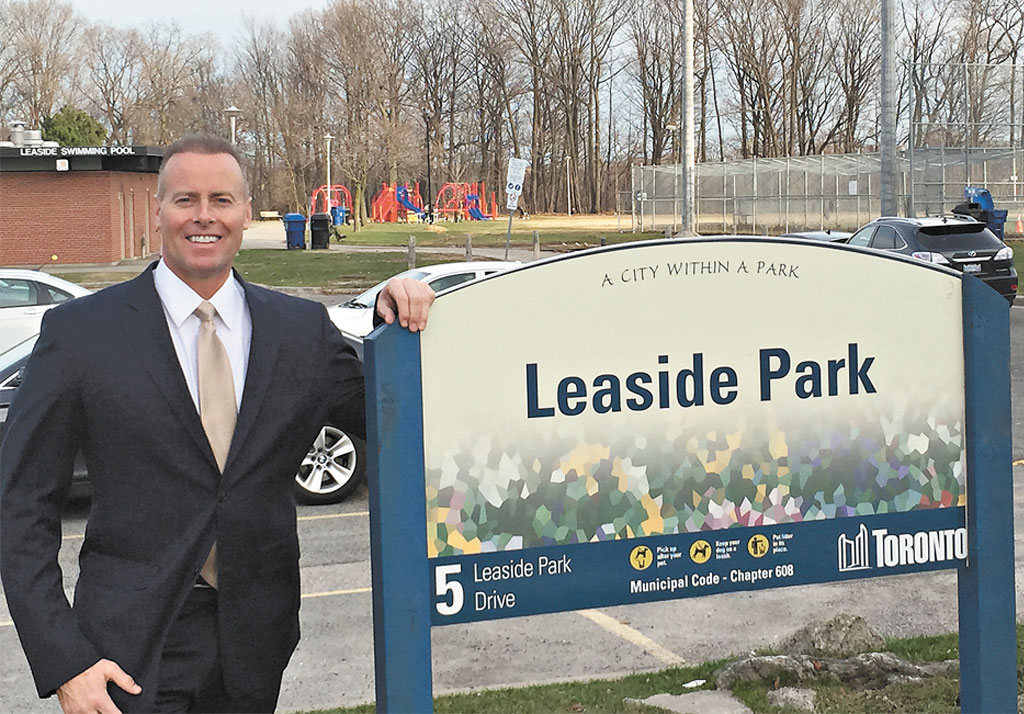
As a result, on March 23, I held a Thorncliffe town hall in which the main focus was Leaside Park and its renaming.

I believe that this would be an ideal site for a new community centre. Given that government funds are limited, I will be looking for external funding for this worthy project. It is currently very difficult to have funders recognize that Leaside Park is actually located in Thorncliffe Park.

I have started the renaming process; however, as I stated during the town hall meeting, the name will be a community decision.

Please contact my office at 416-392-0215 if you have any suggestions for a name for Leaside Park — we are taking all ideas into consideration.

Townhouse development heads to OMB

0

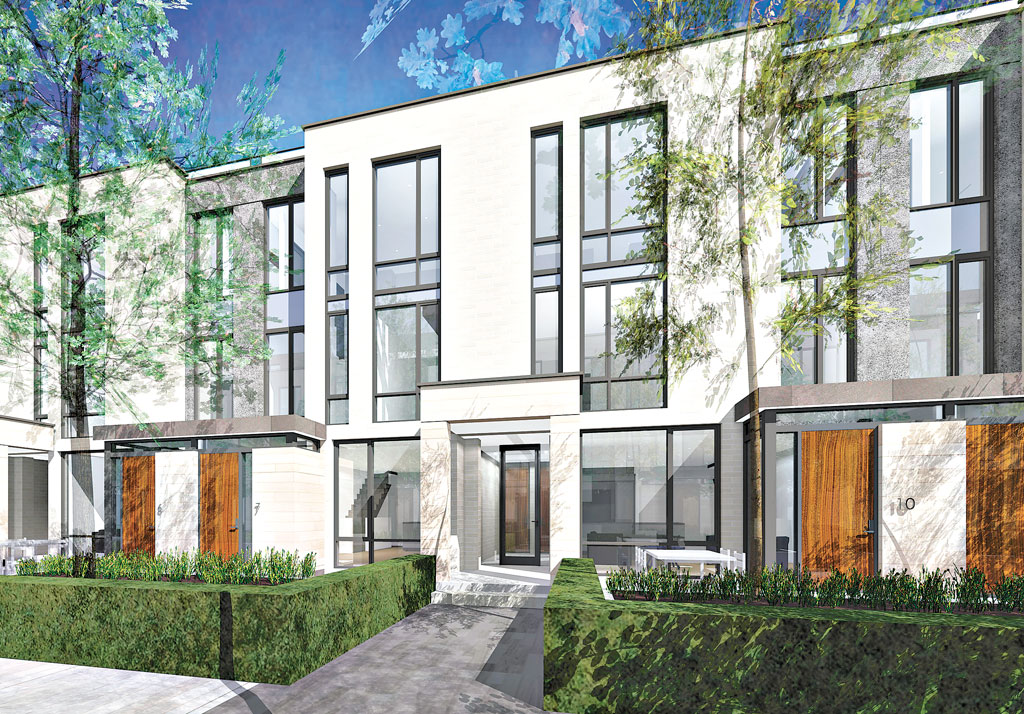
A developer has appealed to the Ontario Municipal Board (OMB) for a proposal that calls for 40 townhomes at 2425-2427 Bayview Ave., leaving residents and city planning staff concerned. 

The battle began in 2006 with a proposal that originally called for 20 townhouses, submitted by the developer Hush Homes. The new application, submitted by Urbancorp in 2014, has proposed to build 40 townhouses on the same lot that once was slated for 20.

A community consultation was held on March 26, where residents shared their concerns about the future intensification, lack of privacy and traffic the proposed development could bring. 

“We’re very concerned about the precedent it will set, if this development is approved,” said John Nicholls, president of the York Mills Gardens Community Association.

Nicholls is also concerned about the added congestion the development would cause on Bayview Avenue — particularly at rush hour.

But Ward 25 councillor Jaye Robinson believes the developer “usurped” the City of Toronto’s planning process.

According to Coun. Robinson, Urbancorp has made assurances to work with the community in the past. 

“I hope they stick to their word,” she said.

As of right now, residents are mobilizing, and Robinson has made it clear that she’ll be working with her community to help fight the development.

According to David Bawden, past president of the York Mills Ratepayers Association, residents raised approximately $120,000 to fight the site’s previous development in 2006, and it wound up receiving approval from the Ontario Municipal Board nonetheless.

City of Toronto planner Guy Matthew will submit a report to the North York Community Council in June, recommending a position for Toronto City Council to take. 

A pre-hearing at the OMB is scheduled for July 27. 

Requests for comment by Urbancorp were not returned by press time.

Remembering Lois

0

Generations of Canadians have grown up with Sharon, Lois & Bram. On April 22, Lois Lilienstein passed away at age 78 due to a rare form of cancer. Kids and parents alike have been delighted by the musicians’ tunes since the group formed in 1978 and helped instill a love of music in many. Throughout her long career, Lilienstein scooped up various Junos and Gemini awards and, in 2002, received the Order of Canada along with her bandmates.

The cheery trio earned themselves Canadian icon status among the preschool crowd when they launched “Skinnamarink” upon the world. Several seasons of mid-’80s TVO success followed (does The Elephant Show ring a bell, anyone?), and the family-favoured threesome eventually found a home for their act on CBC-TV.

Coun. Josh Matlow, who grew up with the musicians’ music, helped honour the legacy of Sharon, Lois & Bram last year when he announced that the city had named the playground in June Rowlands Park the Sharon, Lois & Bram Playground, recognizing the iconic group’s devotion to creating quality music for children — in addition to their commitment to philanthropy.

“It is a testament to the timeless appeal of Sharon, Lois, & Bram’s music that many of our kids, and those of us who grew up being entertained by them, can recite the “Skinnamarink” verbatim three decades later,” noted Coun. Matlow in an email.

Throughout their career, the band was actively devoted to childrens’ charities, most notably UNICEF, which they became spokespeople for back in the 1980s. In addition to championing the orange box Halloween collecting program, the trio did a number of larger scale projects for both UNICEF’s Canadian and international chapters. To mark the 50th anniversary of UNICEF, Sharon Lois & Bram performed at the general assembly of the United Nations.

“I intend to find an appropriate way, with her family, to further recognize the late, and forever loved, Lois Lilienstein,” says Coun. Matlow. “Along with Bram and Sharon, Lois helped make so many childrens’ lives magical and musical.”

Student privilege in parliament?

0

Upper Canada College (UCC) students are “disheartened” after Ontario New Democrat Cheri DiNovo remarked that the school should end its tradition of using the legislative chamber at Queen’s Park for its Ontario model parliament, said the student-run program’s faculty advisor Matt Griem.

“The students thought she was degrading all the work that they have been doing. She called them elites,” he said.

DiNovo said she was surprised to learn over the Easter break that UCC has always had private use of the Ontario legislature for two days.

“It’s an incredible privilege,” she said. “Yes, UCC invites other schools, but it’s still them that gets the space. If all Ontario high schools knew this was available to them, they would step up.”

But Coun. Josh Matlow doesn’t share her view, tweeting: “I think @UCC_Community is being treated unfairly by an ill-informed MPP.”

The legislature’s protocol office has confirmed that any school can make a request to hold a model parliament via an online application. York University and University of Toronto (U of T) have used the space before. 

Since the program’s inception in 1986, UCC has never refused any school but tried to limit each delegation to about 20 students so others can get a taste of provincial politics, Griem said. The not-for-profit program charges students a $70 registration fee, which goes toward renting U of T’s Hart House as a secondary site for a mock debate during the three-day simulation.

This year, 25 schools participated — among them Leaside High School, Central Technical School and Senator O’Connor College School — and only 18 of the 214 students, ranging from Grades 8 to 12, were from UCC. Thirty students received financial assistance.

DiNovo’s comments came just weeks after UCC had already announced to other schools that this year would mark the end of the program, citing logistics as one of many challenges.

Markham City Council on thin ice?

0

Markham residents are questioning the city’s attempt to keep private the documents of a report that looked at the possibility of building an National Hockey League–sized arena in their area.

The arena was never built, but the tab for the failed project has cost Markham taxpayers $726,000 dollars — but they’ve been blocked from seeing how that money was actually spent. 

“We paid for these reports, we should be able to see them, simple as that,” said long-time Markham resident Marilyn Ginsberg. 

Ginsberg also said she believes the city has long tried to keep private any ideas and planning surrounding this project, which she said had included talks to borrow over $3 million for the build. 

“The secrecy of these documents just adds insult to injury. This is a crime against transparency in the City of Markham,” Ginsberg added.  

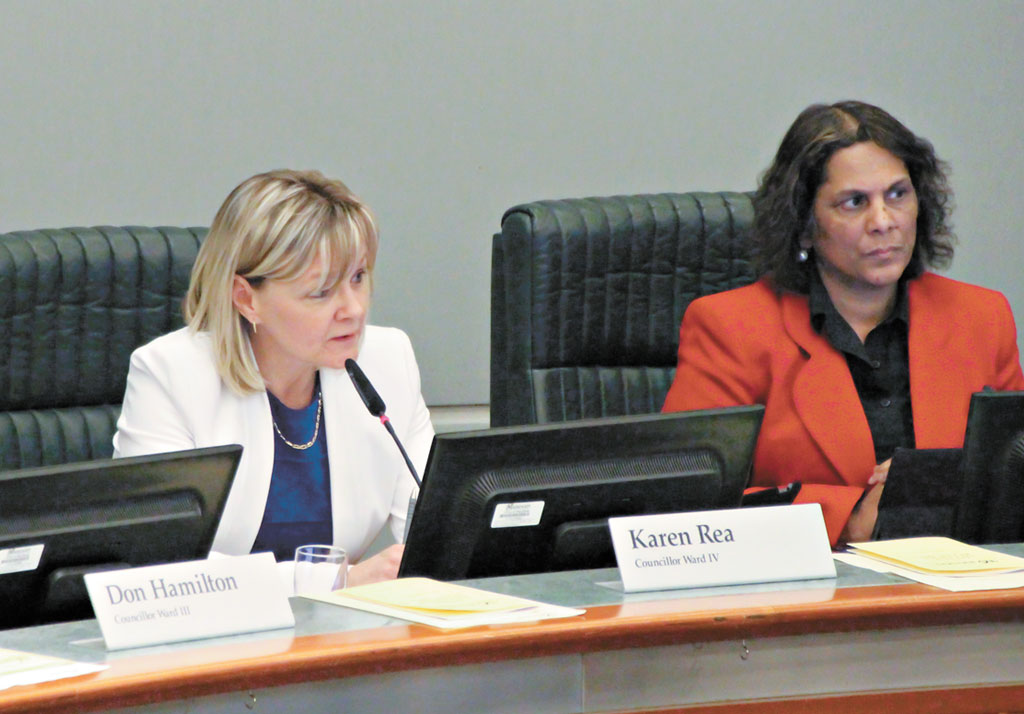
According to newly elected councillor Karen Rae, the project had also been negotiated for over one year before anyone outside a small circle had found out about it. 

Rae had filed a freedom of information request regarding a report on the arena back in 2012 and then again in 2013, both times as a private citizen.

“This is not pocket change. The taxpayers paid for it. They should have access, and they have a right to know where their tax dollars are spent,” Rae said. 

In April, the Information and Privacy Commissioner of Ontario (IPC) ordered portions of the report to be made public and to have the reasons for privacy, provided by Markham City Council, reviewed. 

“The city has received interim orders from the Information and Privacy Commissioner of Ontario (IPC) regarding two outstanding appeals for the disclosure of documents related to the arena project,” Markham’s city clerk, Kimberley Kitteringham, wrote in an email to Post City.

The city has asked for a 60-day extension to review the papers —searching specifically for exemptions such as client-solicitor privileges and economic interests — before releasing them. The IPC later agreed to a three-week extension. 

The city has until May 13 to release the papers to the public.

Town reaching for stars, literally

0

The Town of Richmond Hill has put forward two park options for the David Dunlap Observatory  (DDO) lands, and residents like what they see from both, following a public workshop held at the Elgin Barrow Arena in April.

“Option A, David Dunlap Observatory Park, has a greater focus on the observatory as a key draw with a planetarium and/or an interpretative centre, so people can understand more fully what they are seeing, ” said Greg Warren, a landscape architect at Janet Rosenberg & Studio (JRS). 

He added that a centre for public outreach and education on astronomy would be included. 

By contrast, Option B, David Dunlap Discovery Park, is focused on urban agriculture, but the observatory will remain one of the attractions. 

“It celebrates discovery — past, present and future,” Warren said. 

JRS, the architecture firm behind the Garden of Light at Luminato’s Festival Hub this June and the redevelopment of the Honest Ed’s site in Toronto, studied several other successful parks in open spaces upon being retained by the town in 2014 to develop options for the DDO area. 

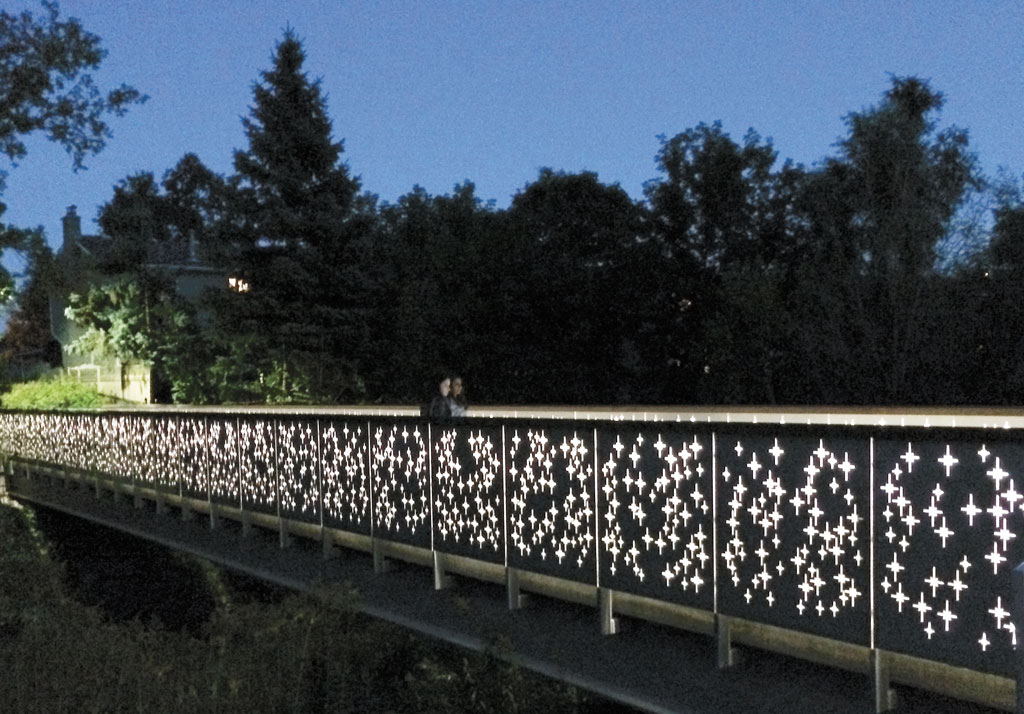
Option A, the observatory vision, aspires to transform the site into a GTA-wide tourist attraction boasting astronomy-themed features and other park elements: a visitors’ centre in the historic Elms Lea Farmhouse, a star path, and a solar system or other astronomy-themed maze. Option B, the discovery park, however, would be more Richmond Hill–oriented and include a museum and a heritage orchard as well as an experimental tree nursery. A pedestrian and cycling bridge is in both plans, among other common elements.  

In 2012, the town paid developer Corsica Development Inc. $19.5 million for the David Dunlap Observatory “panhandle’’ lands. The 4.9-hectare site, which the town had been leasing, includes the David Dunlap Observatory Park and the Elvis Stojko Arena. The rink would be supplemented with an indoor recreation facility under Option B and an outdoor skating rink and tennis court with Option A. 

“The final vision won’t necessarily be precisely Option A or Option B,” said Patrick Lee, the town’s director of policy planning. 

“This is one of the most important public spaces in the GTA. Whatever we land on, it will be a great site,” said Warren.

Neighbourhood could lose local medical centre

0

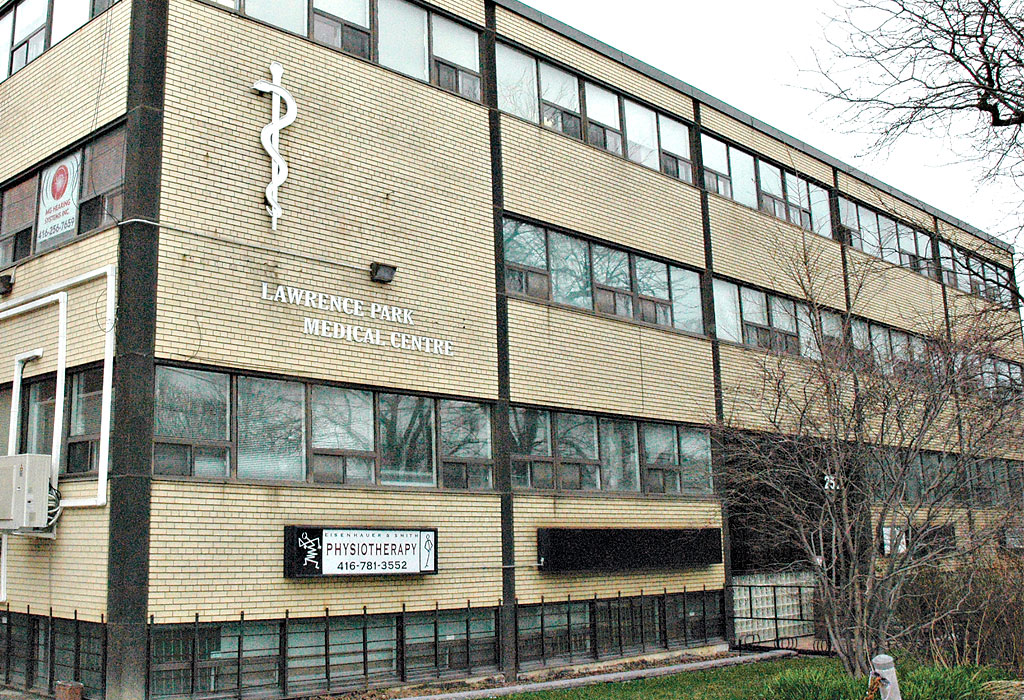
From the outside, Lawrence Park Medical Centre at 250 Lawrence Ave. W. might look a bit worn down, but it serves an important purpose. It houses many of the neighbourhood’s doctors and specialists and it caters to thousands of patients.

But now the centre has been sold for approximately $12 million and  the new owner is looking to demolish it and put up an 11-storey condominium in its place — leaving councillor Christin Carmichael Greb to wonder: where will doctors and patients go?

An official plan amendment and zoning application was submitted by the Goldberg Group to the City of Toronto on March 27. The development calls for 259 units, three townhomes fronting onto Glengarry Avenue and three levels of underground parking. The proposal also calls for the corner house, at 219 Glengarry Ave., to be demolished and turned into two semi-detached homes.

Although Coun. Carmichael Greb is also opposed to the height of the proposed building, her primary concerns with the application are the lack of employment use and the displacement of doctors, patients and other businesses.

“It’s a medical building that is heavily used by the surrounding area,” said Carmichael Greb, who is concerned about the seniors and families with young children in the neighbourhood who frequent the centre.

Irena Gryffer, a hearing instrument specialist in the building, said that maintaining a level of comfort and accessibility for patients is important, and the camaraderie between other tenants is useful since many of her patients see more than one specialist in the building.

“Every single day we get a call asking if we’re taking new patients,” said a receptionist at the office of family physicians Sheldon, Grant and Catz-Biro, at which point a patient sitting in the waiting room chimed in, “It’s hard finding a good doctor in Toronto.”

But it’s not just doctors — there is a blood lab, an X-ray and ultrasound lab, physiotherapists and other office space being used.

“All these people, specialists and others now have to scramble to find where they are going to go. It’s something we’re trying to stay on top of,” said Carmichael Greb, who then added that commercial properties being redeveloped for residential use is a common issue happening in the neighbourhood. 

The councillor has asked City of Toronto, City Planning to expand the notice area so more residents are informed of the process and are able to get involved, and she anticipates a preliminary report to be issued sometime in May, followed by a community consultation meeting.