

Home Blog Page 24

Are recent Toronto Police changes reducing transparency?

0
mark saunders

Many journalists will agree that having a thick skin is a much-needed attribute for success in the industry. After all, reporters often bear the brunt of insults, rants and meltdowns that have resulted in them being called a “bunch of maggots” or “toxic little queens” (among other creative descriptors).

But although former mayor Rob Ford and actor Alec Baldwin may have their qualms with journalists, reporters have also been referred to as “watchdogs” who have an obligation to the truth, a loyalty to citizens and a duty to independently monitor power. 

The need for these duties is why many have criticized the Toronto Police Service’s (TPS) recent decision to use encrypted digital radios, irrevocably affecting journalists’ abilities to maintain their watchdog status, some say.

Until March, TPS used analog radios that allowed reporters to purchase and use scanners to overhear communications between police officers. Now, encrypted digital radios require individuals to provide a key — or code — to gain access to such information, effectively silencing the scanners crime reporters have relied on for so many years. 

The switch has not only cost journalists the ability to gain up-to-the-minute information about local crimes; it has also cost the city a whopping $50 million. 

According to TPS spokesperson Mark Pugash, the switch was mainly motivated by concerns over citizens’ privacy.

“We put out information over the air that can include people’s medical history, people’s criminal history, illnesses that they may have and issues that we may be investigating them for,” said Pugash. “When you have a tool that allows you to protect peoples’ privacy, it seems to me that you’re duty bound and honour bound to do it.” 

Pugash additionally expressed concerns over the media’s “sense of entitlement” in accessing such information.

“The law says private information is private.… And we cannot release that information unless we have the legal authority to do it,” said Pugash.

Aaron Schwartz, a media and privacy lawyer in Toronto, explained that the legalities of police scanners in Canada centre around the Radio communications Act. While hacking into encrypted radios has legal consequences — including a fine up to $25,000, a year in prison or both — this is not the case with analog radio communications. 

“There was nothing illegal about listening in on a police scanner,” said Schwartz. “There’s no special law that applies to journalists.”

Having worked on the crime desk with the Toronto Sun for the past 10 years, Chris Doucette has seen the evolution of crime reporting first-hand. 

When he started as a part-time crime reporter 13 years ago, he worked with five other journalists in a “radio room” that housed about 12 radios to overhear communications amongst police officers, firefighters and emergency services. 

If a reporter heard any buzzwords over the radio — like “collision” or “PI” for personal injury — they would assemble as much relevant information as possible before calling the staff sergeant of the division and heading to the scene.

Today, Doucette manages the crime desk alone and relies on the TPS Operations Centre Twitter feed for information — a method of communication that leaves much to be desired, according to Doucette.

But, in his career, he hasn’t seen a single issue arise over citizens’ privacy.

“There’s not that much personal information that comes out over the scanners because it’s happening so quickly.… You would never, ever use any of that [information] without getting it confirmed on the record from somebody,” said Doucette.

With the lack of legal repercussions through using police scanners — and journalists’ avoidance of solely using scanner information — Doucette and privacy lawyer Aaron Schwartz can’t help but hypothesize about other reasons that led TPS to switch. 

“Coding — protection through digital means — is a way of controlling things, of maintaining power or gaining power,” said Schwartz. “Privacy isn’t a very big aspect of this, I don’t think.… I would argue for the journalist, then, that it gives the police too much control over information. And that’s a very dangerous thing in society.” 

This reminds Doucette of an eye-opening moment he had in March when former police chief Bill Blair spoke with the media about the decision to switch to encrypted digital radios.

“We were talking about, ‘Well, how do these guys in TPS Operations know what we’re interested in and what’s newsworthy?’” said Doucette. “[The chief’s] quote was something along the lines of, they’ll decide what’s newsworthy. And that to me — it stuck with me. And I remember thinking, ‘Wow, Toronto police get to decide what’s newsworthy.’ That’s scary, isn’t it?” 

After all, when Doucette covered the five shootings that occurred in April on Driftwood Avenue, he didn’t see a single tweet from TPS Operations at the time. 

“It’s a give and take relationship, and with the way it’s gone … it’s a lot more take than it is give on the police end,” said Doucette. “It creates a bit of a divide in the relationship.” 

This divide is one that has certainly become evident to Post City Magazines. Whereas TPS’s website provided a wealth of accessible information — including press releases and major crime reports with information on robberies, street crimes and break-ins — for more than 10 years, it is not the same today. Additionally, Post City’s editorial team stopped receiving emails from TPS about break-in details that fell within the publication’s distribution area more than a year and a half ago.

“They don’t publish all of the crimes; they just pick and choose which ones they’re going to publish,” said the publisher of Post City Magazines. “We requested that they continue to provide the information — that the residents look to it because these crimes occur often in patterns and people need to take appropriate precautions.… Toronto Police Service refused and now we must obtain this formerly available information through the formal process of freedom of information requests, and all of the break-in information that we provide readers is now less current than it used to be.”

This division between the police and the media is nothing new, according to Ryerson University associate journalism professor Paul Knox. The switch to encrypted radios, for example, only reflects this high degree of institutional friction, Knox said. 

“In the last two to four years, there’s been a lot that has happened that hasn’t reflected well on the police force,” said Knox, citing TPS’s reaction to the G20 summit and their propensity toward racial profiling. “A lot of that has been presented in the media or actually resulted in news media investigations. I think that’s one reason for the tense relationship.” 

Perhaps most importantly, however, TPS’s control over information speaks to the greater issue of the journalist’s ability to ignite change in communities that so desperately need it. 

As Doucette sat in his car near the scene of Driftwood Avenue, he explained, “The whole point is, if we’re here, city councillors are paying attention. The deputy police chiefs or the police chief and the division commanders, they’re all paying attention,” said Doucette. 

“And as a result of that, there’s a community rally here at five o’clock in the community centre tonight. That’s what’s supposed to happen … we let people know there is a problem.… If we don’t talk about it, then nothing will be done about it.”

Two bold theatre companies find unique ways to bring stories to life

0

“The medium is the message.” Marshall McLuhan’s maxim, applied to theatre, means that how a show is staged is as important as what is said.

Two Toronto-based companies, VideoCabaret and Outside the March, both use unorthodox technical methods to create their worlds. Their current projects couldn’t be more different.

VideoCabaret is examining the Canadian political landscape of the ’60s and ’70s, while Outside the March is forecasting a post-apocalyptic future where Simpsons episodes have become high myth.

But they’re both relying on the same premise: that audience members will use their imagination to fully participate in their shows.

VideoCabaret, started by founding playwrights Deanne Taylor and Michael Hollingsworth, has been using live video feeds and projection techniques since the mid-1970s. They were almost certainly the first theatre company to do so.

“We started in an art gallery with a bunch of musicians, actors and a video wizard named Chris Clifford,” says Taylor. 

“We’d work from the beginning with technicians as well as performers, all in the same room, for a long time. We learned to love the technical aspect of creating a play and include it at the beginning of the staging process.” 

Most companies rehearse for weeks before introducing the technical aspects a few days before the show opens, but not here.

“We’ve been working with cameras and projectors since the beginning,” video designer Adam Barrett explains. “Last year [with Trudeau and the FLQ, which returns to the Young Centre for the Performing Arts May 12], we had to test seven types of grey paint on the scrim [a see-through curtain] to get the right shade for projection. This year [for Trudeau and Levesque, which opened at the Young Centre April 24] we had the methodology, a shorthand.”

When it’s suggested that previous VideoCabaret shows are similar to radio plays, because one image (in a tightly confined lighting spot) at a time appears on a mostly black stage, Taylor is pleased.

“The stage we play on is your imagination. [The props and projections] are all funky and handcrafted, but with high-tech lighting and video cues.”

In Outside the March’s new musical, Mr. Burns: a Post-Electric Play, opening May 9 at a former cinema on Gerrard Street East, the world’s gone dark after a nuclear apocalypse. The company, which has previously staged hit shows in a kindergarten classroom and throughout a house, has committed to using no technology at all in the production — at least, none powered by electricity.

“We really want to create the experience of what a post-electric world would feel like,” says co-director Simon Bloom.

In order to light the space, they’ll have to use the same methods as their nuclear winter survivors.

“Repurposing car batteries is something we’re playing with. Also, an old miner’s tricks for powerless light. And some glow-in-the-dark phosphorescents. The third act will feel like a giant rave.”

Bloom lists cultural properties such as The Walking Dead and The Last of Us as inspirations for their staging. The show moves further into the future with each act, to a point where no living person has ever seen a Simpsons episode, but the television series becomes an oral mythology that helps explain the past.

“The power plant that’s so central in the Simpsons, that starts to bleed into the story of their apocalypse and nuclear meltdown.”

VideoCabaret uses high-tech methods to tell stories of our past; Outside the March will use no-tech methods to tell stories of our possible future. But both companies intend to utilize their staging techniques judiciously.

“The actor, the light, the costume, the words,” lists Taylor. “The audience does the rest.”

Are midtown heritage properties at risk of being torn down?

0

On Jan. 13, councillor Kristyn Wong-Tam put forth a motion to have the 114-year-old upscale men’s retail store Stollerys at Yonge Street and Bloor Street West preserved as a heritage site. Four days later, the councillor was surprised to receive calls from residents complaining that the building was being unceremoniously torn down.

According to Wong-Tam, developer Sam Mizrahi’s demolition permit was issued on Jan. 16, and the construction crew was on site the next day. 

The Stollerys site was part of an area currently under study and review to become a Heritage Conservation District (HCD), along Historic Yonge Street, from College Street to Davenport Road — something Wong-Tam said was widely known. Designating and listing properties one by one has proved a challenging and time-consuming undertaking for City of Toronto staff — which is why HCDs are becoming the new ideal. 

“We capture more properties in a shorter period of time [that way],” said Wong-Tam.

Toronto has an inventory of approximately 10,000 heritage properties listed, with two-thirds of those designated.

But with only 18 staffers and an insurmountable number of applications in the development pipeline, the city is experiencing a backlog. 

Although four planners were recently added to the Heritage Preservation Services (HPS) department of City of Toronto, City Planning in March, Mary Macdonald, manager of HPS, said the added support went primarily to development review. 

“Those people who want to see expansions to the inventory won’t necessarily see any change from this addition,” said Macdonald.

That is because HPS is largely reactive. 

“We try to prioritize based on a kind of immediacy,” said Macdonald. So their primary focus is on properties targeted for redevelopment. This means less development-heavy parts of the city appear to go overlooked.

“Not enough consideration is given to properties north of the downtown core,” said Stacey Rodas of Heritage Toronto — a charitable arm’s-length agency of the city. Rodas also added that residents are calling for the city to widen its focus and look at properties from the mid-1900s (modernist architecture), commonly found in northern parts of Toronto. Community efforts along with help from ward councillors are essential in ensuring citywide conservation, said Macdonald.

“We all have to take responsibility for conservation. One small unit of city planning can’t be everywhere,” she added.

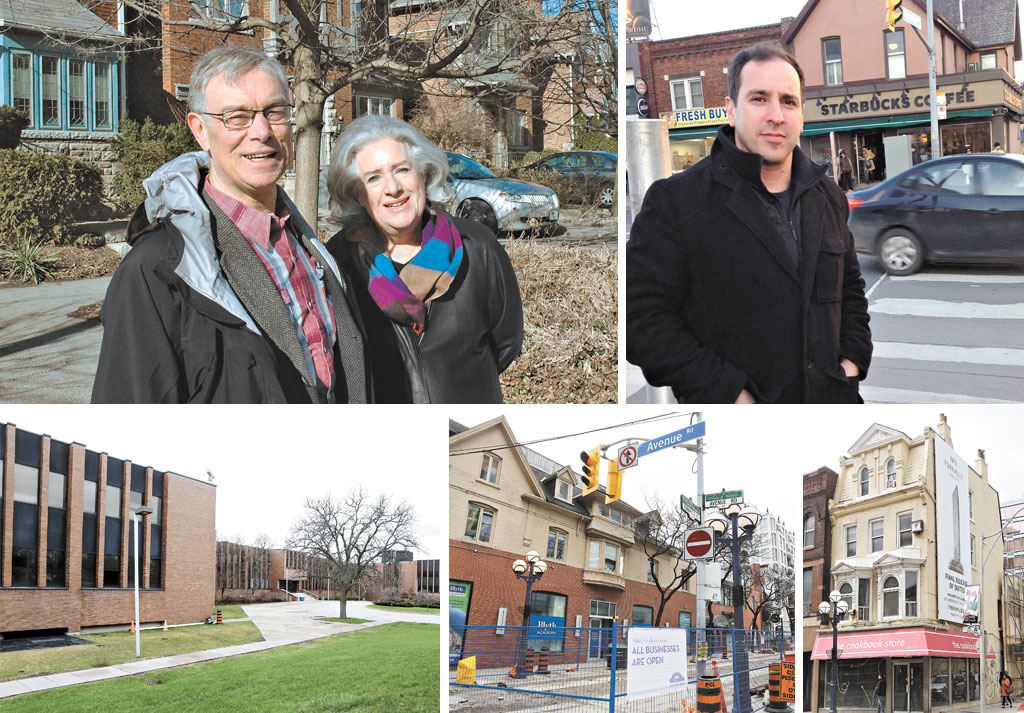
TEN ENDANGERED MIDTOWN HERITAGE PROPERTIES:

1. Building: York Square 
Location: 33-45 Avenue Rd., 136-138 and 140-148 Yorkville Ave.
Heritage value: Seven Victorian houses renovated by Jack Diamond and Barton Myers in 1968
Threat: Empire Communities has proposed a 40-storey tower for the site, that would retain the front facades of only two houses
Status: A working group of local stakeholders has been assembled to negotiate

2. Building: Davisville’s first post office
Location: 1909 Yonge St.
Heritage Value: Davisville’s first general store and post office, run by John Davis in the 1840s
Threat: The building is listed, but not designated as a heritage property
Status: Councillor Josh Matlow is currently seeking its designation 

3. Building: Consumers Gas Showroom
Location: 2532 Yonge St.
Heritage value: Built in 1931 by Charles Dolphin
Threat: It recently sold for over $9 million 
Status: The property is designated, but what the new owners have planned for it is not yet known 

4. Building: Ten quadraplexes 
Location: 1747-1749 to 1783-1785 Bayview Ave.
Heritage value: Built by Howard Talbot, the former mayor of Leaside, in 1934
Threat: The concern is that they will be an appealing target for developers once the Eglinton Crosstown station is operational
Status: Geoff Kettel of the North York Community Preservation Panel has nominated them for designation

5. Building: The Arthur Edward Waine House 
Location: 172 Finch Ave. W. 
Heritage value: Built in 1923 by Arthur Edward Waine
Threat: A proposal to relocate the house for a six-story building was denied by city council
Status: The developer appealed the decision to the Ontario Municipal Board, with a hearing set for October 2015

6. Building: The Celestica property 
Location: 1150 Eglinton Ave. E.
Heritage value: Built in 1965 by Parkin Partnership and Planners
Threat: An application to redesignate the site to allow for a mixed-use development with 3,000 residential units, office and retail space was submitted in May of 2014
Status: The property is not listed, and the application is under review

7. Building: The Charles Frogley Building Location: 850 Yonge St. 
Heritage value: Built in 1851 
Threat: A 58-storey mixed-use building is proposed for the site by Bazis & Plaza
Status: After many rounds of applications Coun. Wong-Tam believes it will retain most of the heritage value

8. Building: Former Tyndale University College and Seminary
Location: 25 Ballyconnor Crt. near Bayview Ave. and Steeles Ave. E. 
Heritage value: Built in 1962 and designed by Peter Dickinson
Threat: Sold to Shining Hill Homes Inc. in 2012. A subdivision of 34 detached houses was proposed for the site in April 2014 
Status: Currently under review

9. Building: Various properties on Parkhurst Boulevard 
Heritage value: Built in the Tudor revival style by Howard Talbot in the 1930s
Threat: Demolition patterns happening in Leaside have residents concerned
Status: The area has been nominated for a HCD study and review

10. Building: De La Salle College 
Location: 45 Oaklands Ave. and 131 Farnham Ave. 
Heritage value: The Fieldhouse (built in 1924), the Macdonald House (1858), and the stone and wrought iron gates (1860) are designated
Threat: Treasure Hill Homes submitted an application in March to demolish the Fieldhouse and relocate the stone and wrought iron gates, to build 28 townhomes 
Status: Currently under review

Next-big-thing artist Sam Shuter readies big solo show in Toronto this weekend

0

Toronto artist Sam Shuter, the one who paints dapper (headless) dudes in men’s suits, darling of the fashion industry, profiled in lad mags Esquire and Maxim, has a big show May 8 to 10 at Andrew Richards Design, 571 Adelaide St. E.

With the blogosphere abuzz with her stunning and quite sizable paintings, representation in London, England, and New York City and buyers snapping up her works from T.O. to Texas, Shuter could be the next big thing.

The young artist is a study in contrasts, just like her paintings. She is wildly creative and free of inhibition, interested in following her own path. But she also seems very driven to succeed in a “real world” kind of way, while at the same time continuing to question what the heck she’s doing with her life. It’s a question she will likely continue to ask herself for a long time despite her rather meteoric rise in the art world after just three short years plopping paint on canvas full-time.

Following the show, she’ll be setting up a new permanent work space within the gallery the folks from Andrew Richards are opening next door. She will also be curating a few shows there every year. But the vibrant young painter has time to meet for a coffee at the western-themed café on the ground floor of her downtown Toronto condo. 

“It’s all part of the journey,” she says, of her dual nature. “I used to laugh at that, the cliché, but it is a journey or a roller coaster. Personally, I love it. One day everything is fine; the next day, it is terrible. And it’s like, ‘Why is anyone even paying attention? I’m throwing in the towel.’ I used to think I was a crazy person, but then I found out that’s just the creative process for a lot people, and I just have to stick with it.”

Shuter was born in Montreal, and many of her family members worked in the textile industry in the city’s fashion district along Chabanel Street.

Her parents moved to Toronto when she was young, and she spent most of her formative years in the Bayview and York Mills area, where she attended York Mills Collegiate Institute.

Family is at the root of much of what Shuter does with her art and the type of artist she is becoming.

As a child, she was surrounded by the colours and textures of the garment industry. But it’s much more than that.

“They also taught me about integrity and hard work, and a lot of my inspiration for work comes from them,” she explains. “They always worked so hard to give us kids every opportunity and encouraged us to give it a shot, so I’m grateful for that alone, that I feel supported enough to take risks.”

And risk she did, giving up a budding career in the film industry to pursue her artistic passions. But, as is often the case, following your dreams can often lead to some seriously serendipitous events. Case in point: the memory box discovery.

Shuter came upon her now signature esthetic after looking through some old memory boxes from her childhood.

“It blew me away,” she says. “There were all these guys with suits and bow ties that I used to doodle all the time. I had the thought to put one of the illustrations on top of an abstract background and a light went off.”

In choosing this particular garment to express herself, Shuter has a chance to play with the familiar ideas of a suit as a symbol of adulthood and hard work. That old chestnut is juxtaposed against an absolute stunning use of colour and detail and movement. 

“The inspiration for painting suits has a lot to do with sort of figuring yourself out,” she says: “What your identity is, your character and societal pressure, all kinds of stuff relating to the question of who I am and how I can make a difference. How can I matter?”

Not uncharacteristically, despite being untrained in art as well as in the ways of the artist, instead of proceeding with caution, she went big, taking out a bank loan, signing up for the Toronto Art Expo and getting to work. 

She created eight new paintings for the show and sold all of them. “I freaked out,” Shuter says. “I had a moment of ‘Who am I? What does this mean?’ ” 

Since then, she’s hired two people to help her with administration and studio work. Her original works are hefty, clocking in at three-by-four feet and up. She also does a brisk business in prints. She’s also working on new works that do not involve suits, and she hopes her growing audience is ready.

“But I’ll always do the suits It’s a big part of who I am,” she says.

Xavier Rudd bringing new band to upcoming reggae-infused jam fest in Toronto

0

Australian musician Xavier Rudd made it big as a one-man groove machine touring the globe with his didgeridoos, guitars and stomp box, turning out beach blanket blues on a series of highly regarded albums backed by moving and energetic live performances. 

Although he’s done collaborations in the past, notably with a drummer on the moody and raw album Dark Shades of Blue and employing a two-person rhythm section, dubbed Izintaba, on the 2010 album Koonyum Sun, his career has largely been defined by his breathtaking solo work, both live and in the studio. It’s kind of been his thing. And it worked.

But for his latest album, Nanna, Rudd did something totally different and put together a massive, eight-person band, dubbed United Nations, for a reggae-infused jam fest, and he’s bringing the entire crew to Toronto on May 6 as part of Canadian Music Week.

“It’s something I’ve always wanted to do, put a big band like this together,” Rudd says.

Rudd is a free thinker, a vegetarian and a well-known environmental activist who actively supports organizations such as the Sea Shepherd Society. When he talks about his music, he speaks as if it is something that comes to him, not something he actively creates. And so it is with his new collective. 

“It came together pretty organically to be honest,” he explains. “As soon as I put it out there to the universe, it just came. All the members are the first members, there were no auditions or anything. It was almost like the ancestors sat down and had a cup of tea and put it all together.”

As is the case with much reggae music, recording Nanna brought Rudd to the island of Jamaica, where he mastered the album side-by-side with the legendary Errol Brown at Tuff Gong Studios.

“It was an honour to work with him. He loved the record,” Rudd says. “You know, his mom had passed during the mixing process, and he was kind of grieving, and the content of the record, the respect for the sacred feminine really touched him. So he got right into it.”

Rudd has a strong connection to Canada. His former wife is Canadian, so Rudd’s two boys, now 14 and 9, have some maple syrup in their veins. In addition, he recorded his last album, Spirit Bird, at a cottage in Thornbury.

“It’s a beautiful wooden studio on the lake,” he says. “I never really planned on recording anywhere but the coast. But I’d just had back surgery and needed to chill.”

Rudd plays the Opera House on May 6 (www.xavierrudd.com).

Arts: May exhibitions in Toronto

0

Robert Kananaj Gallery hosts an installation, video projection and performance by Istvan Kantor, the infamous rebel artist. It’s his first sanctioned art show in Toronto in some time.
May 5 to June 6

The Contact Photography Festival runs in 175 different venues with more than 1,500 artists participating, such as Jean-François Bouchard, at Arsenal Toronto April 18 to Aug. 15.
May 1 to 31

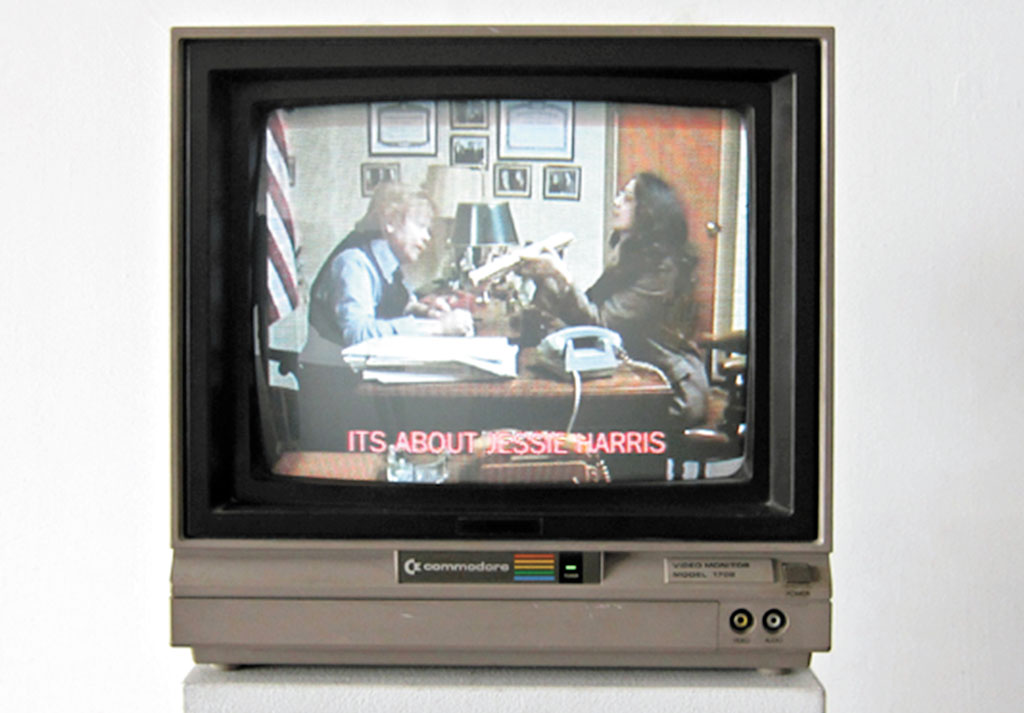
Cooper Cole Gallery will feature a solo exhibition, by Toronto artist Jesse Harris, the creator of the You’ve Changed mural on Queen Street West.
April 30 to May 30

MJG Gallery will host Distant Roadside, a wildlife and nature exhibit featuring artists Richard Ahnert, Ian Busher, Julie Himel and Daniel St-Armant. 
May 1 to 17

The Eighteenth annual ART TOUR returns to Bloor West Village with 36 artists displaying their works in shops, cafes, bakeries and restaurants.
May 29 to 31

Food Crawl: From Cuban sandwiches to handcrafted chocolates in Roncesvalles

0

After two years of construction, Roncesvalles residents were growing weary of diverted traffic, makeshift plywood sidewalks and being woken up by heavy machinery. The period from 2009 to 2011 saw many a Roncy shop shutter, and Toronto’s main Polish artery was ailing. Although the stalwart Polish eateries, like Café Polonez, never cease to please with their fab borschts and perogies, a flock of new restaurants has joined the strip. Today, Roncy is one of T.O.’s dining destinations, and here are six places worth a visit.

EXTRA BUTTER
To kick-start the morning, head over  to Extra Butter, where the only thing buttery are the croissants. Co-owner Cassie Germann pulls chocolatey shots of espresso made from Toronto-roasted Dark City beans. If java and you don’t jibe, the chai lattes will ease — rather than jolt — you into consciousness. The bench out front is the perfect spot for a casual quaff with a side of people-watching. 283 Roncesvalles Ave., 647-340-7791

THE WESTERLY
The Westerly takes brunch classics and kicks up the oomph factor. The french toast, for example, gets the crème brûlée treatment. Vanilla custard–soaked challah bread is griddled and then topped with brûléed cream for a truly extravagant dish. For dinner, chef Geoff Kitt offers bistro staples and plates like citrus-braised short ribs served with creamy coconut polenta. 413 Roncesvalles Ave., 416-551-6660 

LA CUBANA
If you’re suffering from eggs-and-bacon ennui, a better brunch destination might just be La Cubana. A flaky chorizo-stuffed empanada topped with poached eggs and pickled raisins will kick you out of that breakfast rut. For the less daring, a plate of pineapple-glazed pork belly with sunny side up eggs is familiar without evoking yawns. Hemingway probably wouldn’t have noshed at this perennially packed Cuban eatery; it’s a bit too cheery for the curmudgeon. 392 Roncesvalles Ave., 416-538-7500

CHOCOLATERIA
Chocoholics would be remiss not to pop in to the Chocolateria. Chocolate-dipped chips should come with a warning: addictive. The house-made turtles, in dark or milk chocolate, are one of our favourite treats, filled with gooey caramel and crunchy pecans and dusted with fleur de sel. 361 Roncesvalles Ave., 416-588-0567 

STASIS
At the northern edge of Roncy,  Stasis owner Julian Katz prepares some of the city’s best preserves. (Strawberry rhubarb isn’t just a combo that works well in pies; it also makes a delightful toast-topper.) This wee bodega is packed with artisanal Canadian goodies, such as vinegars and oils from Niagara and Forbes Wild Foods’ foraged milkweed pods and spruce tips. Although you can buy all the fixings to make a great sandwich at home, Katz is more than happy to whip up a ’wich for you. The maple bacon grilled cheese is a ’hood favourite. 476 Roncesvalles Ave., 647-766-5267

PIZZERIA DEFINA
For a perfectly fire–blistered pie, head over to Pizzeria Defina. Its pizzas rival those of trendy Queen West trats (ahem, Terroni) but are served with none of the pretension. Meat lovers will go gaga for the Pumba, which tops wild boar meatballs with fior di latte, ’shrooms, grana padano and caramelized shallots. Order the caramelized plum salad. It’s the kind of salad you can make friends with; at the very least it’s large enough to share. 321 Roncesvalles Ave., 416-534-4414 

Arts Profile: Are Taggart and Torrens the next Bob and Doug?

0

“‘Canadianity’ is a fictitious word we’ve made up that sounds like a religion, and it’s used to describe the things that both make us roll our eyes as Canadians but also make us proud,” says Jonathan Torrens, co-host and co-creator of the laugh-out-loud funny Taggart and Torrens Canadianity podcast.

Torrens is a well-known actor working on two successful TV projects in CBC’s Mr. D and Trailer Park Boys. Jeremy Taggart spent the last couple decades drumming in iconic Canadian rock band Our Lady Peace.

The weekly podcast has been running for just over a year and has skyrocketed in popularity after a move to iTunes in January to the tune of 300,000 downloads and counting. The hour-long show is completely unscripted and consists of something akin to a two so-called “bauds” shooting the proverbial horse pucky, trying to crack each other up.

When the duo decided to add a live show at the Rivoli in Toronto on May 2 as part of Canadian Music Week, it sold out in minutes. 

Everything from buying a Timmies for a guy behind you in the drive-thru, to just being a “baud” to reacquainting ourselves with the musical works of long-forgotten musicians such as Amanda Marshall qualifies as Canadianity. It is a celebration of quirky Canadian people and customs that have developed over the past few decades.

“We hit the ground running, and it’s been growing on a grassroots level on such a crazy scale,” says Taggart. “It kind of feels like it validates that it [Canadianity] is a thing and it is a feeling.”

It taps into that inner hoser in a similar fashion to Bob and Doug McKenzie, who managed to poke fun at toque-wearing, beer-guzzling Canucks in a way that also made us proud in a strange way. And that’s a serious compliment to the show’s two hosts.

“We come from similiar but different worlds,” says Torrens, who first met Taggart when the Trailer Park Boys were the opening act for an Our Lady Peace concert tour a years ago. “We’re buds, but not besties, and I think, even tonally, we’re kind of a little opposite, and I guess I just wondered what that kind of conversation might bring,” he says.

The show has added many features along the way, including a top five songs segment in each episode as well as a slew of regular games such as poetry sayin’ and Alanis or Avril, where a quote is read, and one of the hosts has to guess if it was said by Alanis Morisette or Avril Lavigne.

A couple of Canadianity’s recent shows have introduced listeners to two new characters in Salvadore (the “touchy-feely weirdo from Spain” who is constantly having trouble fitting in because he “doesn’t understand Canadian ways”) and the notorious Quebec strip club DJ who introduces dancers with uniquely Canadian stage names. 

Torrens, of course, knows a thing or two about quirky character development, having donned the do-rags and gold chains of Trailer Park Boys resident white rapper J-ROC since the show first aired in 2001.

That show has turned into something of a global sensation since Netflix took over for the eighth season in 2014 and continues to fund its development.

“Every six months since the show started, I’ve thought, well that’s gotta be that then,” says Torrens. “It’s the show that will not die, and it continues to find new audiences in new corners of the world through Netflix — especially teenage boys who are just latching on to it.”

Currently, Torrens is back at work writing for the show’s upcoming new season. 

After leaving Our Lady Peace in 2014, Taggart has been working in broadcasting as well as writing, drum clinics and teaching. He’s also been making music with Kirt Godwin and Alex St. Kitts and confirms the band might have something out this year.

“I love music, but I definitely wouldn’t just go out on the road for 12 months for nothing,” Taggart says. “I have three kids now, and I’m enjoying being here. Life is interesting enough; when you have responsibilities, you have to keep your head clear. I’m not 18 anymore.”

The show is unscripted, and preparation for the show consists of a couple of texts and a frantic five minutes before the show goes live. 

“It’s not like it’s frickin’ Robin Williams,” says Taggart. “Just legitimate people having a conversation, and if we’re not laughing, we know it’s not a good one.”

And that’s all part of the charm.

“It’s warts-and-all kind of programming, not a slick piece of radio at CBC, for example,” Torrens explains. “And once we cracked that nut and found out people had this real affection for this nostalgic Canadianity, for lack of a better term, it was really exciting.”

Although parlaying the success of the show into a paying gig on radio might seem like the natural evolution, which is how Torrens saw it originally, something changed along the way.

“It’s only in recent weeks that we realized that would be limiting for us and for our listeners,” he says. “The end game is to keep spreading the Canadianity, maybe find some sponsors. And my dream is to do a cross-country tour of back roads spots, episodes from hunting cabins, fishing huts, some of the hardest to reach places in the country.”

For more information on the show, visit their website.

On the front lines

0

Seneca College’s new mental health intervention certificate program launches this May, and veteran community mental health worker Tanya Shute is at its helm as the program co-ordinator. Offered at Seneca’s King campus, the two-semester post-graduate program has accepted about 25 prospective and current front line workers from various helping-related fields, from nursing to police foundations. The program will prepare students with the skills necessary to give support directly to those with mental health issues in the community, as opposed to a clinical setting, like hospitals.

Shute, 44, did similar important community work as the first family support worker at Krasman Centre, in 1998 and later as the executive director. Krasman requires that all of its workers have experienced mental health issues themselves, in order to serve and understand those affected by them. The Seneca program, also rooted in direct mental health experience, is a natural extension of her work at Krasman, where the Richmond Hill resident saw an average of 2,000 people a year. By the time Shute left in 2010 to teach social work at Seneca and her alma mater, Laurentian University, Krasman’s original annual budget of $100,000 had grown to $250,000. It’s now almost $1 million. 

“The work is draining, not because of the people we see, but the inadequate funding models and difficult policy environments in social services,” said Shute, who was also a counsellor at Sandgate Women’s Shelter of York, where “women had to leave when their time was up.” 

“Your work with people is what keeps you going,” said Shute. “They were fighting your fight, too.”

Real men wear heels

0

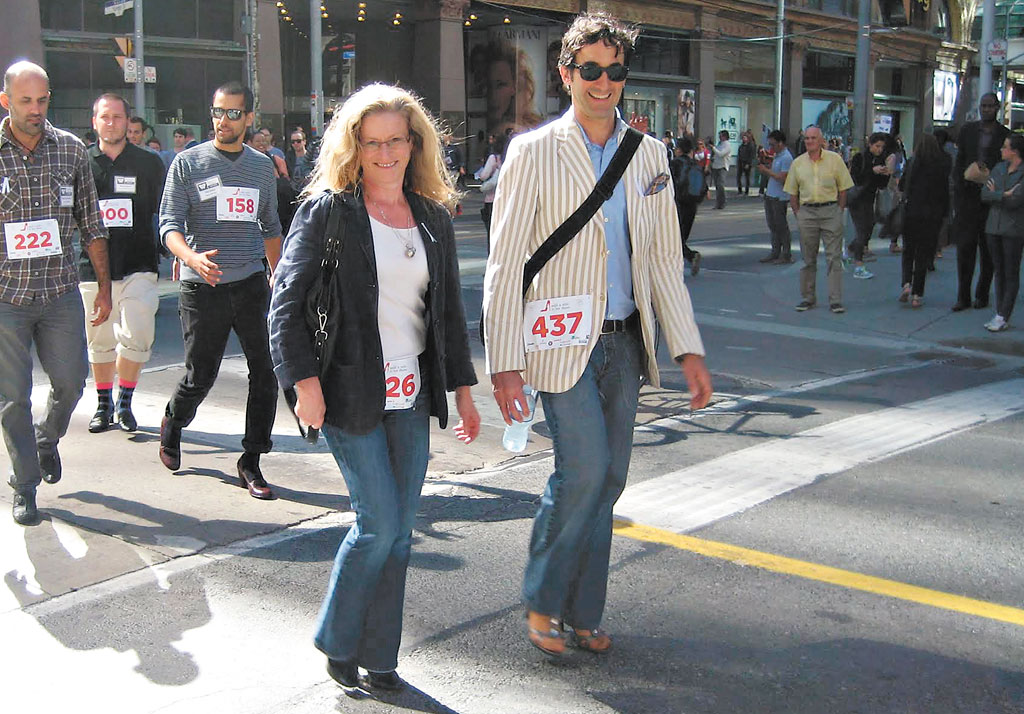
Downtown residents may be accustomed to the click-clack of heels on pavement in the Yonge Street and Dundas Street area, but come May 21, it’ll be men who strap on the stilettos for the Walk A Mile In Her Shoes event, a march to end violence against women. 

White Ribbon, the organization behind the event, is the world’s largest effort of men working to end violence against women. Co-founded in Toronto by the late Jack Layton, it arose out of a response to the Montreal Massacre in 1989 at École Polytechnique, where 14 women were killed by 25-year-old Marc Lépine.

Moore Park resident Laurie Freudenberg has volunteered as chairperson of the board since 2007 and has participated in every march since they started the event six years ago. Over 2,500 men and women have walked the walk alongside Freudenberg — which will run from noon until 2 p.m. this year — allowing them to raise over $500,000 for educational programming. 

“We knew as an organization that men wanted to speak out and help to end violence against women, but they really didn’t know where to start,” said Freudenberg. “The walk is an opportunity to give men the chance to literally and figuratively take a walk in her shoes and show their support.”

According to Freudenberg, looking to see what kind of shoes the men show up in is just an added bonus: “I don’t know where they get them!”

But what makes White Ribbon unique — beyond the female footwear? “We are really focused on the engagement of men and boys. We believe a preventive approach is the key,” she said. “Men have a huge role to play in addressing gender-based violence, and boy, we’d sure love to be put 
out of business.”

Spin-spiration for rehab

0

Five years ago, Lara Kaufman couldn’t even climb onto a spin bike, let alone ride one. She was 41 years old and the entire left side of her body was paralyzed from a stroke she suffered on a ski trip with her husband and three children in Collingwood. Now, Kaufman is the driving force behind the charity event Rocket Ride 4 Rehab that raises funds through spinning — with all proceeds going to the Rocket Family Upper Extremity Clinic at Toronto Rehab, University Health Network.

The event, held on April 25 at the  spin studio Rocket Cycle (686 St. Clair Ave. W.), raised upwards of $109,000, $13,000 of which Kaufman and her husband Peter raised themselves — although the campaign is accepting donations until the end of May. 

With the help of the rehab clinic, Kaufman said she has made “huge gains.” The effects of her stroke made it so that she was unable to walk, drive or do something as simple as eat and read at the same time. But now, she is gearing up for a two-kilometre walk this spring and rides a recumbent bike regularly. Also a volunteer at Toronto Rehab, on the stroke floor every week, she meets with patients to hear their stories and share her own. 

“Seeing me and the fact that I’ve recovered so much in five years shows that they can, too,” she said. “So many people see themselves on a one-way hill going downward, but it’s actually on a climbing hill going upward. It’s a climb, no question, but it’s an upward climb,” she added.

“It’s been said that we’re not in control of the things that happen to us, rather in the attitude that we have toward the things that happen. We have the choice to either dwell and be miserable or we can ride,” said Kaufman. “So let’s ride.”

Too Close to Call: Backyard chicken rentals come to Toronto

0

BACKYARD BOK BOKS

vs.

RENT THE CHICKEN​

Mike Craig and 
Mary-Kate Gilberston; 2011 
Owner(s); year established:
 
Harry and Silvia Stoddart; 2013
We had our own backyard chickens and our friends wanted to try it, too. So we thought we could make it really easy by supporting people who wanted to have backyard chickens. How did you get into the chicken-renting business? We noticed an interest in backyard chickens and thought there might be a need for a rental service with a full helpline so people can experience raising hens without the long-term commitment.
$349, three hens for two weeks Cost? $375, two hens for May-October
That’s a good question. I’d have to say the egg What came first? The chicken or the egg? For our renters, the chickens come first, and the eggs come the next day!
My favourites are Kale, Chrysanthemum, Glee, Bokchoy, Sparkle Princess, Splash and Guelphy. Funniest hen names: My favourites are Miss Henny Penny, Henrietta, Egberta, Breakfast, Omelette and Scrambled. 
It’s the experience of having an urban farm and connecting with where your food comes from. Apart from eggs, why do people rent hens?

For the experience of caring for part 
of their food chain and the companionship.

We looked into goats, but they just eat all your shrubs, jump around and escape. We were looking into sheep to cut grass but haven’t done it.  Have you been asked to rent other animals? Goats seem to be the next big thing — all those cute goat videos. But I have a feeling most goat rentals won’t last more than a day or two.
www.backyardbokboks.com    www.rentthechicken.com 

City of Toronto bylaws do not allow residents to keep chickens on their property. A vote to allow backyard coops was deferred indefinitely in January 2012. In the meantime, city officials will respond to complaints but will not actively enforce the bylaw.