
Home Blog Page 23

Capitol Theatre block purchased for $19.9 mil, tenants wonder what will come to the site in the next few years

0

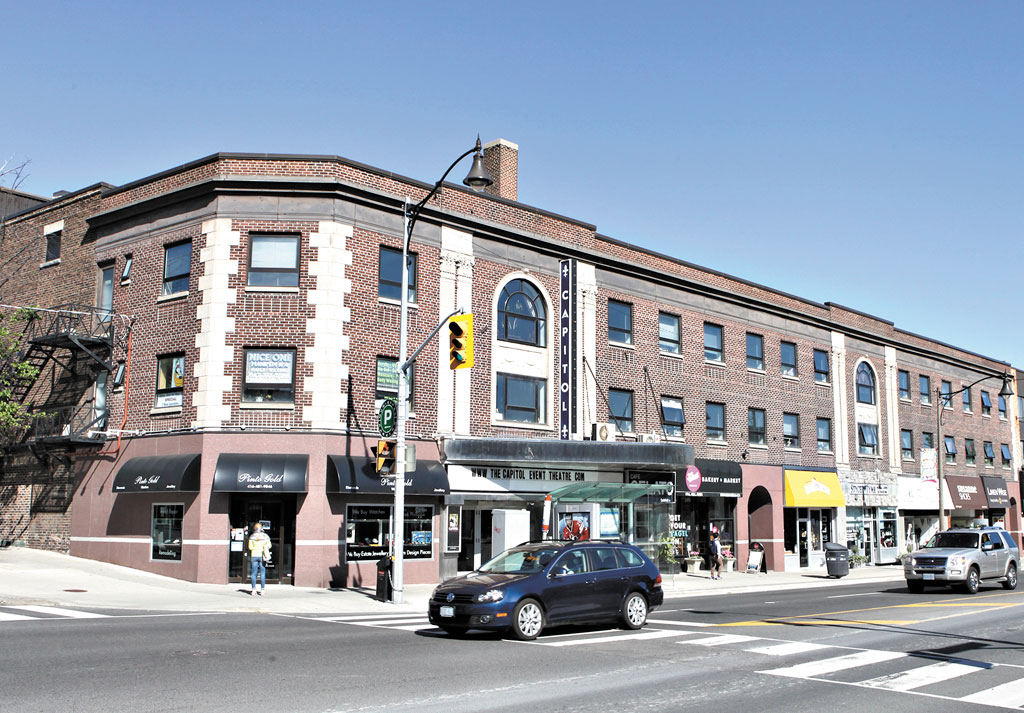
A three-storey strip of Yonge Street at Castlefield Avenue was recently purchased by Madison Homes, a Toronto-based developer known for its high-rise condominium and commercial developments — leaving residents and tenants to wonder what will be coming next. 

The site at 2490-2514 Yonge St. and 12 Castlefield Ave. was purchased for $19,938,163 in February from Ronald Buildings Limited, owned by the McClelland family. It consists of stores that stretch from Pinto Gold to the southernmost Kailyana store and includes the Capitol Event Theatre (formerly known as the Capitol Theatre and now leased by a separate owner). 

Although part of the property at 12 Castlefield Ave. is zoned by the Toronto Parking Authority (TPA), Terry Mills, planning consultant for Arris Strategy Studio pointed to the high-rise condo at 30 Roehampton Ave. as an example of how a developer can negotiate with the TPA to incorporate parking into a development. 

“[The TPA] had a surface parking lot there, and they were quite happy to negotiate with Minto to have it put in a floor below ground,” he said. 

As for the potential height of a future project, Mills mentioned that zoning only allows for 16 metres along Yonge Street but noted that developers don’t always abide by those rules.

The Capitol Theatre at 2492 Yonge St. has been in the McClelland family since it first opened in 1918, featuring vaudeville shows and silent films. Most of the property’s current tenants arrived in the last 12 years, when president of Ronald Buildings Limited Ian McClelland and his brother were running things. The block was run by their stepfather before that and grandfather before that. Ian McClelland would not say why the family had decided to part with the property but noted that it was due to a “family matter.” 

A representative from the purchaser, Madison Homes, implied “something” was coming but could not share what that might be. Tenants of the building are anticipating a change, and both McClelland and his brother have renewable contracts to look after the property until January of 2016. 

“They wouldn’t have bought it if they couldn’t do something with it,” said Penny Bedford of Stychin Tyme, one of the tenants of the strip. Bedford also said that “word on the street” was that the developer was contemplating putting up condos, but she acknowledged that it was all just hearsay at this point. 

When asked if he’d like to see the Capitol Theatre building remain standing, McClelland replied, “You can have your fanciful dreams, I guess, but these things happen in business.” 

“They were out doing surveys the other week,” said McClelland. “They’ve got to develop some sort of a plan for the property, and then it has to go to council and be reviewed. These things take two to five years to jell.”

Where are they now: Scarborough native Stephanie Beard from YTV’s The Zone show

0

For a long time, Scarborough’s Stephanie Beard, otherwise known as Sugar, was one of the most recognizable people in children’s television, thanks in part to her almost unbelievably high squeaky voice. 

In addition to voicing Rini on Sailor Moon, she was one of the hosts of YTV’s The Zone from 2001 to 2007 along with a fella by the name of Carlos Bustamante. 

Where do you take your career after becoming such a recognizable part of kids’ TV in Canada? Why, Hollywood of course. 

Since leaving YTV, Beard, who now goes by Sugar Lyn Beard, has slowly but steadily been stringing together some fairly impressive projects south of the border. And it looks like things are going to get even hotter for the pint-sized thespian. 

Beard is just wrapping production on Aloha, a new blockbuster Cameron Crowe film that stars Emma Stone, Bradley Cooper and Rachel McAdams.

The movie, which opens May 29, is about a former military contractor who returns to Hawaii, the site of his greatest triumphs as part of the U.S. space program.

In addition, she is currently filming Sausage Party. Now, before rolling your eyes, this is the latest project from Seth Rogen and James Franco. In the raunchy animated movie, Beard plays a character named Baby Carrot. It’s slated for release in June 2016.

OK, maybe roll your eyes a bit.

Poker’s $25-million man Daniel Negreanu ready to battle the world’s best this month

0

You know you’re doing something right when you lose and still take home $8.3 million. That’s the enviable situation Toronto-born poker star Daniel Negreanu found himself in last July after being bested by 23-year-old Daniel Colman at a big-stakes event in the World Series of Poker.

That day, Colman won $15.3 million — an enormous sum even for the world of high-rolling poker — at an event where just getting a seat at the table cost $1 million. 

By any measure those are mind-blowing figures. For those of us who are used to more modest paydays, it’s almost impossible to conceive how it would feel to stake life-altering amounts of money on a handful of playing cards. 

But to hear Negreanu talk about poker, you’d think he was on about a game among buddies over some beers. The pressure, he says, just doesn’t get to him. 

“Even when I had no money, it was never about the money for me,” he says. “I always had confidence as a teenager that I would be wealthy, so the minor setbacks never fazed me.”

Frequently sporting a baseball cap, usually with a scruffy-ish beard, there’s an everyman style to Negreanu that has endeared him to the game’s millions of fans. In his 20 years in the business, he has become one of the game’s most recognizable faces. In large part because of his performance at the table, ranking number one on the all-time cash list with $30 million in winnings. But it’s also because there’s an openness to the man known as Kid Poker that has made him so popular with fans.  

He tweets incessantly, blogs regularly, appears on TV (even in some unlikely places, like a cameo on CBC’s Mr. D) and last month made his debut on online poker streaming service Twitch, where he has over 300,000 views on his channel.

That openness may seem unusual for a man who makes his living in a game famously based on giving away as little as possible, but Negreanu believes that there’s an innate skill to great poker players that can’t be learned anyway.

“Anyone can become a decent player,” he says, pointing out that it’s easier than ever to learn the fundamentals of the game and to practise risk-free online. “But there are key areas that just need to be there. Emotional intelligence, or self-awareness, is the number one most valuable trait a poker player can possess. If you can be aware of how you come off to others and how they perceive you, they can no longer beat you.”

That awareness of self is among the reasons Negreanu does yoga and meditates. Mindfulness techniques are becoming increasingly popular among high-stakes poker players as ways to not only put losses into perspective, but also help keep calm during high-pressure situations like when they’re bluffing. Negreanu takes meditation so seriously that he even teaches courses on it. 

With this year’s World Series of Poker getting underway at the end of this month in Las Vegas, where he now lives, getting in the right head space will be Negreanu’s key focus in the coming weeks.  

“There is only one player I focus on before WSOP: myself,” he says. “I know when I play my game and trust in the strategies I’ve developed over the last 20 years that I’ll be successful.” 

“At this point in my career, I don’t focus much energy on learning how to play better, instead I focus on how to improve my mental state and preparation.” 

These days, Negreanu has the luxury of picking and choosing his tournaments, tending to focus on the two months of the WSOP. 

When he was cutting his teeth, however, things were different. Having started playing poker in his friends’ basements as a teen in Toronto, Negreanu moved up to charity tournaments. Never a particularly diligent student, he dropped out of high school and concentrated on the game, eventually deciding to try making it as a pro around the age of 22. 

“I woke up one morning and just thought to myself, ‘Well, I guess this is what you do for a living,’ then I made the move to Las Vegas, and it’s all worked out amazingly well.”

Although he advises young players to be more cautious than he was. 

“I would warn them of playing outside of their bankroll. That’s what I always did. If my bankroll was only big enough to play $20 to $40 limits, I would be seated at a $100 to $200 table,” he says. 

Away from the poker tables, Negreanu spends a lot of his time on the golf course. It’s one of his great passions. Gambling on the game, he says, is the only area in his life he’ll take a big risk; otherwise, he says he’s quite calculated in what he does in both life and poker. 

Though he makes it back to Toronto regularly — recently to see the Raptors play, and lose, a game in the playoffs — there is one area that really makes him miss home. If there’s one thing Las Vegas is not, it’s a sporting town, which means there’s no hockey. 

Like any good Canuck, Negreanu is a big fan of the game, and so he has recently been making moves to drag Sin City out of the hockey wilderness. With the NHL’s Western Conference having two teams fewer than its Eastern, Negreanu is promoting the idea of bringing an NHL team to Las Vegas. 

“I am personally quite excited about the prospects of an NHL team in Las Vegas, and I believe strongly that not only will we get a team, but that hockey will work in this sports starved city,” he wrote on his blog, Full Contact Poker.

Negreanu is working hard to realize the dream, promoting the idea and reportedly having met with others interested in bringing a team to the city. Whether he will succeed or not is a moot point, but in his passion for bringing a team to Vegas, it’s clear Negreanu isn’t bluffing.

The New Mid-Life: Rebecca Eckler gets the inside scoop on her genes and what they mean

0

Most new mid-lifers these days want to live a long and healthy life. Well, 23andMe is a site where you can order a DNA kit to learn how you can do just that.

The results from your kit will provide you with detailed information on your medical health, ancestral origins and your response to certain medications. Alhough these are important facts to know about yourself, what I found most rewarding was that my results provided me with proof of conditions I had claimed to have for years! 

For example, as I’ve told many, many people, I have an increased sensitivity to pain, and now I have the proof because my results confirmed it! But to tell you the truth, at first, this new mid-lifer didn’t really want to know what 23andMe offers with these DNA kits. I didn’t want to know if I’m at risk for any inherited conditions or passing them on. So I took a lighthearted approach to the whole process. 

For $199, 23andMe sends you an in-home kit, where you have to spit into a tube. So I spit, spit, spit until I hit the correct line on the saliva sample. I am not a good spitter. It took me almost 10 minutes. The next step is to create an online account with 23andMe and register my kit with that account. Then I mail the kit back to the company and fill out an online questionnaire. This takes a bit of time. 

About six to eight weeks later, you will get an email from 23andMe telling you your results are ready. 

Why 23? The company’s name refers to the fact that human DNA is organized into 23 pairs of chromosomes. The results you receive from the DNA kit will connect you with your unique, paired set of 23 chromosomes.

The report with your results provides you with information on what diseases you could be at risk for; however, the company is quick to note that they do not diagnose diseases. They recommend that you work with your doctor to determine what you can change and how to manage what you can’t. 

Your results provide you with the ability to explore your genetic rates for everything from lactose intolerance to male pattern baldness. (I hope I don’t get that!) 

I do agree that “better health starts with a healthy awareness,” but the details of the results are overwhelming. What if I don’t want to know if I’m lactose intolerant? I’ve never had any problems with lactose before! 

I feel like I’m in first year medical school when I begin reading my results. 

For example, when it comes to my production of stomach acid, it tells me, “Likely an ultra-rapid or rapid metabolizer. Someone with this genotype typically metabolizes certain PPIs at a rapid pace … if you are taking a PPI and your symptoms do not improve, consider talking to your doctor.”

First, I hope many doctors will read this and tell me what the heck it means. I’ve never noticed any stomach problems before this test! 

I’m also likely, I find out, to be more sensitive to warfarin (a blood thinner) based on my genetics. “Genetic information may only be useful when determining an initial dose of warfarin,” my report reads.

This is when I start freaking out: all these “problems” that I completely don’t understand. This report is so detailed that if you were looking to having a healthy awareness, you’d be like a kid on a Disney cruise.

You can find out everything from your earwax type (gross, I know) to finger length ratio to the iris pattern in your eyes. 

Quite frankly, while reading the report, which I do become addicted to, I just want to know if there is something really serious that I need to worry about. I suppose I could care that I weigh one to three pounds lower than typical for adults, except I’ve always been petite, so no shock there and nothing that will kill me, like, tomorrow.

I guess I’m glad the results are mostly positive. I’m also glad to find out I have no variants for a higher risk for Alzhemier’s disease. 

And guess what? I am likely to be lactose intolerant due to lack of the lactase enzyme as an adult, which my body needs to completely digest whole milk.

All in all, I spent more than two hours looking at my results. So yes, I learned a lot about myself. And, it seems I am in good health … from what I gather. I just need a doctor to understand it all.


From high-school dropout to HGTV’s latest host, the long and winding road of Paul Lafrance

0

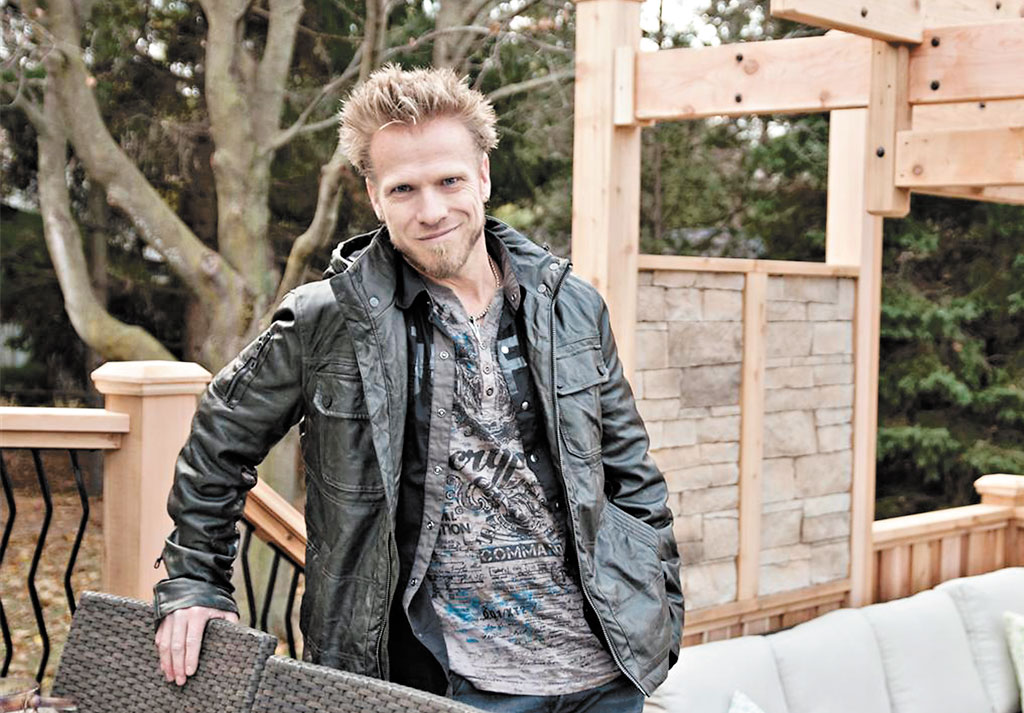
It’s easy to make assumptions about Paul Lafrance, now known as Canada’s handyman.

For example, one might assume that the host of HGTV’s Disaster Decks, Decked Out and Custom Build has changed since attaining celebrity status.

One might assume that the success of his design company was dependent on the typical formula of business degree, networking skills and being in the right place at the right time.

One might also assume that the spiky-haired, grinning face staring back at you from his company’s website knows nothing of struggle and hardship.

But in reality, Paul Lafrance is a high-school dropout and a man who once found himself $365,000 in debt.

It may be surprising to some that the mind behind the amazing home transformations didn’t pick up a circular saw until he was 22. Before that, he was a bored high-school student with undiagnosed attention deficit disorder — his teachers’ worst nightmare.

“Guidance counsellors were like, ‘Look Paul, just conform. Everyone else knows what the system is. While you’re pimply-faced and full of hormones, you’re going to decide what you’re going to do for the rest of your life.… You’re going to meet the woman of your dreams, get married, buy the house of your dreams, have 1.5 children and live happily ever after,’” says Lafrance. “My response to that was: ‘Then why are all of you people so miserable?’”

Before Lafrance was kicked out, his English teacher left him with a powerful piece of advice: “Don’t ask yourself what the world needs, but instead ask yourself what makes you come alive and go do that thing,” recalls Lafrance. 

Soon, he found himself working at a fence and deck company. 

“Three months later, I was stopping at the drugstore to get laxatives for everyone’s coffee because I was building 7,000 linear feet of the same fence, and I was bored out of my mind,” says Lafrance.

Seeing that Lafrance was getting a bit squirrelly, his boss showed him the deck of a backyard and asked for his thoughts.

“I began to tell my boss all of my ideas in this one continuous run-on sentence and then he said something to me that I’ve heard many times before and that was, ‘Paul, please for the love of God, stop talking,’” says Lafrance. “So I decided, at the age of 22, ‘Very well, I will go start my own company.’”

The 22-year-old Lafrance started knocking on doors.

“I would go into peoples’ houses, spend two, four, six, eight hours with people asking completely unprofessional questions like, ‘Who are you! Tell me about your life!’ and I would design projects in a very personal way,” he says. “They had never met somebody that was so passionate about creating something for them. And that’s how I got past those early years where people are going, you know, ‘Well what are your credentials?’ and I’m like, “Lego.’”

Lafrance soon determined that the backyard space could be something more than just a hangout spot. It could become a place where people could finally find peace and connection.

This unique approach to design could very well have been what inspired his entire team to stick by him when the “economic apocalypse” hit in 2008. With three competitors going out of business — and a debt of $1,000 for every day of the year — Lafrance told his team he was “releasing them from their loyalty.” Not a single person left, and Lafrance never gave up on his dream either.

“Most people walk around this planet and do not feel like they are ever really known or understood by people. They don’t feel like anyone knows their story, and even if their story was told, they feel like no one would really care,” said Lafrance.

“What makes me come alive is … seeing what it does to a person when they feel like somebody gets them and understands them. And that will make me a very unusual designer builder guy. That makes me an unusual contractor, let me tell you. But hey, it’s working well so far.”

Daily Planet: Ontario is now saving the bees

0

No matter how you feel about Ontario’s proposal to restrict use of neonicotinoid insecticides on corn and soybean crops, we can all agree: bees matter. But as important as bees are, there’s more at stake.

Neonics are poisoning our soil and water. This problematic class of pesticides needs to be phased out globally to protect Earth’s ecosystems. By implementing restrictions now (the first in North America), Ontario will have a head start in the transition to safer alternatives.

Not surprisingly, Ontario’s proposal has drawn the ire of the pesticide industry.

Neonics have only been around for a couple of decades, but annual global sales now top $2.6 billion.

They were initially embraced because they are less directly toxic to humans than older pesticides and are effective at low levels, reducing the volume used.

They can be applied to seeds and are absorbed into the plant, which then becomes toxic to insect pests, reducing the need to spray.

We now know these characteristics are the problem. These chemicals are nerve poisons that are toxic even at very low doses and persist in plants and the environment.

They affect the information-processing abilities of invertebrates, including some of our most important pollinators.

Bees have borne the brunt of our unfortunate, uncontrolled experiment with neonics.

Beekeepers report unusually high bee death rates in recent years, particularly in corn-growing areas of Ontario and Quebec. Virtually all corn and about 60 per cent of soybean seeds planted in Ontario are treated with neonics.

Critics emphasize that other factors — including climate change, habitat loss and disease — affect pollinator health. But these factors are not entirely independent; for example, chronic exposure to neonics may increase vulnerability to disease.

A comprehensive pollinator health action plan should address these factors, and scaling back the use of neonics is a good start.

Ontario’s proposal to restrict the use of neonic-treated corn and soybean seed, starting next year, is far from radical.

The idea is to move away from routinely planting neonic-treated seeds and use neonics only in situations where crops are highly vulnerable to targeted pests. The government expects this will reduce the uses of neonic-treated corn and soybean seed by 80 per cent by 2017.

It’s no surprise that the pesticide industry and its associates oppose even this modest proposal and are running expensive PR campaigns to obscure the evidence of harm. 

The industry’s objection to restrictions on neonics is eerily similar to big-budget advertising campaigns to create a smokescreen thick enough to delay regulatory responses to the obvious harm caused by cigarettes.

Let’s hope today’s decision-makers have a better grasp of the precautionary principle and a stronger commitment to protecting the public good, because bees really do matter.

David Suzuki is the host of the CBC’s The Nature of Things and author of more than 30 books on ecology. (With files from Faisal Moola.) 

Retail Recap: Bayview Village welcomes new shops and celebrates long-standing favourites

0

Windfield’s has been a long-standing favourite amongst North York residents for years. This month marks the 20th anniversary for owner Marino Stauvropoulos. Well-known for its casual atmosphere, friendly staff and generously sized portions, it’s easy to see why so many people frequent the joint — whether it’s for breakfast, lunch or dinner.
801 York Mills Rd., 416-445-1630

New to Toronto is Gerry Weber. The international fashion brand celebrated the launch of its Canadian flagship store at Yorkdale Shopping Centre in April. Sandwiched between Bebe and ivivva athletica, just down the way from Williams-Sonoma, the new womens wear store is 1,900 square feet on the ground floor and houses four of the brand’s fashion lines all under one roof.
3401 Dufferin St., 416-789-2002

Famous Laffa just opened its newest location at Yonge and Steeles, the first expansion of growth for what is now a franchise chain, with great-tasting Middle Eastern food made quickly. Picks include mains like lamb kebabs and the Jerusalem mixed plate and, of course, a roster of laffa sandwiches (6283 Yonge St., 416-792-4420).
Narooe Korean Cuisine is the new Korean restaurant in Newtonbrook, near Yonge Street and Finch Avenue. The resto offers a casual ambience with moderately priced Korean cuisine dishes including various types of bibimbap, kimchi jjigae and gamjatang — pork bone stew.
5649 Yonge St.,416-546-4918

The boutique jewellery and accessories store Magi 3 is a welcome addition to the Avenue Road and Wilson Avenue neighbourhood. Owners Magi Lanz, Nilza Ogniewicz and Janine Shmuelevitz recently celebrated the store’s grand opening in March.
1961 Avenue Rd., 416-486-6244

Avenue Interiors has been providing patrons with full-service flooring, window and wallpaper services in Toronto since 1986. Owners Mindy and Rick Gelman celebrate their 30th anniversary this May.
1900 Avenue Rd., 416-781-3005

Park it anyplace: City needs to make public spaces more appealing to adults, not just children

0
Toronto beaches
Sugar beach

During a recent trip to Paris and Tours, France, I was struck by how often the parks in those cities were designed for adults, not children. It seemed such a contrast with Toronto.

The telltale difference for me was the fact that many of the parks there had lots of seating along the pathways or at places of interest: you were invited to sit down and watch the passing world or talk with friends or read a newspaper or book.

I took our empty wine bottles to the recycling spot in a park near the apartment we had rented in Tours. The park had a very pleasant and winding lagoon with ducks and geese and, to either side of the gravel walkways, flowers, trees and bushes, a few small patches of grass and lots of benches. It was mid-morning and there were a few mothers with their baby carriages, some teenagers obviously talking about a school project of some kind and people sitting on benches watching the ducks and other people. I wanted to spend the rest of the morning there.

On a warm spring afternoon we walked from the main commercial area in Tours to an island in the Loire. We found the same profusion of benches and people, but none of the swings and teeter-totters that seem to be part of almost every park in Toronto. One corner of the island had a skateboard park designed for kids, and since it was a holiday, it was jammed with action.

It’s not that there is nothing in French parks for kids, but that is rarely a park’s main attraction. In the gigantic Luxemburg Gardens on the left bank of Paris, there’s an area devoted just to kids’ activities  on the west side, but the main part of the park is around the fountain and pool where there are sturdy movable metal chairs and benches. That’s where you find the crowd.

Yes, since it was a Sunday afternoon with a breeze, there were many toy sailboats skittering across the pool, but it seemed they were mostly of interest to adults who were talking as they sat around the pool. Nathan Phillips Square never felt so friendly and relaxed, even with its reflecting pool.

I’m not trying to argue that parks should not respond to the needs of children, just that this shouldn’t be their main function. Toronto’s parks seem to be skewed against adults.

On warmer weekends, Trinity Bellwoods Park fills with neighourhood gen-Xers, but since it is almost benchless, they have to lie and sit on the grass, and it does not look very comfortable. The innovative park on Cumberland Street with the hunk of Georgian Bay rock is clearly a place designed for adults, not children, and it offers many visual delights but few benches for sitting.

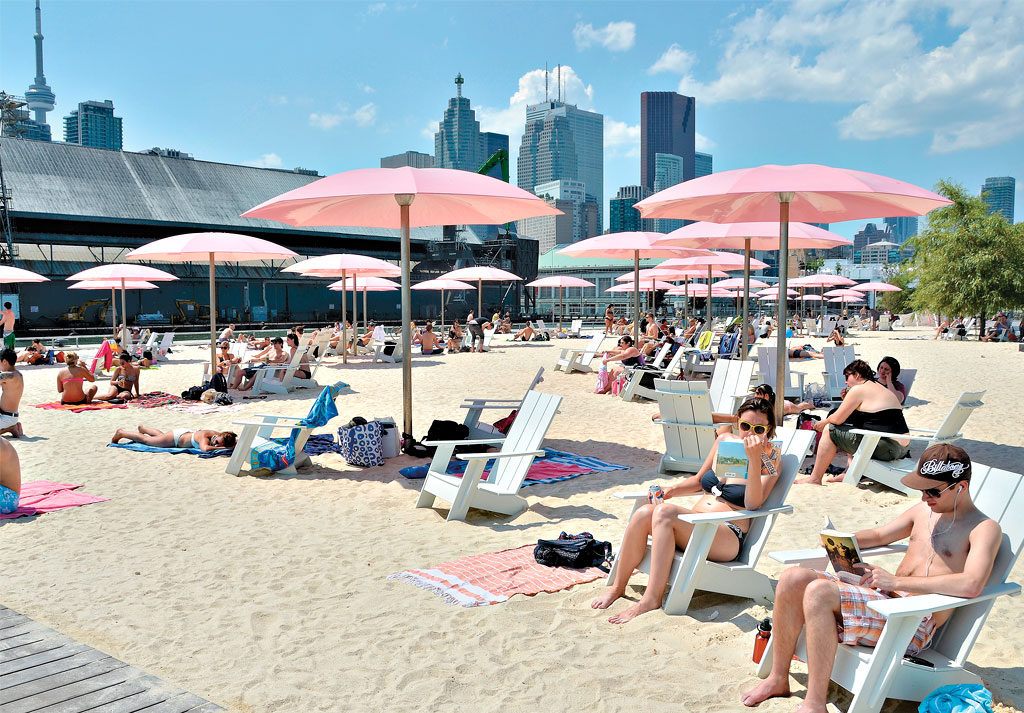
Sugar Beach by the Redpath plant on Toronto Bay is designed for adults, and that’s good. High Park could use a lot more benches on its pathways.

The Toronto consensus is that a park should be a place of green grass and kids’ playthings, not a place where adults can relax and while away an hour on a comfortable bench.

The formidable Jutta Mason has done much to make Dufferin Grove Park a place that welcomes community activity — including wood-fired pizza ovens! — but largely her efforts have been seen as a thorn in the side of the city bureaucracy.

Maybe things are changing. The group Park People, www.parkpeople.ca, gets residents involved in rethinking and redesigning local parks, including asking the city to waive permit and insurance fees for local events in parks. Imagine if the city actually encouraged local groups to use parks for events not only focused on children: that would be a good change.

The ravines, of course, are a different story. They are meant for walking and in some cases riding, certainly not for sitting. And the Toronto Island serves a different purpose than local parks: our big green space, our green lung in the lake, a pleasantly distracting boat ride away, our own Central Park, although Toronto City Council seems intent on approving a busy flyway over it for jets using the Island airport.

That’s a good thing about travel: it asks you to see your own city in a different way. My small trip taught me that our parks should be more attractive for casual adult interaction and relaxation, which often just means more benches.

And how would we get to that decision? Maybe we should send councillors to France for a few weeks in spring to check things out. Hmm.

Post City Magazines’ columnist John Sewell is a former mayor of Toronto and the author of a number of urban planning books, including The Shape of the Suburbs.

Looking back: The month of barley is upon us, herewith our unofficial celebration of everything beer

0

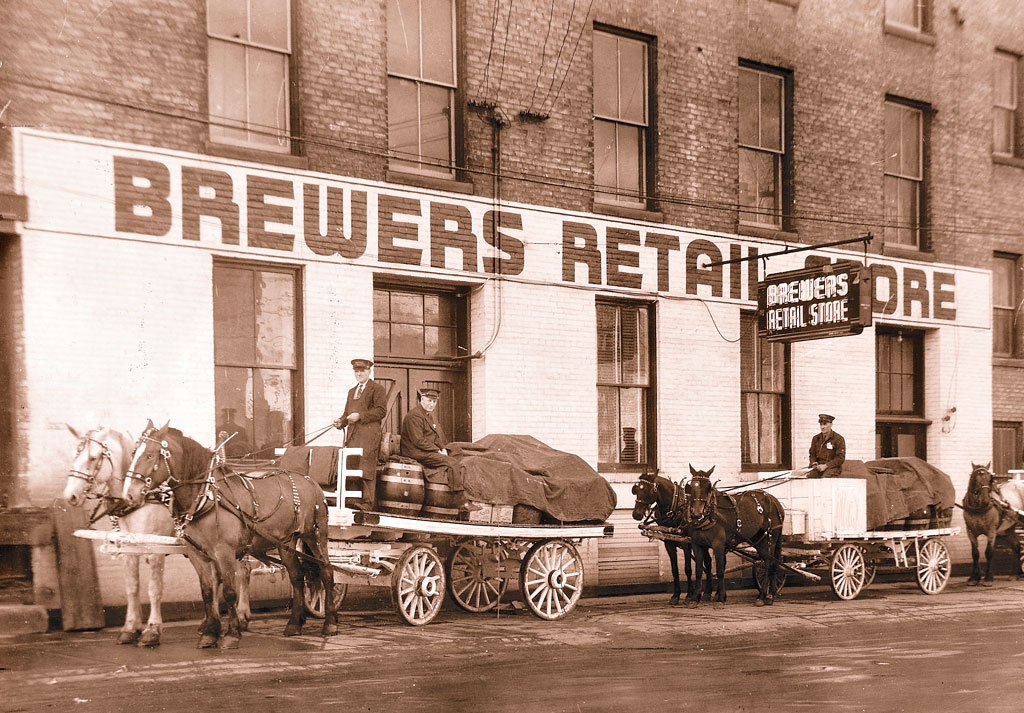
Ontario Premier Kathleen Wynne has announced somewhat-radical changes ahead of the beer business in the province, and it will soon be Victoria Day, better known as May 2-4, a celebration of the beverage that has been brewed and sold to Torontonians since Robert Henderson first brewed up a batch of barley in 1804. Henderson was the first to the keg party, brewing from his operation at the corner of what is now Richmond and Sherbourne, but a slew of brewmeisters soon followed. It was all craft or microbrewing back then, or whatever the hipsters are calling it these days.

The city’s first big-time baron of brewski was Eugene O’Keefe, who founded the O’Keefe Brewery Company of Toronto in 1891. He mechanized his operations and used trucks for delivery and all manner of fancy business practises that elevated O’Keefe above the competition.

O’Keefe is also notable in beer lore because it was the first brewery in Canada to brew up lager, as opposed to ale and porter, the standards of the day. The business was a big hit right out of the gate, and would soon expand to put out some 500,000 barrels a year. 

Eventually, O’Keefe would be bought out and form an even larger sudsy conglomerate. Then along came the megabreweries — Labatt Brewing Company, of London, Ont., and Montreal’s Molson, the oldest brewery in North America — that dominated the market for decades.

In the early 1980s there were only a few breweries in operation. But a hardy few renegades started to appear, such as Horseshoe Bay Brewing in Vancouver and Brick Brewery in Waterloo. These original craft brewers changed everything.

Way back in 1986, Amsterdam Brewing Company decided to follow suit and opened its John Street location in downtown Toronto, initially as a brew pub but later as the city’s first microbrewery. Now, it seems a week doesn’t go by without hearing of another operation releasing its first offering. Craft beer still represents less than 10 per cent of the market.

But whether you enjoy a double black peach IPA or a box of cold Labatt 50, this is your month. Cheers.

From man caves to she sheds: Creating a custom backyard shed offers an alternative living space

0

It has become a common term that everyone understands: the man cave.

It describes a place that men can go to unwind and do the things they love without the interruption of the wife or the family. Typically the tool shed was also a man’s world; however, “all things equal,” he can be in the man cave while she spends time in the she shed. This is a space that is becoming increasingly popular with women as it can be a place for gardening, crafts, a book, tea or a nap, not to mention a lovely glass of wine.

The physical structure of the she shed is determined on use and how many months a year the shed will be used. Some plan for a space that can be used year-round and therefore need to have things like a heated floor and insulation throughout, along with a space heater. Others want it just for spring, summer and fall and therefore require less of the structure when the temperature drops low. You do want to be certain that you can build the premises as it relates to your neighbours.

The more complete the space is, including electrical, plumbing, heating, etc., the more likely you are to require a clear permit beyond a simple shed. The effort can be worth it for the added space and she-enjoyment.

For those who have a green thumb and want a greenhouse, then the glassed-in roof of a typical greenhouse works best. A wrought iron structure or a wooden structure is not only appealing in the yard year-round, but it is a perfect sunny place to spend a few hours cultivating the glories of the garden.

Build the she shed with electricity and the possible uses increase dramatically. Add a little bit of furniture. Perhaps a table and chairs or a day bed and side tables will give you what you need. Now you can surf the Internet for gardening tips, stream music, watch television, read a book or have a nap. The space is entirely your own to do with what you will.

She sheds are also very useful for those with a home-based business. It can be very beneficial to create a space that is “the office” simply to have a change of atmosphere between the house and work.

One friend who built her shed quarters at the back of the garden finds that she is far more able to concentrate and feels far more productive when she makes the effort to go to the “office.”

She finds also that “having a little more work to do” allows her to escape the house for a well-deserved break from the family for some private time.

There is no need for the space to be constrained by the confines of the shed.

You can build it with a double door entrance that gives you access to the garden and yard around the shed.

A carpet placed outside the shed can be great as a place to do some exercise, to practise yoga or as a private place for meditation.

Add a table and umbrella, a chaise or a simple Muskoka chair and you will have created your own little cottage in the garden.

You don’t really have to practise yoga. You could simply enjoy a glass of red and a great novel while you wear your yoga pants! With added flower boxes and potted plants to surround the exterior, you will have created a perfect space for a “staycation” that will be good for both your soul and your spirit.

Glen Peloso is a design expert on The Marilyn Denis Show and Restaurant Makeover. For further info: www.glenpelosointeriors.com.

Jeanne Beker: Spring denim and jean pieces primed for pairing

0

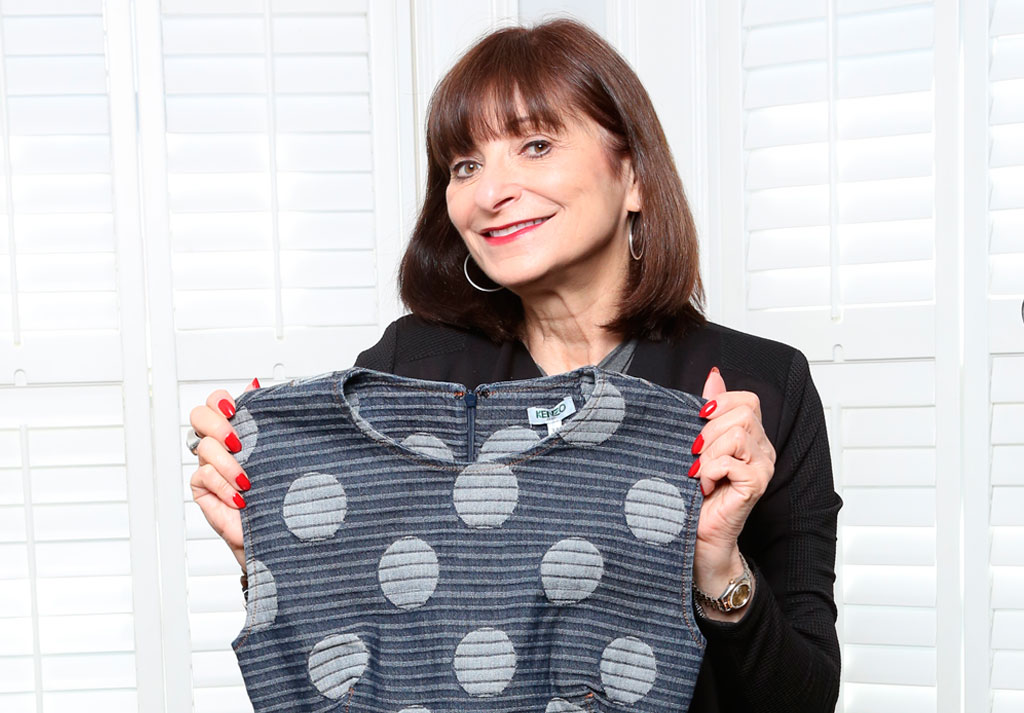
Jeanne taps into one of spring’s biggest trends, seeking out jean, chambray and wannabe denim pieces primed for pairing.

Jeanne's Pick (pictured above)
Kenzo
​Holt Renfrew, 50 Bloor St. W., $535
“We love our polka dots! This is such a beautiful treatment of the denim. Very spirited — a real go-to for the summer.” 

Feelin' fancy (A)
Kastor & Pollux
$288
“These white jeans are just adorable. They’re a wow without being too in your face.”

Fine lines (B)
T by Alexander Wang
Holt Renfrew, Yorkdale Shopping Centre, $305
“This has a retro feel but then the design is very clean and very modern. Timeless.”

Day-to-night (C)
Judith & Charles
Bayview Village, $350
“This is a beautifully tailored vest. You could wear this in myriad ways. It would look great with nothing underneath!”

Daring duo (D)
Intermix
130 Bloor St. W., skirt $315 & top $298 
“I love this denim print — very refined. Worn together they’d look like a dress but even on their own they’re great pieces.”

High-low (E)
Nine West
Bayview Village, $110
“These are really cute and would be wonderful with jeans — the denim-on-denim trend is so hot.”

Double duty (F)
Aritzia
Shops at Don Mills, $175
“This is a great piece for a woman of any age and any figure. You could wear it as a trench or as a dress.”

Key component (G)
Over the rainbow
101 Yorkville Ave., $194
“Women love these shirts ’cause they’re so comfortable. You can hide anything under here. So relaxed — wonderful styling.”

Cut for cruisin' (H)
Aritzia 
Shops at Don Mills, $35
“I just got a new convertible, and I’ve decided I need to wear something like this to protect my face from the sun!”

Step it up (I)
Capezio
Promenade, $75
“Very cool shoe — and not expensive. I just love the look: a subtle print with different shades of blue, a metallic sheen and a wide rubber sole.”

Palatial pants (J)
Free People
79 Yorkville Ave., $186
“These are great for entertaining: very romantic, very hostessy. You have these big slits up the side, so they’re a bit sexy.”

Folk appeal (K)
Stella McCartney
Intermix, 130 Bloor St. W., $1,120
“Oh, I love this little Stella! There’s faux leather binding and stitching that really speaks to the folkloric trend.”

Boys' club (L)
Carbon Toronto
2591 Yonge St., $175 
“This is a chambray — there’s such a soft feel to it. It’s very classic, yet feminine because of these fine little dots.”

Inspiring women share what they learned about parenthood from their mothers

0

ERICA EHM 
Publisher, YummyMummyClub.ca
“My mom taught me to let my kids follow their hearts. My parents did that for me, and they always supported my interests even though they weren’t necessarily what the average kid did, and that’s how I parent my kids now. I let them show me what they love and who they are, and it’s my job to support them in those endeavours. My mom is still doing it with my kids, too. They are lucky to have such an amazing, powerful grandmother, actually two grandmothers.”

WENDY MESLEY 
Host on CBC’s The National
Wendy Mesley says her mother’s influence on her was to be out of the ordinary. “My mother is not normal. She was divorced and raised me on her own, back when that was extremely unusual. She also never did typical ‘mom’ things like tell me my face would stay that way [in a frown] or to wear clean underwear in case I got hit by a bus! She was never preoccupied with avoiding embarrassment. Instead, she taught me to be brave, to think for myself and to try to find a rewarding way to give back. I’m a lucky daughter.”

SARAH RICHARDSON
HGTV Host
She may just be the Martha Stewart of Canada. Viewers especially know Sarah Richardson from her HGTV show Sarah’s Cottage. Here’s what she had to say about her mother’s influence on the mom she became: “At every critical stage, in a very subtle yet supportive way, my mom encouraged me to follow my inner compass, trust my instincts and, most importantly, to make the decisions that were right for me even if they weren’t the most obvious and easy ones. Learning early on to make your own destiny and chart your own path is invaluable.”

RANDI SHINDER 
Founder of i smell great
“My mother had a very rare disease that required extensive surgeries in her early 20s. She endured what many of us could never imagine. What she taught me is, ‘Where there is life, there is hope.’ She has always lived life with her glass half full. She showed me that all you need is a loving family and a few good friends. My mother never complains because she has far too much to be grateful for every day. She taught me gratitude as a way of life and that love really conquers all.”

MARY JOSEPHINE EUSTACE 
Actress and author
Mary Josephine Eustace’s mom is a constant source of inspiration. “My mother’s strongest and most profound influence on me is how she lives her life. She still giggles at my father’s humour, even though he is an acquired taste. She dreams big and wide for her four children and always looks forward not back. To me, my mom is pure joy. And I am sure my sisters and my brother would agree — she kind of rules the world and made all of us feel like we could, too. Unconditionally.”

KATE WHEELER 
Co-host, SiriusXM radio show What She Said
Kate Wheeler learned how to deal with teenage angst from her mother. “The most important thing my mother taught me is empathy. When the teenagers screamed at me for something minor I knew (most of the time) not to react until I determine the reason behind their angst. My mother told me, ‘They will always take it out on the person with whom they feel safest, just as you did with me.’ That skill set enables me to listen, actually hear and ferret out the deeper story.” 

JOANNA TRACK 
Founder of Good Eggs and co.
Joanna Track introduced her mother’s house rules into her own home. “Growing up, we lived in a household where we had rules and boundaries, but it wasn’t overly restrictive. We got to indulge some of the time and learned to respect the idea that it was the exception not the rule. We also learned by her example of eating well and taking care of herself. I believe that’s why my brothers and I all now live quite healthy and balanced lifestyles and teach our children the same.”

CELINE, NATALIE & STEPHANIE GEE 
Co-owners, Gee Beauty 
Celine, Natalie and Stephanie are the daughters of Miriam Gee, and all of them make up the team behind Gee Beauty. Here’s what they had to say about their mother: “Our mother is definitely our main source of inspiration and strength and leads by example daily. Creation and compassion were the dominant messages in our house growing up and still to this day ring true. The importance of positive language is also something we learned daily. It’s not about what we can’t do, but what we can do.”